You're taxiing back in after a lesson and clip the edge of a taxiway light with a wingtip. Or a crosswind gust catches you on touchdown and you land harder than planned. Maybe it's not even your fault — a mechanical issue causes a gear-up. Whatever the scenario, the aircraft is damaged, and now the question becomes: who pays for what?
A lot of renting pilots assume the flight school's insurance covers everything. It doesn't. And understanding the gap between what the school's policy covers and what lands on your plate is one of the most important things you can know before you ever leave the ground in someone else's airplane.
The flight school's insurance is not your insurance
Flight schools carry insurance on their aircraft. That policy is there to protect the school's investment, not to protect you. When you rent and cause damage, the school's insurer pays out the claim — but that is not the end of the story.
Under a legal principle called subrogation, the flight school's insurance company has the right to come after you to recover what it paid out. In plain terms: the insurer writes a check to the school, and then turns around and sues you for the same amount. You were the negligent party. They have a legal right to collect.
This is why the common belief that "the school has insurance, so I'm covered" is so dangerous. You were not a named insured on that policy. You were the person who caused the loss. The school's insurer does not owe you anything — and in most cases, it will pursue you.
What the deductible actually means for you
Many flight schools require renting pilots to carry hull coverage on their non-owned policy that at minimum matches the school's deductible. A typical flight school deductible runs anywhere from $5,000 to $25,000 depending on the aircraft and policy. Some are higher.
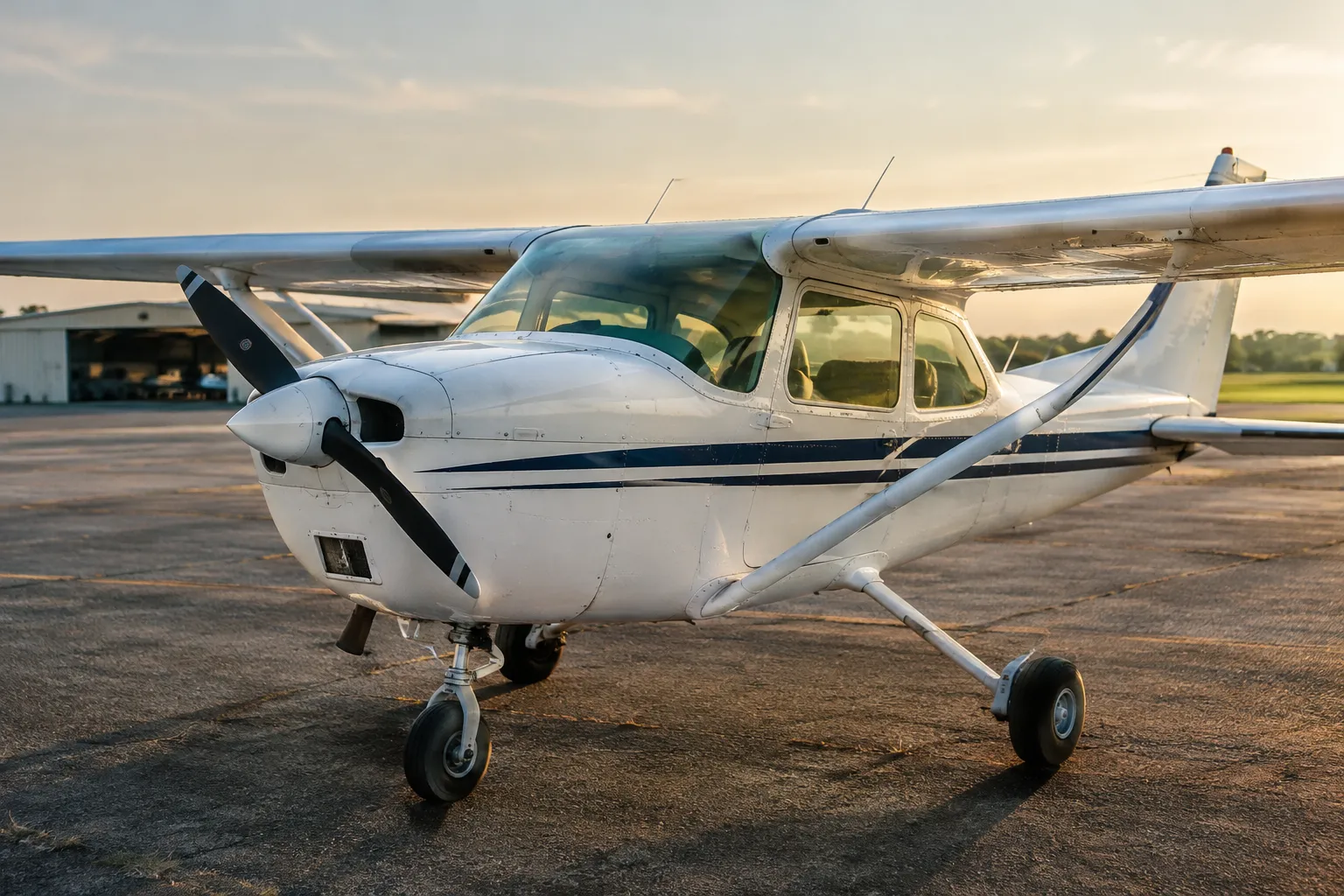
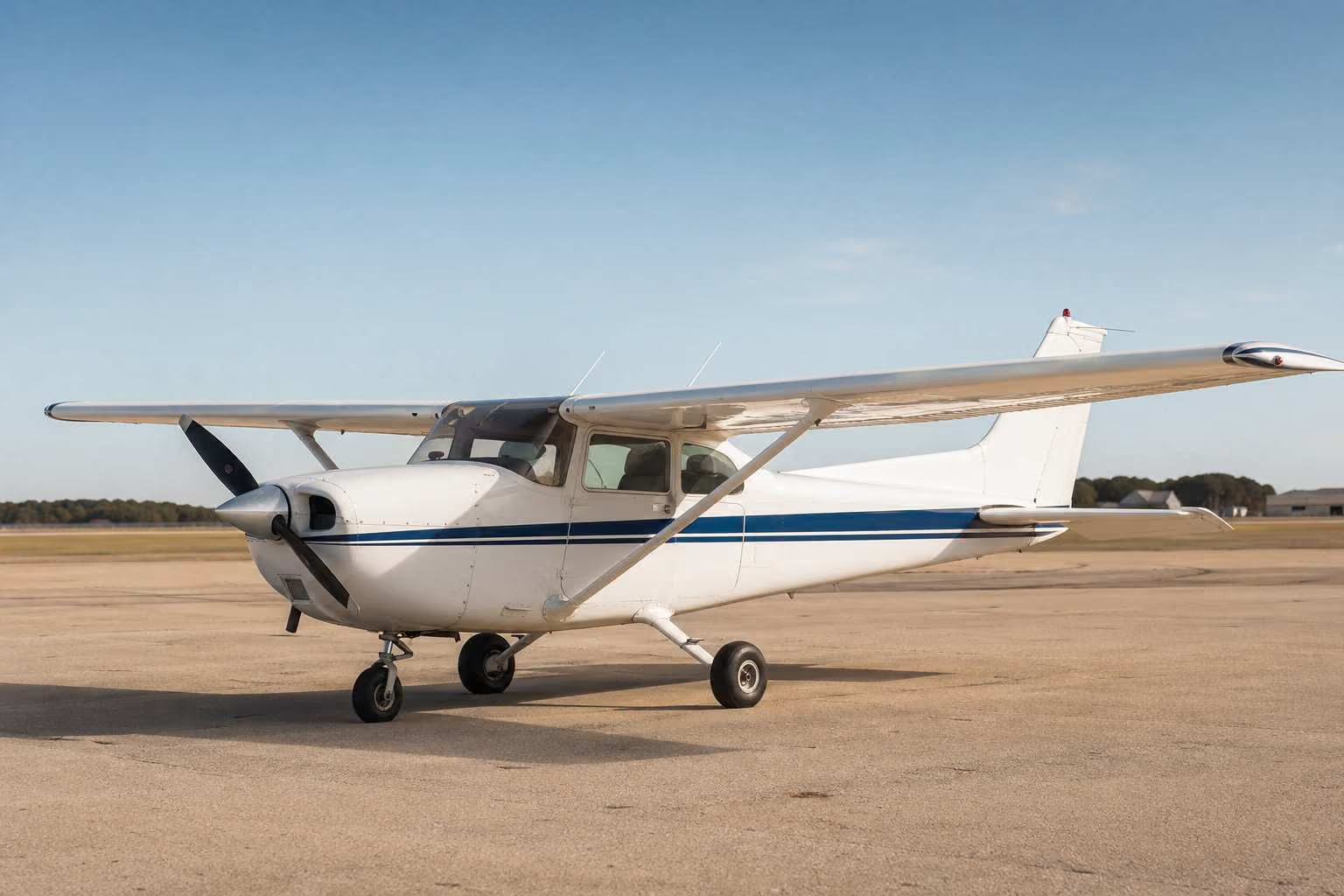
If you scratch a Cessna 172 and the repair bill is $8,000, and the school has a $10,000 deductible, the school's insurer pays nothing — the school covers it out of pocket and then comes after you for the full $8,000. Even when the claim does exceed the deductible, you're still on the hook for the deductible amount itself.
Your non-owned aircraft renters policy, when it includes hull coverage, is designed to cover exactly this. The hull portion of a renter policy protects you from claims related to physical damage to the aircraft you were flying. Without it, that $8,000 comes from your bank account.
Loss-of-use: the bill nobody mentions
Physical repairs are only part of the exposure. When an aircraft is grounded for repairs, the school loses rental income. Some flight schools include loss-of-use claims as part of what they pursue from the at-fault pilot. A Cessna 172 renting at $180 an hour, grounded for 30 days while repairs are completed, represents real money to a school operating on tight margins.
Not all non-owned policies cover loss-of-use claims. It's worth reading the fine print on any policy you carry to understand whether that exposure is included or excluded.
What to look for in your non-owned policy
When you're reviewing or shopping for aircraft renters insurance, there are a few things to check before you sign anything. First, confirm the hull coverage limit matches or exceeds the flight school's deductible. Second, check whether the policy includes coverage against subrogation claims from the aircraft owner's insurer. Third, understand whether loss-of-use is included or excluded. Fourth, verify the liability limits meet or exceed what the school requires.
If you fly at multiple schools or clubs, make sure your policy isn't tied to a single location or aircraft registration. Many flexible non-owned aircraft insurance policies cover any non-owned aircraft you're authorized to fly, which is what you want.
Student pilots and subrogation risk
Student pilots often assume that because they're flying dual instruction, the CFI or the school takes on all liability. That is partially true — your CFI carries responsibility as the instructor of record. But you are still acting as a student pilot in command during certain phases of training, and your personal exposure to subrogation claims does not disappear just because an instructor was on board.
Getting your own student pilot insurance from the start of training is the cleaner solution. It's inexpensive and it closes the gap before it ever becomes a real problem.
Frequently asked questions
Can a flight school's insurance company sue me directly after an accident?
Yes. This is subrogation. Once the school's insurer pays the claim, it legally inherits the right to pursue you for reimbursement. Non-owned policies with liability and hull coverage are specifically designed to protect against this.
What is the difference between the school's deductible and my hull coverage?
The school's deductible is the amount the school must pay before its insurance kicks in. If you caused the damage, you're responsible for that amount. Your hull coverage on a renter policy pays that portion so it doesn't come out of your pocket.
Does my renter policy cover me at any flight school or just one?
It depends on the policy. Many non-owned policies, including those available through SkyWatch, cover any non-owned aircraft you're authorized to fly. Read the policy language and confirm before flying at a new location.
What happens if the damage to the aircraft exceeds my hull coverage limit?
You could be personally responsible for the difference. This is why matching your hull coverage to the school's actual deductible matters. Under-insuring leaves a gap that subrogation claims can reach into.
Do I need non-owned insurance if the flight school says it's optional?
Optional from the school's perspective still means you're financially exposed. Some schools don't require it. That doesn't mean the school's insurer won't pursue you after an accident. Non-owned coverage is not expensive relative to what a single subrogation claim can cost.