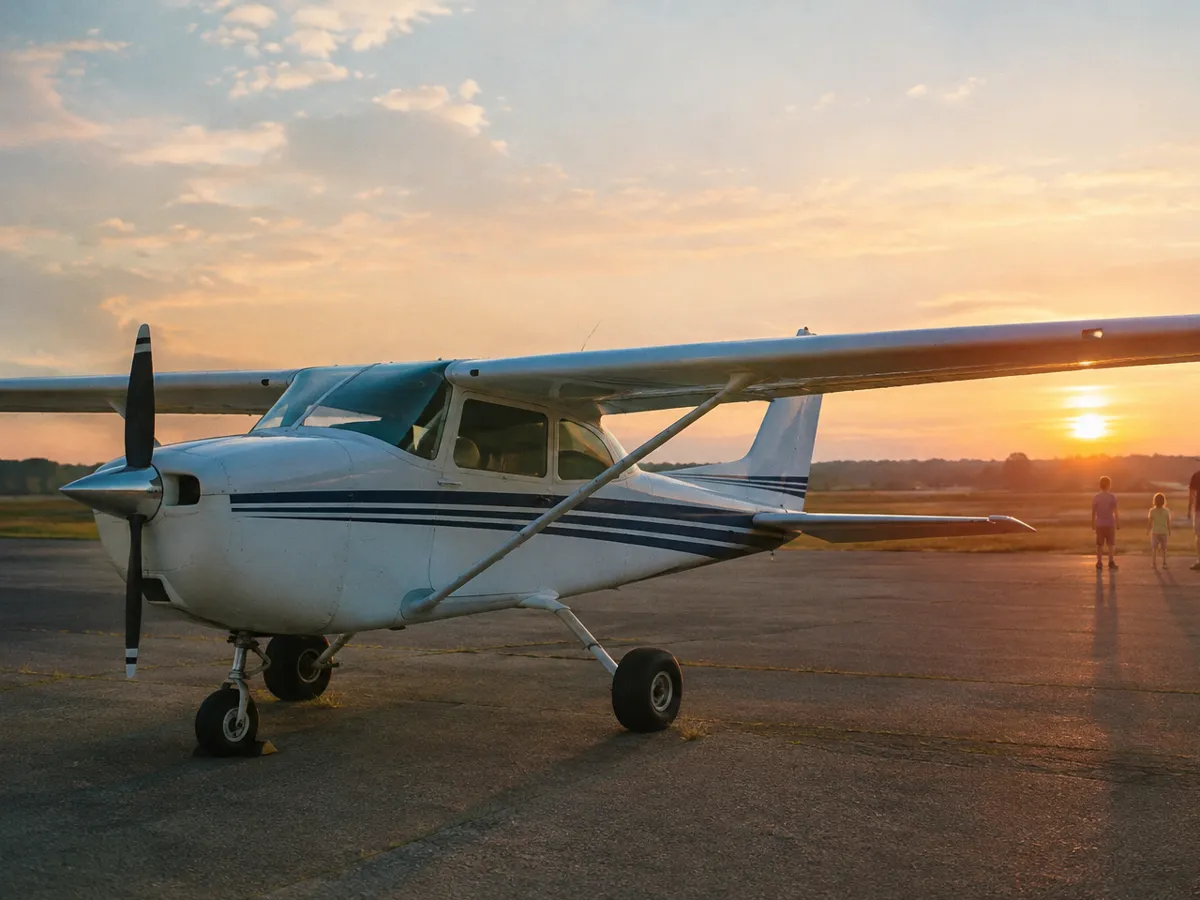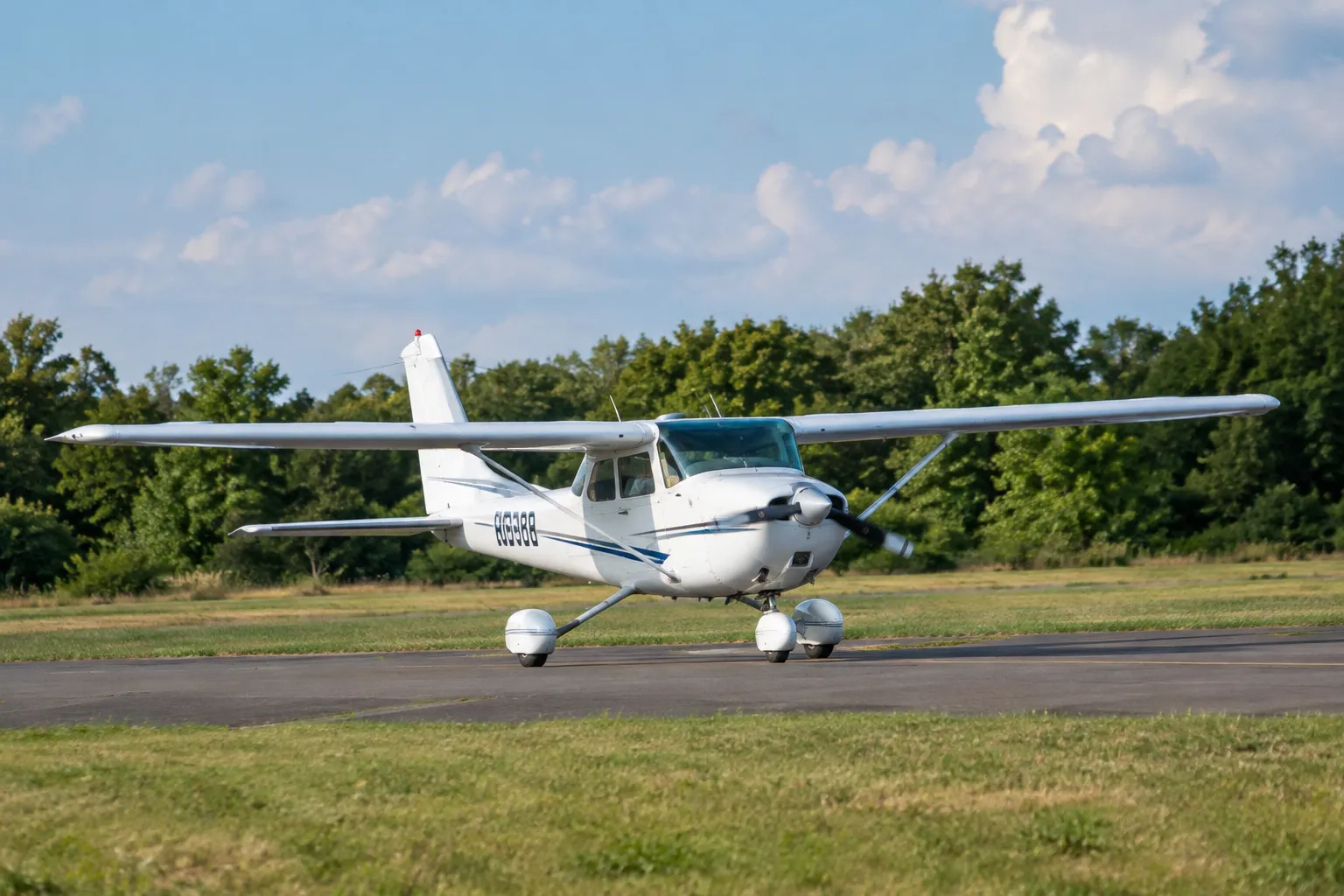
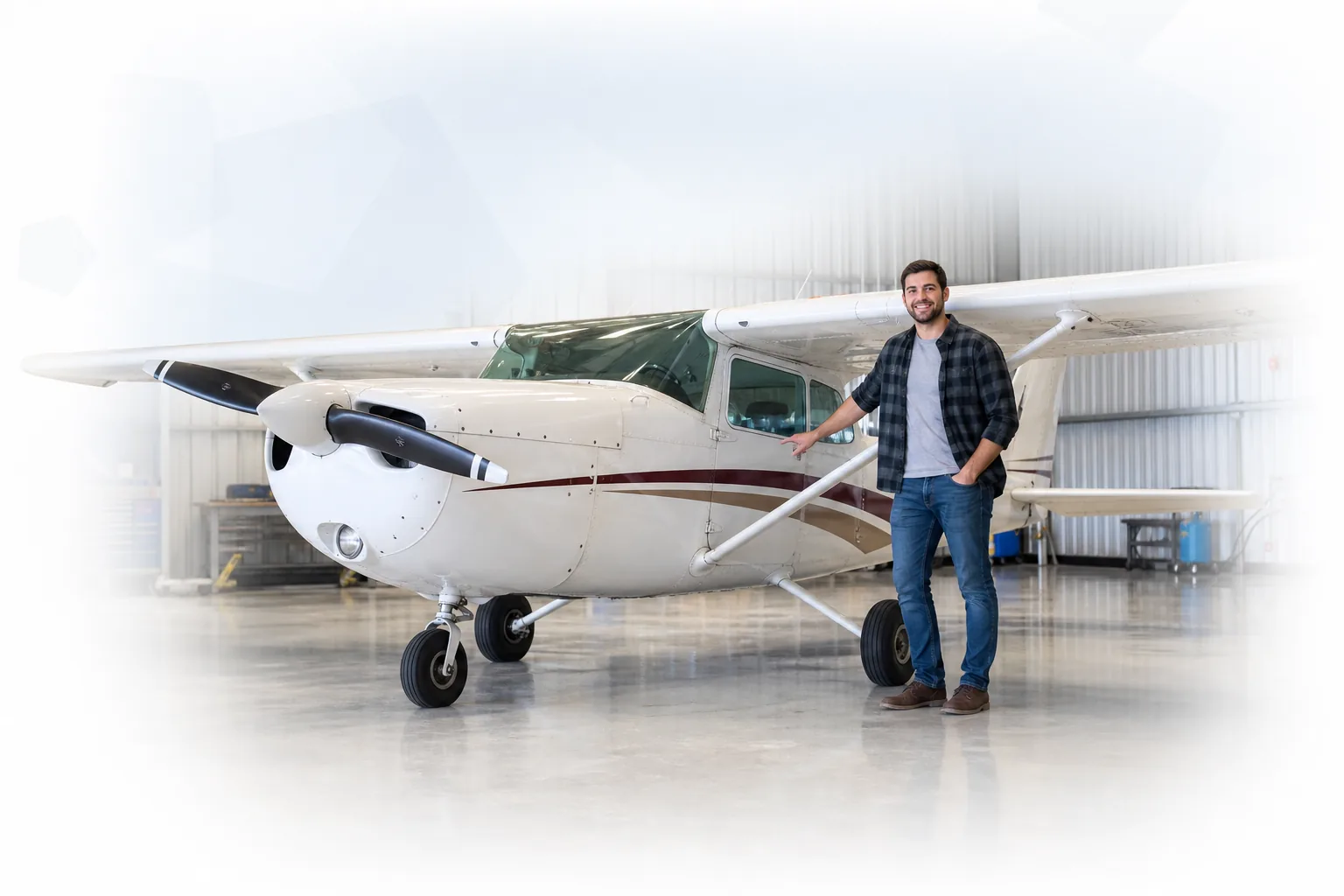
You fly your Cessna on weekends when the weather cooperates, take a few long cross-countries each summer, and the plane spends most of its time in the hangar. If you are like a lot of general aviation owners, the aircraft sits a lot more than it flies. That is just ownership.
But here is something that comes up repeatedly in conversations with pilots: there is real confusion about what an aircraft insurance policy actually does when the plane is parked. Does coverage still apply? What if there is a hangar fire? What if someone breaks in and steals the avionics? What happens after a bad hailstorm? The short answer is that most of this is covered, but the details matter and they are worth knowing before something goes wrong.
Hull coverage does not clock out when you do
Standard aircraft insurance hull coverage protects your plane against physical damage whether it is in the air or on the ground. That means a hangar fire, a wind event that sends another aircraft into yours, a hard hailstorm while it is tied down outside, or a ground handling mishap during maintenance are all situations your policy is designed to cover.
Ground and flight hull coverage, which is the most common type, applies in both environments. Some owners opt for ground-only hull coverage as a lower-cost option, which makes sense if the aircraft is rarely or never flown. Either way, sitting still does not equal uninsured.
What hull coverage does not include is mechanical breakdown, wear and tear, or corrosion from prolonged storage. If the engine gives out because of deferred maintenance or the airframe develops a moisture problem after years in a damp hangar, that falls outside a standard policy. Insurance covers sudden, accidental physical loss, not gradual deterioration.
Theft is covered, with one important condition
Avionics theft is a real issue at general aviation airports. A panel-mounted GPS unit or a transponder upgrade can represent thousands of dollars. Most single-engine aircraft insurance policies include theft as a covered peril under hull coverage, so a break-in at the hangar that results in stolen avionics is a legitimate claim.
The condition that matters here is proper security. If you left the hangar unlocked or the aircraft unsecured in a way that made theft easier than it should have been, some insurers may push back on the claim. Documenting your security practices is not a formality. It is something that can matter when you actually need coverage to pay out.
Liability does not stop at the runway
Your liability coverage protects you against third-party claims for bodily injury or property damage arising from your aircraft. Most pilots think of this in flight terms, but ground situations can trigger liability too. A prop strike during an engine run-up that sends debris toward another person, a fuel spill during servicing that damages another aircraft, or a towing mishap in the hangar row are all scenarios where your liability coverage could come into play.
Make sure your policy includes liability for ground operations. Most comprehensive policies do, but it is worth confirming when you review your coverage terms.
What happens if you are not flying for an extended period
Some owners ground their aircraft for months at a time, whether due to a medical situation, a major maintenance project, a move, or just life getting in the way. During that period, the hull coverage continues, but there are a few things to be aware of.
First, your policy is a contract with terms you agreed to at inception. If you made representations about how much you would fly, some insurers build that into their underwriting. A long gap in flight activity is generally not a problem on its own, but it is worth a quick conversation with your broker if the aircraft will be out of service for several months or more.
Second, your annual policy is still renewing on schedule. Letting it lapse because the plane is not flying is one of the more costly mistakes an owner can make. An aircraft sitting in a hangar without coverage is fully exposed to every ground risk, and getting a new policy after a lapse can be harder and more expensive than maintaining continuous coverage. For more on this, see what we covered in our post on what happens when aircraft insurance lapses.
Third, if you are planning any modifications or avionics upgrades while the plane is grounded, notify your insurer. Changes to the aircraft can affect hull value and should be reflected in your policy before the work is done, not after.
Storage location affects your risk and sometimes your rate
Where your aircraft lives matters to underwriters. A plane in a private hangar is considered lower risk than one tied down on an open ramp. Hangared aircraft have less exposure to weather events, reduced theft risk, and generally lower rates to reflect that. If you move your aircraft from a hangar to outdoor tie-down for any reason, it is worth knowing how that affects your policy terms.
Some policies include a geographic territory restriction as well. Flying or relocating your aircraft outside the covered territory, even temporarily, can create a gap you did not know was there. Check your policy declarations page for the territory your coverage applies to.
The bottom line for parked aircraft
Your aircraft insurance does not require you to be in the cockpit to work. Hull coverage follows the aircraft whether it is flying or parked, and liability follows you as the owner regardless of what the aircraft is doing at any given moment. The things that fall outside of coverage are generally predictable: gradual deterioration, mechanical failure, modifications not disclosed to the insurer.
If you have questions about how your specific policy handles storage or extended downtime, the best move is a direct conversation with your broker before you need to find out the hard way. You can also get a quote through SkyWatch and see exactly what terms apply to your situation.
Frequently asked questions
Does my aircraft hull coverage apply when the plane is in the hangar?
Yes. Standard ground and flight hull coverage applies whether your aircraft is flying or parked. Hangar fires, theft, hail damage, and ground handling accidents are all covered perils under most comprehensive policies.
Is avionics theft covered under aircraft insurance?
In most cases, yes. Theft is typically a covered peril under hull coverage, which means avionics or other equipment stolen from a parked aircraft can be claimed. Your insurer may look at whether the aircraft was reasonably secured at the time of the theft.
What happens to my insurance if I do not fly for several months?
Your policy continues in force regardless of how much or how little you fly. Hull coverage applies throughout the policy period. If the aircraft will be out of service for an extended time, notify your broker, especially if you are making modifications or changing where the aircraft is stored.
Does aircraft liability insurance cover ground incidents?
Most comprehensive aircraft policies include liability coverage for ground operations, not just in-flight incidents. Ground handling accidents, prop strikes during engine runs, and similar situations can all trigger liability coverage depending on the circumstances.
Will my insurance rate change if I move my aircraft from a hangar to an outdoor tie-down?
It can. Hangared aircraft are generally considered lower risk, and some policies reflect that in the premium. Switching to an outdoor tie-down increases exposure to weather and theft, which underwriters take into account. If you make a storage change, it is worth informing your insurer so your policy accurately reflects your situation.