A lot of commercial drone operators we talk to carry liability insurance and nothing else. That's a reasonable starting point when you're flying a $500 drone. But once you're putting a $10,000 aircraft in the air for paying clients, the math shifts.
Hull insurance covers physical damage to your drone. Liability covers damage to someone else's property or person. They're separate, and most operators need both once their equipment value crosses a certain threshold.
What hull coverage pays for
Hull pays when your drone is damaged or destroyed: crashes, hard landings, flyaways, and in some cases theft. What it does not cover: normal wear and tear, software failures, or damage from operating outside your policy terms.
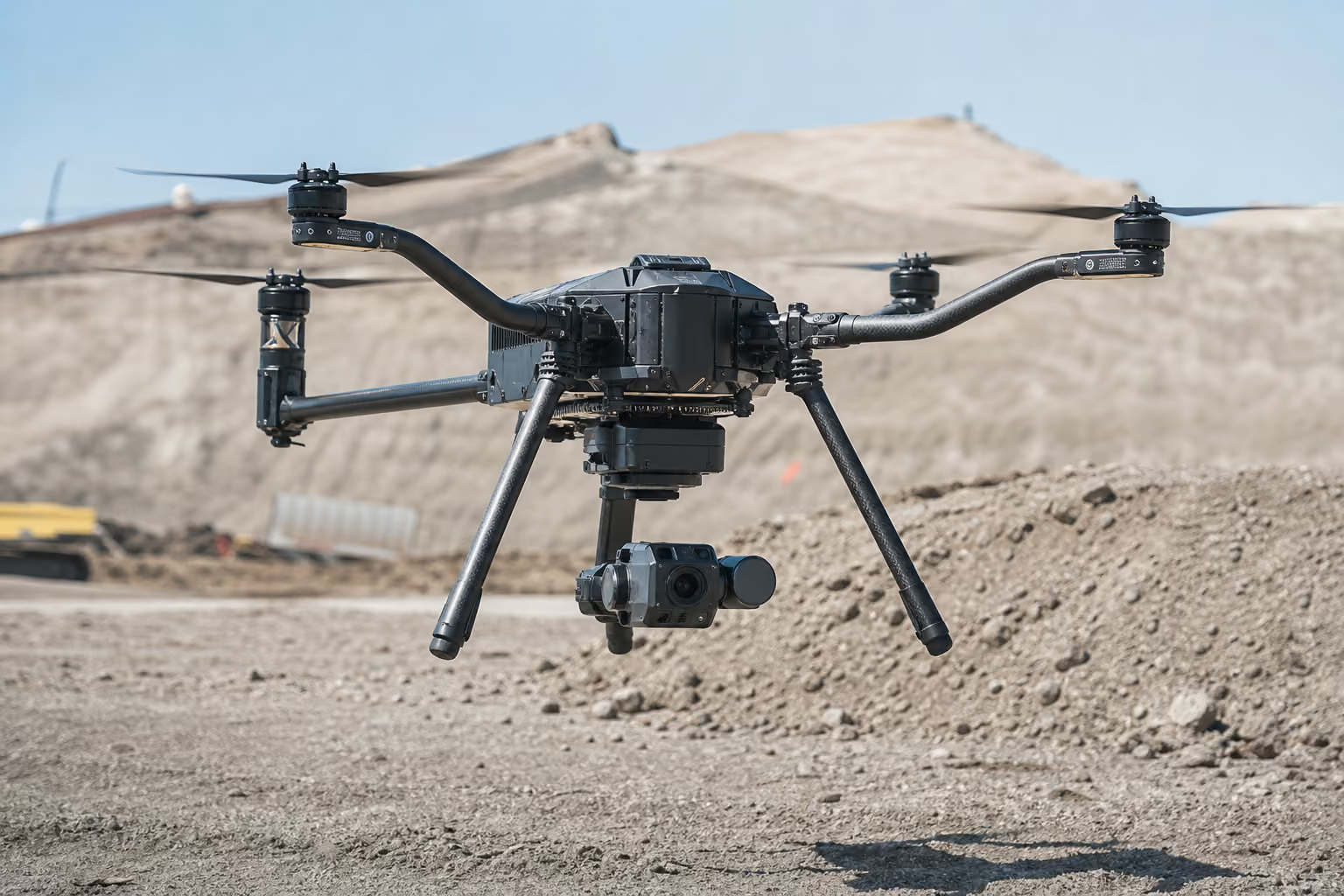
Coverage is based on the declared value of your aircraft, including payload. If you're flying with a thermal camera or LiDAR sensor, that equipment needs to be in the declared value or you're underinsured. Many operators insure the frame and forget the sensor attached to it.
When liability-only leaves you exposed
The case for skipping hull is simple: you're a careful pilot. That's true for most operators. But careful doesn't eliminate flyaways from GPS interference, or mechanical failures mid-flight, or walking away from a job site without your aircraft.
The real question is whether you can absorb the replacement cost without it disrupting your business. For a $1,500 drone, most operators can. For a $15,000 to $75,000 commercial aircraft, most can't. If a job pays $2,000 and you lose a $15,000 drone on it, you didn't just lose money on that job. You lost your ability to work the next one.
What operators get wrong
The most common mistake is insuring at purchase price rather than current replacement cost. Drone prices shift, some models get discontinued, and a policy written two years ago may not cover what it actually costs to replace the aircraft today.
Payload coverage is another gap. Many policies cover the airframe but exclude third-party equipment. If you're flying with a rented or client-owned camera, check whether your policy extends to gear you don't own. It usually doesn't by default.
On-demand vs. annual hull coverage
Hourly and on-demand drone insurance policies focus primarily on liability. Hull coverage on short-term policies, where it exists at all, tends to have more limitations. For operators flying regularly, an annual policy with hull included typically offers better protection and a lower per-flight cost.
Run the numbers. If you're flying two or more jobs a month, annual commercial drone insurance with hull coverage will often cost less over a year than per-flight liability-only options. You can get a quote at SkyWatch.
Frequently asked questions
Does hull insurance cover flyaways?
Many policies cover flyaways caused by equipment malfunction or GPS interference. Some exclude flyaways attributed to pilot error. Check the exclusions section and ask your insurer directly before purchasing.
Does hull coverage include the payload?
Not automatically. Airframe-only coverage is the default for most policies. If you're flying cameras, thermal sensors, or LiDAR, declare those separately at replacement value or they won't be covered.
What's a typical deductible on drone hull coverage?
Usually between 5% and 15% of the declared aircraft value. On a $20,000 aircraft at 10%, you absorb $2,000 of any claim. Factor that into your comparison when choosing a policy.
Can I add hull coverage to an hourly policy?
Some providers offer it as an add-on. Coverage terms vary and are often narrower than a dedicated annual policy. If you're flying equipment worth protecting, an annual policy with hull built in is the more complete option.
Is hull insurance worth it for lower-cost drones?
If your aircraft costs under $2,000 to $3,000 and you can replace it without major disruption, hull coverage may not justify the premium. Start with solid liability coverage, and add hull once your equipment value makes the math work.