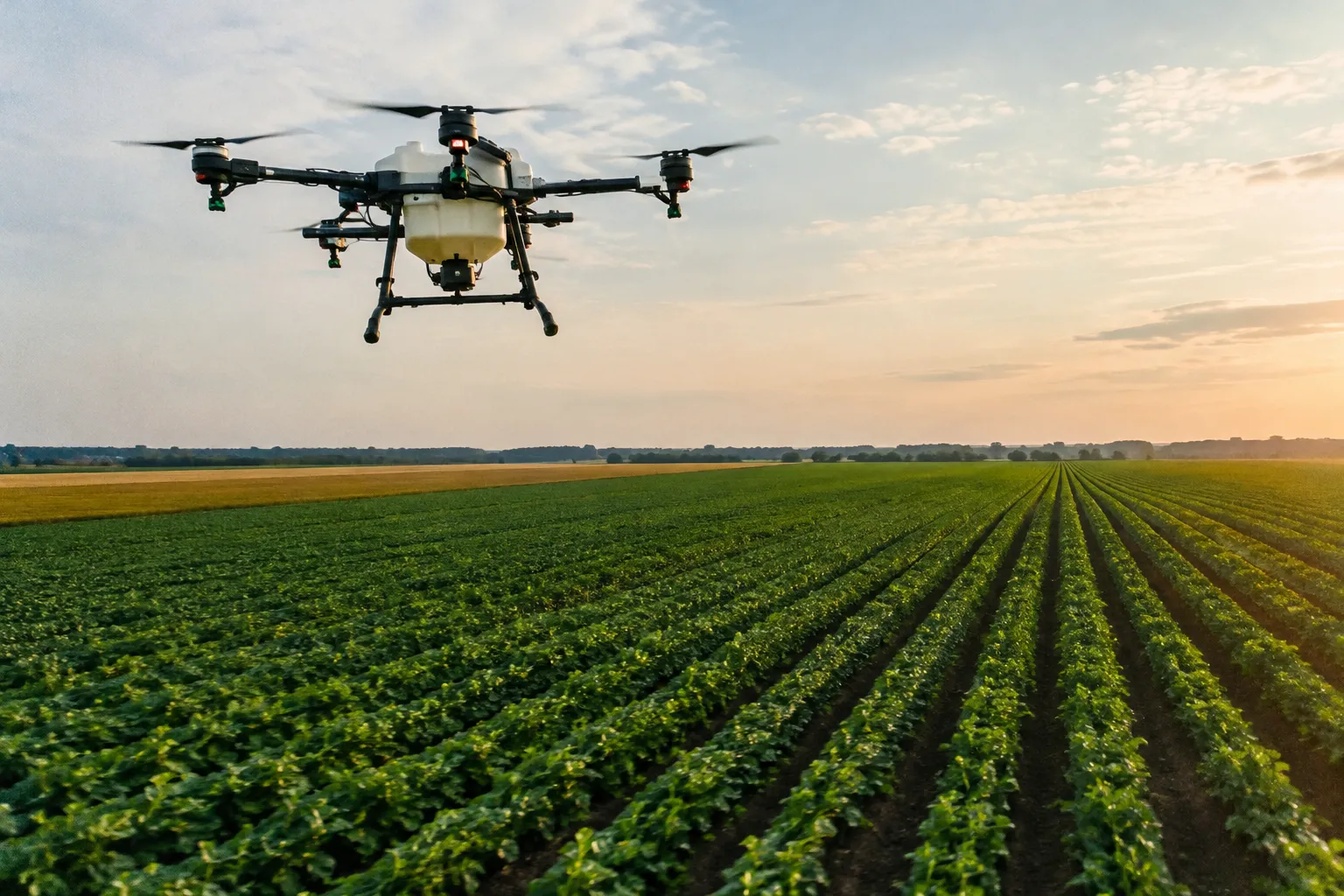
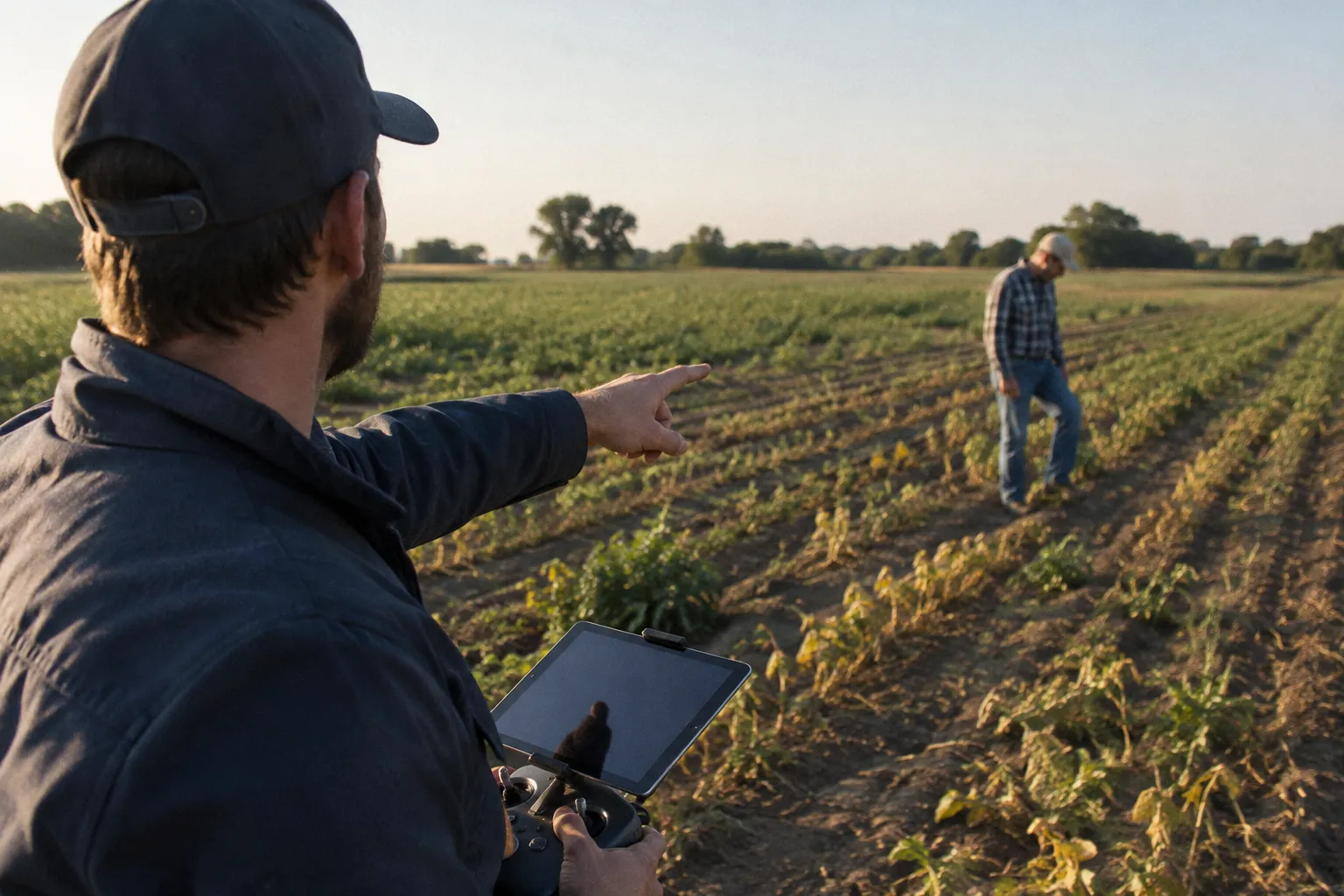
Spray drift is the claim nobody plans for. You're treating a soybean field, the wind shifts, and your neighbor's sweet corn catches the overspray. Now you have an angry phone call and a loss to sort out. This is where third party crop damage agriculture drone insurance earns its premium.
Plenty of operators assume their farm policy or their equipment coverage handles this. Often it doesn't. Hull coverage protects your aircraft. Liability coverage protects you from what the aircraft does to other people's property. Those are two different jobs.
Crop damage claims usually come from a short list of causes. Drift is the big one. Others include a crash into standing crop, a flyaway drone that lands in the wrong field, a mixing mistake, or sloppy swath overlap at a field edge. None of these requires bad intent. All of them can cost real money.
How Liability Coverage Responds When Your Drone Damages Someone Else's Crops
When a neighbor files a claim, your liability policy steps in on two fronts. It pays for your legal defense, and it pays damages you're legally responsible for, up to your policy limit. You don't have to fund a dispute out of pocket while you wait for answers.
Take a simple example. Your drone drifts herbicide onto 20 acres of corn that yields 200 bushels per acre. At $4.50 a bushel, that's $18,000 in lost crop before anyone talks about attorney fees. Neighbor crop damage drone liability claims scale fast because the value sits in the field, not in a repair bill.
Here's the part people miss. Coverage depends on how the policy is written. Standard general liability often carries a pollution exclusion, and chemical drift can fall right into it. That's why you want ag drone insurance built for aerial application, not a generic business policy stretched over the work. Good ag drone crop damage coverage names spraying and spreading as covered operations.
Accidental crop damage drone insurance is aimed at sudden, unintended events. A gust you couldn't predict, a signal loss, a nozzle failure. It won't cover deliberate acts, and it won't cover work that breaks the rules. Flying without the right certifications, applying a product off-label, or ignoring label wind limits can give an insurer grounds to deny a claim.
We've issued more than 300,000 commercial drone insurance policies, and we work with underwriters who specialize in ag drone operations. That matters because spray work is not treated like photography or roof inspection. The underwriters know what drift looks like, what a reasonable buffer is, and how these claims actually get resolved. If you want the broader picture beyond ag work, our drone insurance page covers the other coverage types.
Limits deserve a hard look. A $1 million limit sounds big until a high-value specialty crop is involved. Orchards, vineyards, seed corn, and organic acreage can be worth far more per acre than commodity row crops. Match your limit to the most expensive thing within drift range of your jobs, not the average field.
Then there's your paper trail. Keep flight logs, wind and temperature readings, product labels, and field maps showing buffers. If a claim lands, this record is your best evidence that you acted carefully. It can also speed things up. A tidy file gets answers faster, and that's where we hear back from customers most. Our nearly perfect 5-star customer support rating comes largely from helping operators through exactly these moments.
One more habit costs nothing. Talk to the neighbors before you spray. Ask what they're growing and where their sensitive plots sit. A five-minute conversation can prevent a claim, and it makes a bad day less ugly if something still goes wrong.
Finally, read the policy before you need it. Look at how it defines covered operations, what it says about chemicals, and whether crop damage is named or merely implied. Ask your provider to walk you through a drift scenario. A good one will answer plainly. Solid third party crop damage agriculture drone insurance should leave you with no guesswork about what happens after a bad pass.
Frequently Asked Questions
Does third party crop damage agriculture drone insurance cover chemical drift?
It can, but only if the policy covers aerial application and doesn't carry a broad pollution exclusion. Many general liability policies exclude chemical drift. Confirm in writing that spraying and spreading are covered operations.
How much does ag drone liability insurance cost?
Cost depends on your limit, acreage, products applied, and experience. Many operators pay a few hundred to a few thousand dollars per year. Higher limits and specialty crop exposure raise the price.
Will my farm policy cover damage to a neighbor's crops from my drone?
Often not. Farm policies commonly exclude aircraft or limit coverage for drone operations, and they may exclude commercial application. Check for an aircraft exclusion, and consider a dedicated drone liability policy.
What is not covered under accidental crop damage drone insurance?
Intentional damage, off-label chemical use, and operating without required licenses or certifications are commonly excluded. Damage to your own crops and your own aircraft is also outside third-party liability. Hull coverage and first-party endorsements handle those separately.
Get a quote at skywatch.ai