
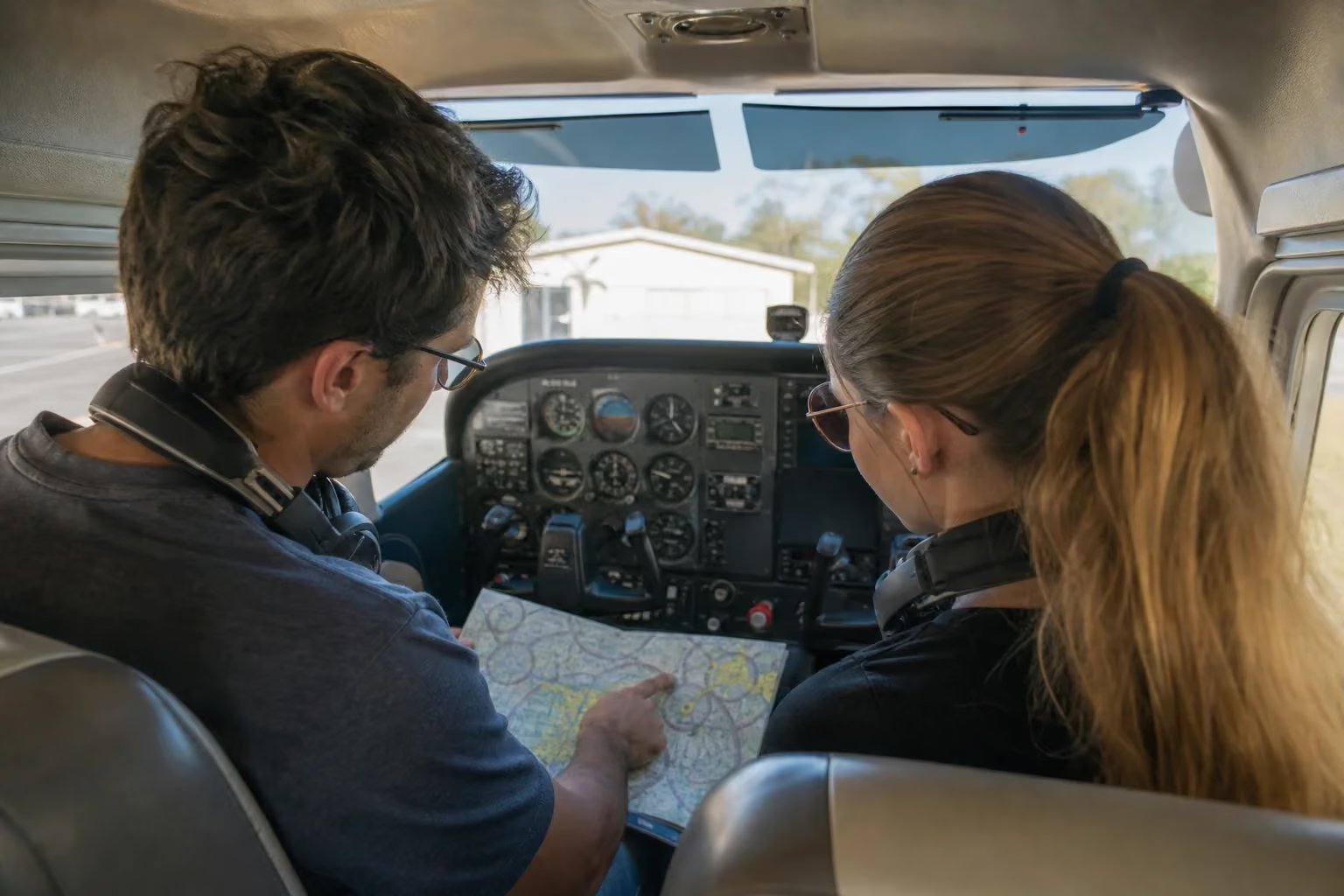

The FAA lets you split costs with passengers on a private flight. Most renter pilots know this. What fewer of them know is that their non-owned aircraft insurance policy may see that arrangement very differently.
Before you invite someone along and ask them to chip in for fuel, it is worth understanding exactly what FAA rules permit and where your insurance coverage stands.
What FAA rule 61.113 actually says
Under FAR 61.113, a private pilot cannot act as pilot in command for compensation or hire. The rule does carve out an exception for cost-sharing, but it comes with conditions that are easy to misread.
The exception allows you to share the operating expenses of a flight with passengers as long as the pilot pays at least their pro-rata share. So if three people are on the flight, the cost gets split three ways and the pilot covers one third. The pilot cannot be reimbursed more than their own share, and the flight has to be a common-purpose trip, meaning everyone on board has a reason to make that specific flight, not just the pilot.
Where pilots get into trouble is treating this as an open-ended arrangement. Posting on social media asking strangers if they want to fly somewhere and split costs is not cost-sharing under 61.113. That is closer to charter, and it puts you outside the private pilot exception entirely.
Where your insurance gets complicated
Most aircraft renters insurance policies are written for private, non-commercial flight operations. The standard language in many non-owned policies includes an exclusion for any operation that constitutes compensation or hire.
The question is whether cost-sharing triggers that exclusion. The answer depends on the specific policy wording and, in some cases, how your insurer interprets the arrangement.
A true 61.113 cost-share where each passenger pays their pro-rata portion and the pilot is not profiting is generally considered a private operation. Most policies written for renter pilots treat this as within scope. But not all policies are written the same way, and a few use broader exclusion language that could create ambiguity.
The situation that creates real risk is when the cost-sharing looks more commercial than the FAA exception allows. A pilot who regularly flies passengers to destinations and collects payment, even at cost, starts to look like an air taxi operation to an insurer. If a claim comes in after one of those flights, the commercial-use exclusion becomes a genuine problem.
What student pilots and low-time private pilots should know
Student pilots cannot exercise the 61.113 cost-sharing exception at all. Solo flight means solo, and a student pilot taking on a passenger, paid or otherwise, is operating outside their certificate. A student pilot insurance policy reflects that scope, and any flight outside those parameters is unlikely to be covered.
For newly certificated private pilots, cost-sharing is legally available but worth approaching carefully. If you are renting from a flight school and you bring along a passenger who contributes to the rental cost, most schools will want to know. Some rental agreements have clauses about passengers and compensation that interact with the school's own insurance requirements.
How to know where your policy stands
The cleanest way to get an answer is to read the exclusions section of your policy. Look for language around compensation, hire, or commercial operations. If the exclusion is broad, call your insurer and ask directly whether a 61.113 cost-share falls inside or outside covered operations.
This is worth doing before the flight rather than after. An insurer's opinion on a hypothetical is not binding, but it gives you a clear picture of where you stand. If you fly cost-sharing trips regularly, it may be worth making sure your policy language specifically addresses it.
For CFIs who receive payment for instruction, the commercial operation question is already answered. A dedicated CFI non-owned policy is built for compensated operations, and it handles the instruction context correctly. A standard renters policy is not the right tool for a paid CFI.
The practical bottom line
Cost-sharing under 61.113 is legal and widely practiced. For most renter pilots doing a straightforward pro-rata split on a genuine shared-purpose flight, the coverage picture is clear. The area that deserves more attention is when the arrangement starts to look organized, frequent, or profit-adjacent.
Your non-owned aircraft insurance is there for the unexpected. Knowing in advance that your specific flights fall inside your policy scope is a lot better than finding out after something goes wrong.
Frequently asked questions
Can I take a passenger on a cost-sharing flight if I have renter's insurance?
In most cases yes, as long as the flight qualifies under FAR 61.113 and your policy does not contain broad commercial-use exclusions. Check your policy's exclusions section and confirm the arrangement is a true pro-rata cost-share, not a for-hire operation.
Does FAR 61.113 apply to student pilots?
No. Student pilots cannot use the cost-sharing exception. Solo student flights must be flown alone, and carrying a passenger regardless of payment falls outside a student pilot certificate.
What is the pro-rata share rule?
If there are three people on the flight including the pilot, costs get divided by three. The pilot must pay at least one third. The pilot cannot collect more than their proportional share of expenses.
Can a CFI use the 61.113 cost-sharing exception for instruction flights?
No. A CFI receiving payment for instruction is already operating in a compensated capacity. A standard renters policy is not the right coverage for compensated CFI work. A dedicated CFI non-owned policy is.
What should I look for in my non-owned policy before a cost-sharing flight?
Find the exclusions section and look for any language referencing compensation, hire, or commercial use. If the wording is broad or unclear, contact your insurer directly and ask whether a 61.113 pro-rata cost-share falls within covered operations.