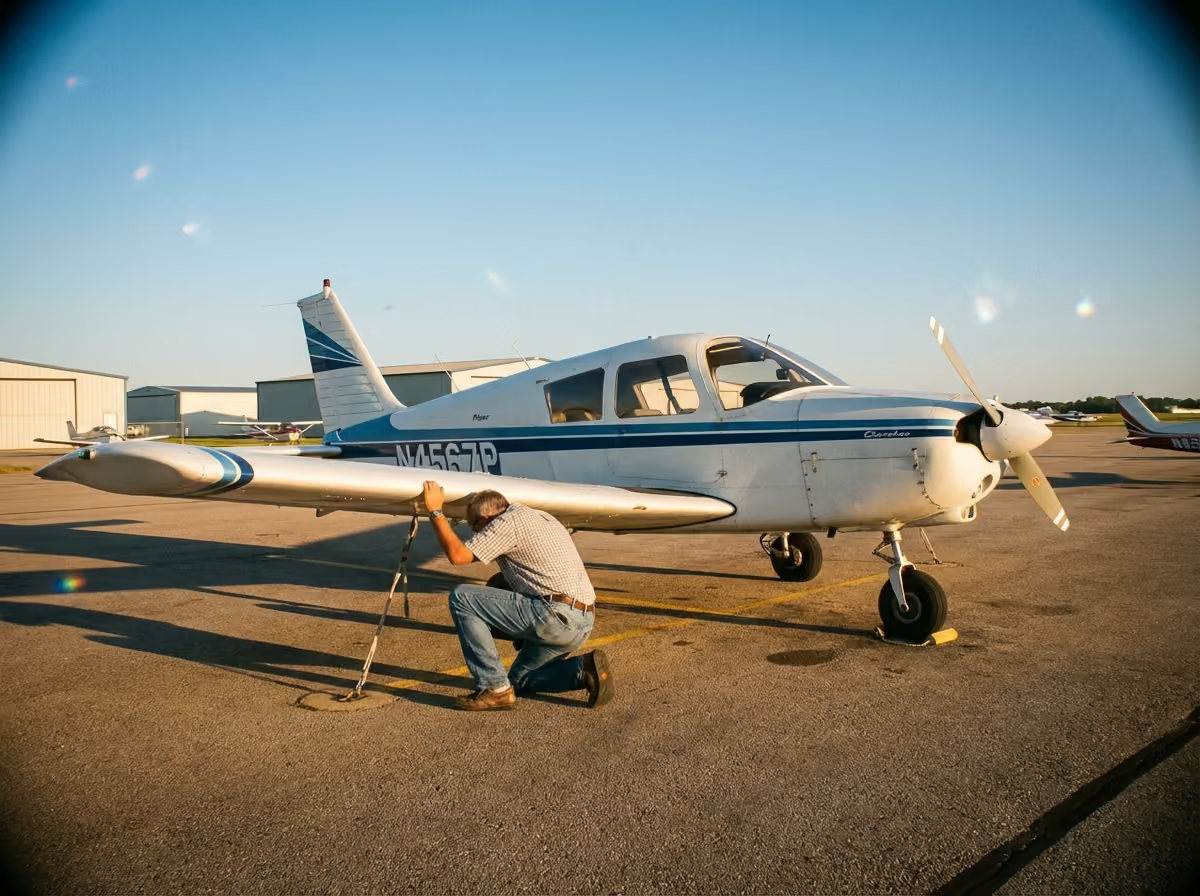

You've just bought a Piper Arrow after years of flying a Cessna 172, and the excitement is real. Then the insurance quote arrives. The premium is more than double what you paid on the 172, and the underwriter hasn't even met you. It feels arbitrary, but there is a clear logic behind it. Understanding how your logbook affects your rates is one of the most practical things you can do as an aircraft owner.
What Underwriters Actually Look At
Aviation insurance underwriters are not guessing. They are working from actuarial data tied to specific risk variables. When you apply for owner aircraft insurance, here is what gets weighed:
- Total flight time. More hours generally mean more experience, but total time matters less than you might expect if those hours were all in one aircraft type.
- Time in make and model. This is the single biggest factor. Underwriters want to know how many hours you have specifically in the aircraft you are insuring. Low time in type, even for an experienced pilot, drives premiums up significantly.
- Ratings and endorsements. Holding an instrument rating is treated as a meaningful risk reducer across most carriers. Complex and high-performance endorsements also matter when you are stepping into a more capable aircraft.
- Retractable gear. Gear-up landings are one of the most common and expensive general aviation accidents. Retractable gear aircraft carry a premium penalty, and it is not small.
- Hull value. The more your aircraft is worth, the larger the potential payout. Higher hull values mean higher premiums, even at the same percentage rate.
The Numbers Behind the Rates
For a pilot with solid experience in a fixed-gear Cessna 172 or similar trainer, annual premiums often fall around 1 to 1.5 percent of hull value. Step up to a retractable-gear aircraft like a Piper Arrow or Mooney, and that range can jump to 1.5 to 3 percent, sometimes higher, depending on time in type.
A practical example: a $100,000 Arrow insured at 2 percent of hull value runs $2,000 a year. The same pilot insuring a $60,000 Cessna 172 at 1.2 percent pays $720. The aircraft type and hull value together create that gap, not just the pilot's skill level. That is why building time in type before your renewal date can have a measurable impact on what you pay for single-engine aircraft insurance.
Practical Ways to Lower Your Premium
There are things within your control that can move your rate in the right direction:
- Build time in type deliberately. Log hours in your aircraft before your policy renews. Even 25 to 50 additional hours in type can shift you into a better rate bracket with many carriers.
- Get your instrument rating. Beyond the safety benefit, an IFR rating signals to underwriters that you have invested in your training. Most carriers reward it with lower rates.
- Use a broker, not a single carrier. Going direct to one insurer means one quote. A broker shops across multiple underwriters and knows which ones are more competitive for your specific aircraft and pilot profile.
- Set hull value accurately. Over-insuring increases your premium without adding real protection. Use current market values and be precise.
- Consider flexible coverage options. If you are a lower-hours owner or fly seasonally, on-demand and pay-per-month policies can align your coverage costs with your actual flying.
At SkyWatch, we built our platform specifically for aircraft owners who want coverage that reflects how they actually fly. Get an instant quote and see how your logbook translates into a rate that makes sense for you.