The comprehensive inspection checklist that protects aircraft buyers from costly mistakes


The Decision That Defines Your Ownership Experience
You've found the perfect aircraft. The photos look great. The seller says maintenance is up to date. The price seems fair. You're ready to write a check.
But before you transfer ownership, there's one step you absolutely cannot skip: a comprehensive pre-buy inspection. This inspection determines whether you're buying a well-maintained aircraft or inheriting someone else's maintenance problems.
At SkyWatch, we insure aircraft owners across the country. We've seen buyers discover major issues during pre-buy inspections that saved them from terrible purchases. We've also seen buyers who skipped inspections and spent $30,000 on unexpected repairs in their first year of ownership.
Here's what every pre-buy inspection should cover and why this investment protects everything that follows.
Why Pre-Buy Inspections Aren't Optional
An annual inspection confirms an aircraft meets minimum airworthiness standards. A pre-buy inspection goes deeper, evaluating the aircraft's actual condition, maintenance history, and potential future issues.
The seller's annual inspection doesn't protect you. Annual inspections focus on regulatory compliance, not revealing every issue a buyer should know about. Mechanics performing annuals work for the current owner, not you. Their job is confirming airworthiness, not uncovering problems that might affect your purchase decision.
A pre-buy inspection works for you. The mechanic's job is finding issues you need to know about before you commit. This includes problems that don't ground the aircraft but will cost you money soon.
Choosing Your Pre-Buy Inspector
The right inspector makes all the difference. You want someone with specific experience in the aircraft type you're buying. A mechanic who's worked on hundreds of Cessna 172s knows where problems hide. A generalist might miss type-specific issues.
Don't use the seller's mechanic. Even honest mechanics have conflicts of interest when their regular customer is selling an aircraft. Find your own inspector, preferably one recommended by other owners of the same aircraft type.
Location matters too. Having the aircraft flown to your mechanic's shop is ideal. If that's not practical, find a qualified mechanic near where the aircraft is located. But make sure they're working for you, not just coordinating with the seller's operation.
The Comprehensive Airframe Inspection
A thorough airframe inspection examines structural integrity, corrosion, and previous damage history. This goes beyond visual checks to include detailed examination of critical areas.
Structural Components
Wing spars, fuselage stringers, and control surfaces all need careful evaluation. Previous damage repairs require special attention. Was the repair done correctly? Does it meet manufacturer specifications? Are there signs the damage was more extensive than initially addressed?
Your inspector should remove inspection panels to access areas not visible during routine inspections. Corrosion often hides in areas owners rarely see. Wing attach points, belly skin, and battery compartments are common problem areas.
Control Systems
Flight control cables, pulleys, and bellcranks wear over time. Your inspector should check cable tension, examine pulleys for wear, and verify control surfaces move freely through their full range without binding or excessive play.
Control surface hinges and attach points need inspection for wear and security. These components are critical for flight safety and expensive to replace if problems develop.
Landing Gear
Whether fixed or retractable, landing gear components take significant stress. Inspectors should examine gear legs for cracks, verify proper rigging, check brake systems, and assess tire and wheel condition.
Retractable gear systems require additional scrutiny. Hydraulic systems, actuators, and gear doors all need functional testing and visual inspection. Problems here can be expensive to repair.
Engine and Propeller Deep Dive
The engine represents your largest maintenance cost over time. A thorough engine evaluation during pre-buy can prevent catastrophic financial surprises.
Compression Tests
Compression testing reveals cylinder health. Low compression indicates worn rings, valves, or cylinder damage. Perfect compression (75-80 PSI on an 80 PSI scale) is ideal. Anything below 60 PSI deserves investigation.
But numbers alone don't tell the whole story. How compression drops during testing matters. A cylinder that drops to 62 PSI but holds steady might be fine. One that drops to 65 PSI and continues falling indicates a problem.
Borescope Inspection
A borescope allows visual inspection inside cylinders without disassembly. Your inspector should examine all cylinders for scoring, carbon buildup, valve condition, and piston condition.
This non-invasive inspection catches problems before they become emergencies. Discovering a damaged cylinder during pre-buy gives you negotiating leverage. Discovering it 20 hours after purchase costs you thousands.
Oil Analysis
If possible, request recent oil analysis reports. These lab tests identify metal contamination indicating internal engine wear. Elevated iron suggests ring wear. Aluminum indicates bearing problems. Silver often means accessory gear issues.
Trend analysis is more valuable than single samples. Gradually increasing metal content might be normal wear. Sudden spikes indicate developing problems.
Time and Overhaul Status
Know the engine's time since major overhaul (SMOH) and remaining time to TBO (time between overhaul). An engine at 1,800 hours SMOH with 2,000-hour TBO means a major expense looms.
Don't just look at total time. How was the engine operated? Regular flying preserves engines better than sitting. An engine with 1,200 hours flown consistently might be healthier than one with 800 hours flown sporadically.
Propeller Condition
Propellers need inspection for blade damage, hub condition, and maintenance status. Small nicks can be dressed out, but deep blade damage requires professional repair or replacement.
Check propeller logs for overhaul history and AD compliance. Some propellers have life limits or recurring inspection requirements that affect long-term costs.
Avionics and Electrical Systems
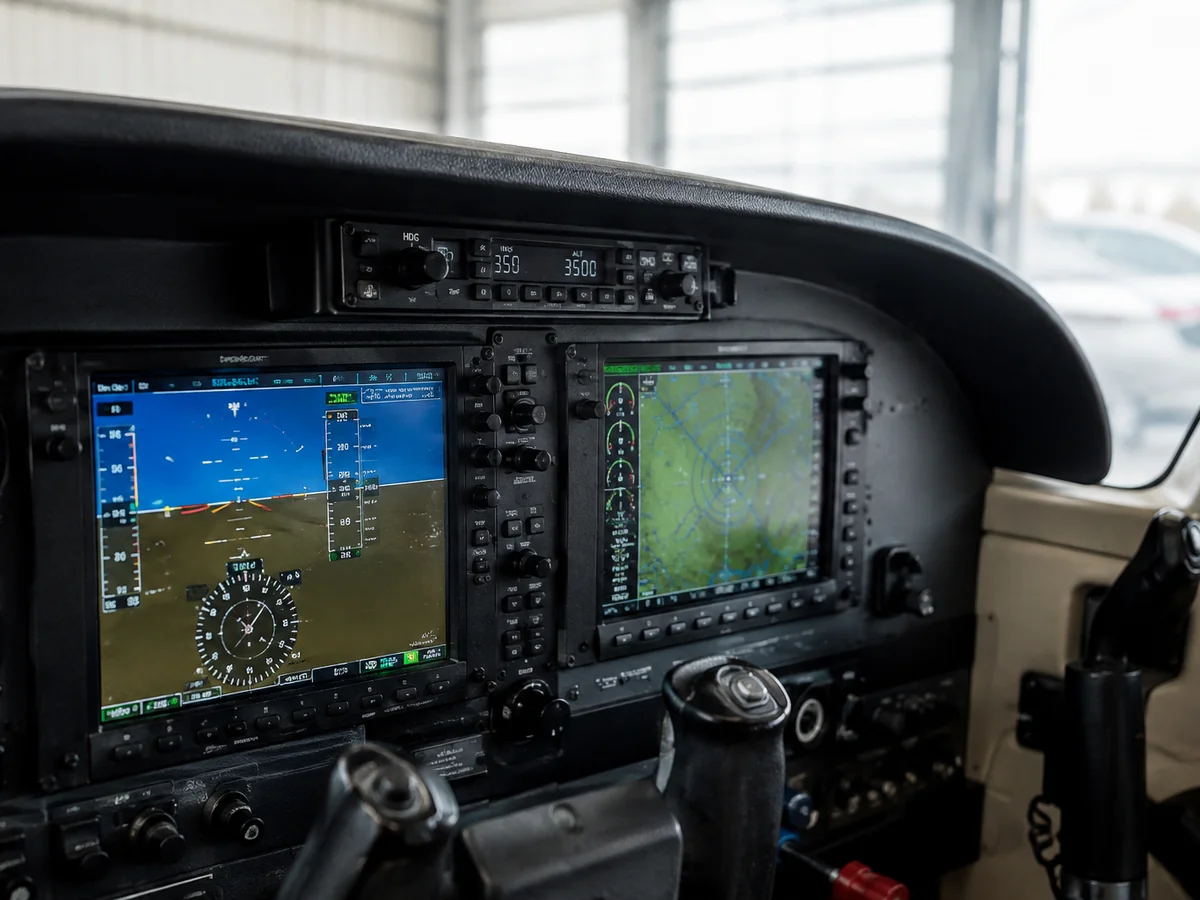
Modern aircraft depend on reliable avionics and electrical systems. Your pre-buy should include functional testing of all installed equipment.
Navigation and Communication
Test all radios, navigation equipment, and transponders. Verify GPS databases are current or budget for updates. Check that autopilot functions properly if installed.
If the aircraft has an IFR GPS, confirm the database subscription status and what updates cost annually. These recurring costs add up over ownership.
Panel Condition
Examine instrument panel condition and organization. Outdated or poorly installed equipment affects both utility and resale value. Major panel upgrades cost $20,000 to $50,000 or more.
Electrical System Health
Test alternator output, battery condition, and electrical load management. Older aircraft often have marginal electrical systems that struggle with modern avionics loads.
Check for signs of previous electrical problems: burned wires, makeshift repairs, or bypassed circuit breakers all indicate potential issues.
Logbook Deep Dive
Aircraft logbooks tell the maintenance story. Your inspector should review all airframe, engine, and propeller logs thoroughly.
AD Compliance
Verify all applicable Airworthiness Directives are properly documented and complied with. Missing or inadequate AD compliance can ground the aircraft and cost thousands to correct.
Some ADs require recurring compliance. Ensure these are up to date and will remain your responsibility after purchase.
Major Repairs and Alterations
Any major repair or alteration requires FAA Form 337. These should be present in the logs with supporting documentation. Unsigned or poorly documented repairs create certification headaches.
Previous damage history matters for insurance and resale. Major damage repairs can affect insurance rates and make the aircraft harder to sell later.
Maintenance Patterns
Look for consistent, professional maintenance. Regular oil changes, timely inspections, and prompt attention to squawks indicate a well-maintained aircraft.
Gaps in maintenance, deferred items, or multiple shops performing work might indicate problems. Ask why the owner changed mechanics frequently or let maintenance slide.
Test Flight Evaluation
If the aircraft is insurable and legally flyable, a test flight reveals things ground inspection cannot.
Engine Performance
Does the engine start easily? Are all parameters (oil pressure, temperature, RPM) normal? Does it develop full power? Any unusual vibrations or sounds?
Flight Characteristics
How does the aircraft handle? Does it fly straight? Do controls feel normal? Are there any unusual vibrations or handling qualities?
Systems Operation
Test all systems in flight: radios, navigation equipment, autopilot, lights, and any other installed equipment. Problems that don't show on the ground often appear in the air.
What Issues Should Kill the Deal
Not every problem discovered during pre-buy means walking away. But some issues are serious enough to end negotiations.
Undocumented major repairs: If significant repairs lack proper 337 forms and supporting documentation, the aircraft's airworthiness is questionable. Fixing this can be impossible.
Extensive corrosion: Minor surface corrosion is repairable. Structural corrosion affecting wing spars, fuselage frames, or other critical components can be uneconomical to repair.
Non-compliance with ADs: If significant ADs are not complied with and compliance costs thousands, factor this into your decision. Some AD compliance issues can make an aircraft uninsurable.
Evidence of poor maintenance: If logbooks show years of neglect, deferred maintenance, and minimal inspections, assume expensive problems lurk everywhere.
Negotiating After the Inspection
Most pre-buy inspections find issues. The question is how significant they are and who pays to fix them.
Major discrepancies should result in either price reduction or seller repairs before closing. Don't assume you'll fix things cheaply after purchase. Get quotes for actual repair costs and negotiate accordingly.
For aircraft near engine TBO or with other major expenses looming, factor these costs into your offer. That $80,000 aircraft becomes a $110,000 aircraft when you add a $30,000 engine overhaul needed in 200 hours.
What a Thorough Pre-Buy Costs
Comprehensive pre-buy inspections typically cost $1,500 to $3,500 depending on aircraft complexity and inspection depth. This seems expensive until you consider what it prevents.
We've seen pre-buy inspections uncover $20,000 in immediate repairs needed. Others found engine problems that would have cost $40,000 to address. That $2,500 inspection fee saves tens of thousands by preventing bad purchases.
How This Affects Your Insurance
Your insurance application will ask about aircraft condition and recent inspections. A clean pre-buy inspection from a reputable shop helps secure better insurance rates.
Conversely, aircraft with known issues or questionable maintenance history can be difficult or expensive to insure. Some insurers won't cover aircraft with certain damage history or maintenance concerns.
At SkyWatch, we work with aircraft owners who've completed thorough pre-buy inspections. These owners know their aircraft's condition, understand what maintenance lies ahead, and can make informed decisions about coverage.
The Decision That Protects Everything After
Aircraft ownership is expensive. But it's significantly more expensive when you inherit someone else's maintenance problems. A comprehensive pre-buy inspection protects you from this scenario.
Don't let excitement about aircraft ownership push you to skip this step. Don't let sellers pressure you into accepting their annual inspection as sufficient. Don't try to save money by using less thorough inspections.
The few thousand dollars you spend on a proper pre-buy inspection is the best money you'll spend in aircraft ownership. It's the difference between buying an aircraft you'll enjoy for years and buying an expensive maintenance nightmare.
Your aircraft ownership experience starts with the pre-buy inspection. Make sure it's comprehensive, professional, and working for your interests, not the seller's.