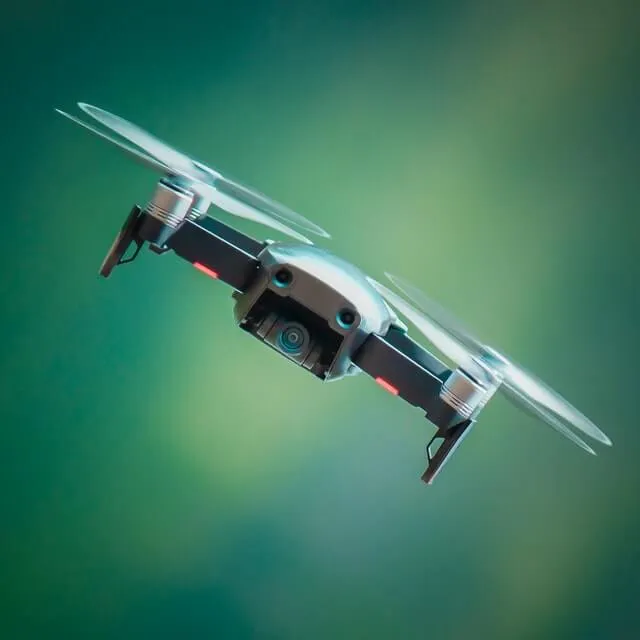
At Skywatch, we've had the privilege of issuing over 200,000 drone insurance policies, and we've witnessed the agricultural drone industry's explosive growth firsthand. Aerial application drones are revolutionizing farming, but with this innovation comes significant liability exposure. Whether you're spraying pesticides, dispersing seeds, or applying fertilizers, having the right insurance isn't optional - it's critical to protecting your business and the farmers you serve.
1. Understanding Chemical Liability Coverage Levels
General drone insurance often excludes coverage for chemical application. To be properly insured, you need a policy built specifically for aerial application operations.Chemical liability is the cornerstone of agricultural drone insurance, governed by FAA Part 137. There are three coverage types:
- Excluding Chemical (XC): Covers only seeds or fertilizers
- Limited/Restricted Chemical (LC/RC): Covers seeds, fertilizers, insecticides, and fungicides
- Comprehensive Chemical (CC): Covers virtually all chemicals, including defoliants and desiccants
The most common policy limit is "1/3/1" - $1,000,000 Combined Single Limit for non-chemical operations, with $100,000 for chemical bodily injury/property damage and $300,000 for bodily injury per occurrence. These limits reflect the substantial risks involved when chemicals drift or damage adjacent fields.
2. Top U.S. Agricultural Spray Drone Companies
Hylio AgDrones – A pioneering U.S.-based manufacturer designing precision agricultural spraying drones. Their flagship ARES series features autonomous and swarm-enabled capabilities, gaining notable FAA approval allowing a single operator to control multiple swarming drones simultaneously for spraying operations. This breakthrough technology dramatically increases coverage efficiency for large-scale farms.
Website: https://hylio.com/
Popular Model: ARES series (autonomous swarm-enabled sprayer)
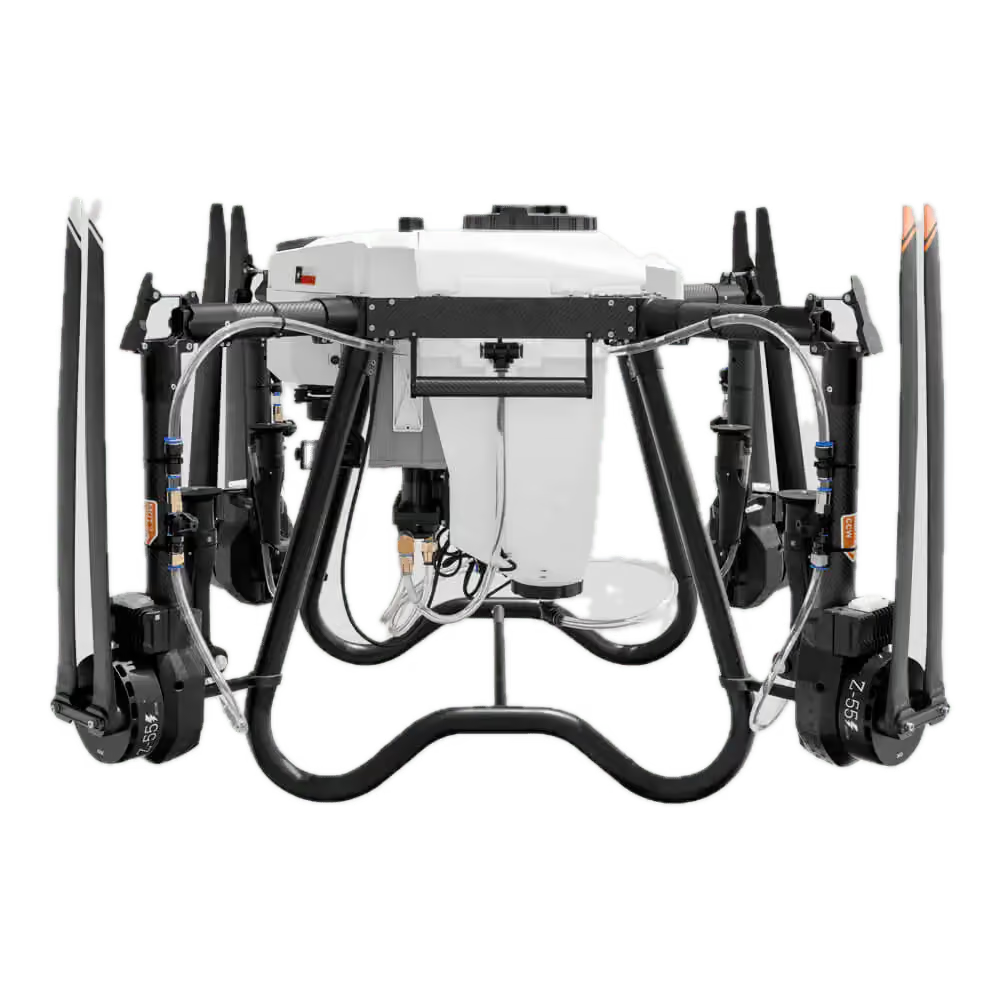
Draganfly (Precision Spray Drones) – A North American manufacturer offering customizable agricultural spray UAV platforms. Their precision application systems are designed for targeted crop spraying, allowing farmers to tailor drone configurations to specific operational needs and crop types.
Website: https://draganfly.com/
Services: Customizable precision spray UAV platforms
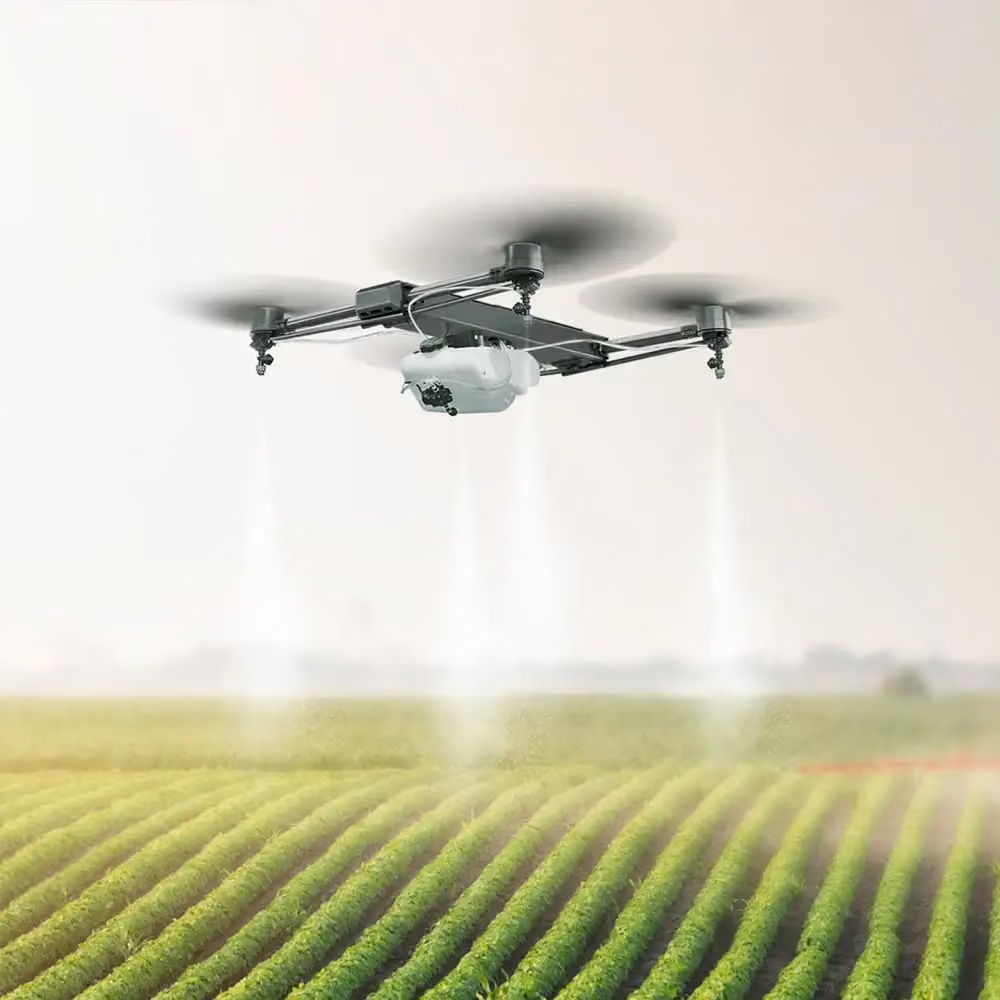
Agri Spray Drones LLC – A U.S. specialist in agricultural spray drone technology focused on delivering complete sprayer systems with comprehensive support, training, and field implementation for farmers. Their approach emphasizes turnkey solutions with ongoing operational support.
Website: https://agrispraydrones.com/
Focus: Full-service spray systems with training and support
.avif)
Accurate Ag Drones – A U.S.-based provider of agricultural spray drone services offering state-of-the-art spraying technology across large areas. They specialize in precision application services for commercial farming operations.
Website: https://accurateagdrones.com/
Services: Professional aerial spray services
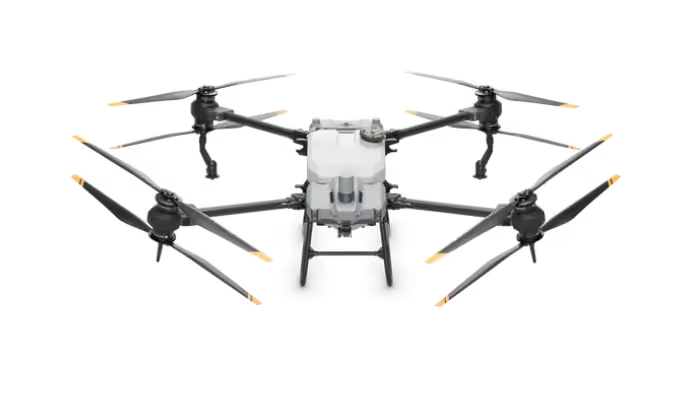
Vortex Advantage AG LLC – An American aerial drone spray service company offering precision pesticide, herbicide, and fertilizer applications for farms and ranches. Their focus on operational effectiveness has made them a trusted partner for agricultural operations across the U.S.
Website: https://vortexag.com/
Services: Precision chemical application services
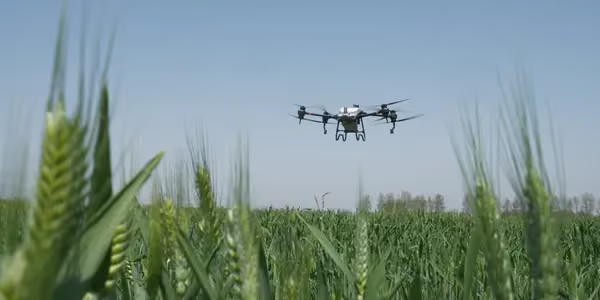
UAV-IQ – Based in Los Angeles, California, UAV-IQ specializes in aerial biological pest control via drones, offering a unique form of precision spraying for integrated pest management. Their biological control approach represents an eco-friendly alternative to traditional chemical spraying.
Website: https://www.uaviq.com/en/home/
Specialty: Biological pest control and integrated pest management

Notable Mention: DJI Agriculture – While Chinese-based, DJI's Agras series (including the T40 and T30 models) dominates the U.S. agricultural drone market with widespread adoption. Their proven technology and extensive dealer network make them a benchmark in the industry.
Website: https://ag.dji.com/
Popular Models: Agras T40, Agras T30 (market-leading spray drones)
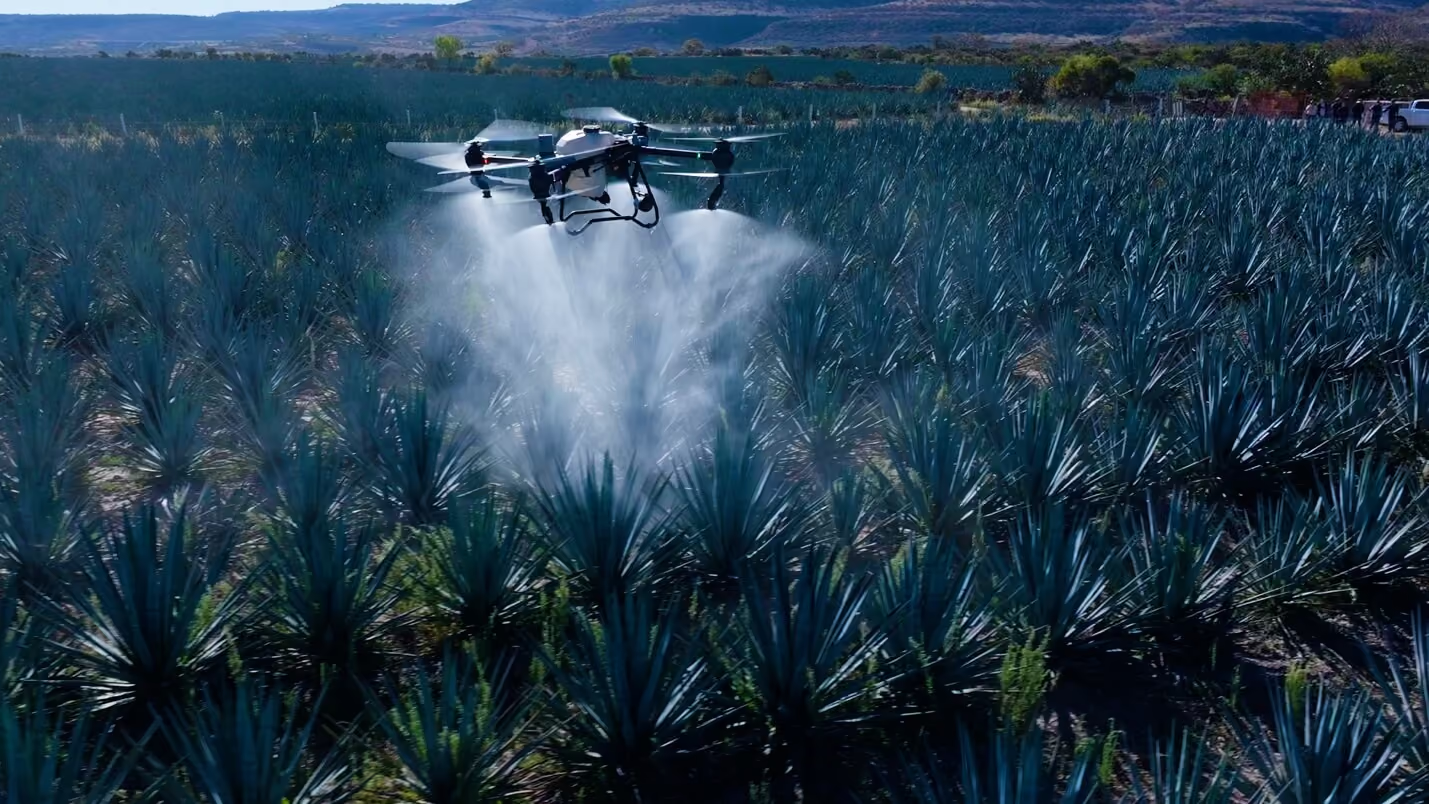
3. Critical Coverage Considerations
Beyond chemical liability, agricultural drone operators need:
- Drift Coverage: Protects when wind carries chemicals to unintended areas
- Adjacent Fields Coverage: Covers damage to neighboring properties
- Crops Being Treated Coverage: Protects the actual fields you're servicing
- Farmer, Owner, Grower (FOG) Coverage: Grants additional insured status to your clients
Premises liability is typically excluded but can be added via endorsement - essential if you operate from a fixed location.
4. Operational Use Cases Beyond Traditional Spraying
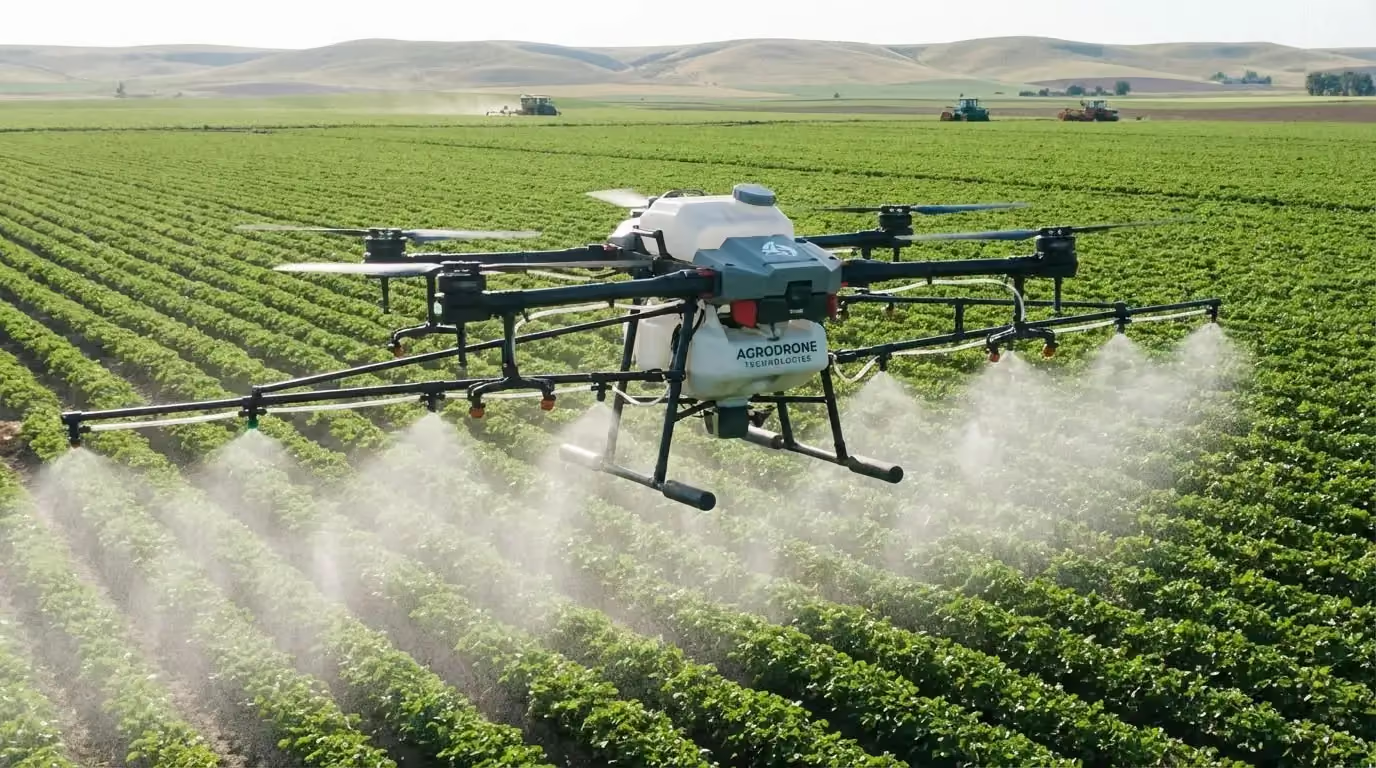
Agricultural drones aren't limited to pesticide application. Insurance should cover diverse operations including seed dispersal, fertilizer application, mosquito control, environmental restoration, aquaculture management, beneficial insect release, and even controlled burning support. Each operation carries unique risks requiring tailored coverage.
5. Regulatory Compliance is Non-Negotiable
All aerial application operations fall under FAA Part 137 regulations. Compliance isn't just about avoiding fines - it's an insurance requirement. Operators must maintain proper certifications, and many carriers require membership in the National Agricultural Aviation Association (NAAA) to demonstrate industry commitment.
Why Agricultural Drone Insurance Matters
Agricultural drone operations involve applying potentially hazardous chemicals over valuable crops and near populated areas. A single drift incident can destroy neighboring organic fields, contaminate water sources, or cause bodily injury - exposing you to lawsuits that could bankrupt your operation. Standard commercial drone policies exclude chemical application, making specialized coverage essential. With our experience across 200,000+ policies, we've seen how proper coverage protects businesses when the unexpected happens, ensuring you can continue serving farmers with confidence.
Frequently Asked Questions
What is the FAA Rule that governs Aerial Application?
FAR 137 - AGRICULTURAL AIRCRAFT OPERATIONS governs all aircraft, including drones, for the purposes of agricultural aircraft operations in the United States. This regulation establishes specific requirements for operating aircraft in agricultural operations, including pilot certification, aircraft registration, and operational standards. All aerial application drone operators must comply with FAR 137 to operate legally.
What are common limits of liability for policies that cover chemical liability?
The most common limit selected for aerial applicator drones is stylized "1/3/1." This limit is explained as $1,000,000 Combined Single Limit (CSL) for non-chemical liability, with Chemical Liability limits of $100,000 for Bodily Injury (BI) and Property Damage (PD), and a $300,000 limit for BI Any One Occurrence. Other common options include 50/100/50, $300,000 CSL, $500,000 CSL, and $1,000,000 CSL. Limits of $1,000,000 CSL and higher are incredibly rare and may not be available at all due to the elevated risks associated with chemical application.
Is Premises Liability Included?
It is most common for Premises Liability to be excluded on Aerial Application policies. This means coverage for incidents occurring at your business location (such as slip-and-fall accidents or property damage at your hangar or office) is not automatically included. However, Premises Liability is often purchased as an endorsement for an additional premium, which we recommend for operators who maintain fixed business locations where clients or vendors visit.
What types of chemicals can I apply with drone insurance coverage?
The chemicals you can apply depend on your coverage level. Excluding Chemical (XC) policies only cover seeds and fertilizers. Limited Chemical (LC/RC) policies extend to insecticides and fungicides. Comprehensive Chemical (CC) policies cover the broadest range, including herbicides, defoliants, and desiccants. However, certain restricted-use pesticides like Picloram may require special underwriting approval. Always verify your specific chemical coverage with your insurance carrier before operations.
Do I need special coverage for Farmer, Owner, Grower (FOG) clients?
Yes, FOG coverage is essential for agricultural drone operators. This endorsement grants Additional Insured status to the farmers, landowners, or growers for whom you perform work. Many commercial farming operations require this coverage as a contractual obligation before allowing aerial application services. FOG coverage protects your clients from liability claims arising from your operations, making it a critical component for securing contracts with larger agricultural businesses.