
Buying a Cirrus SR22 is one thing. Insuring it is another conversation entirely, and for many new owners it comes as a genuine shock. Whether you just closed on your first SR22 or you're still in the research phase, here's what you actually need to know about insurance costs, requirements, and how to avoid the most common mistakes.
Why Cirrus SR22 insurance costs more than you expect
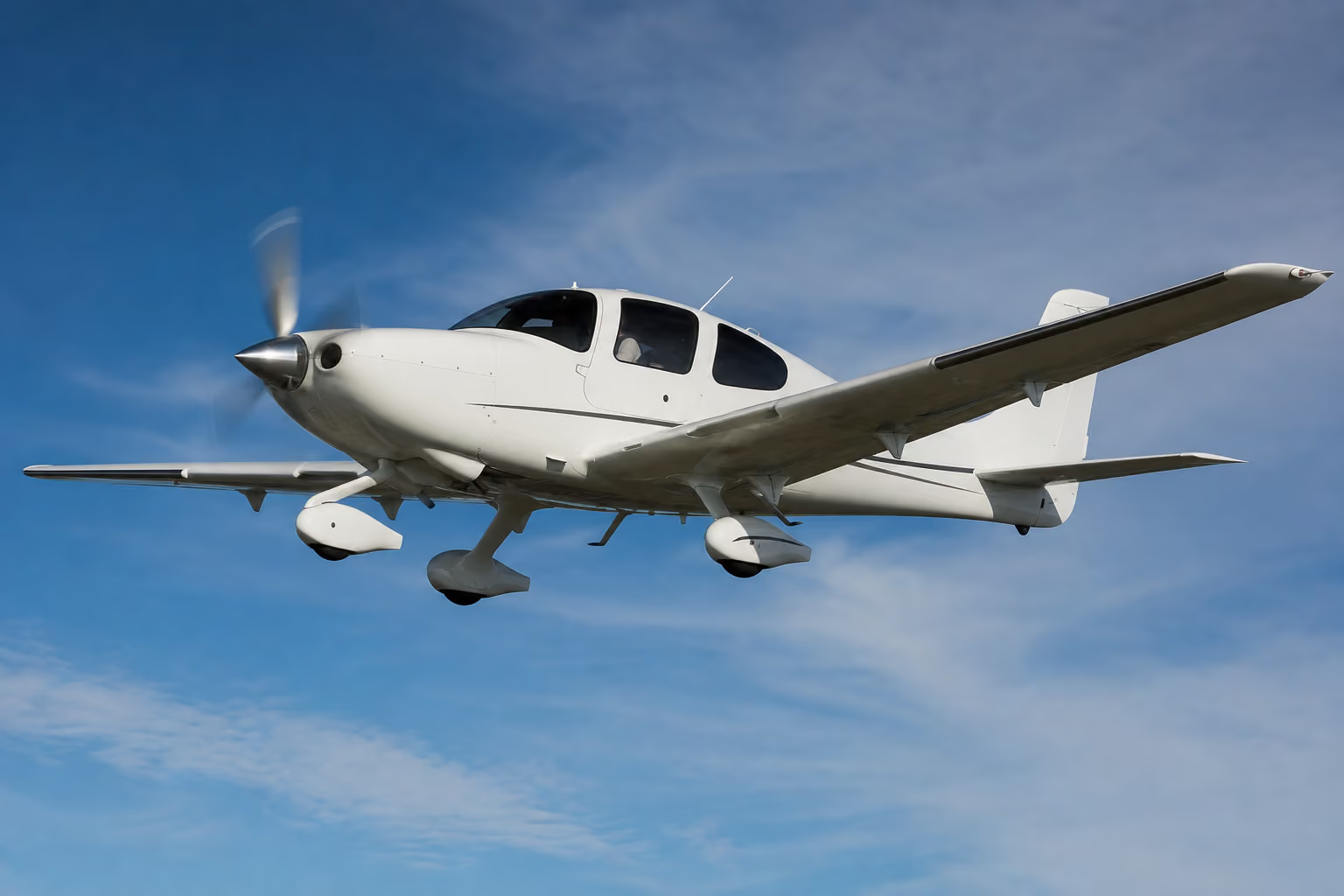
The SR22 is not a cheap aircraft to insure, and the reasons go beyond the hull value. Underwriters look at the combination of a high-performance airframe, a glass cockpit, and the pilot in the left seat. A low-time private pilot stepping into a $1.2 million G7 SR22T with no instrument rating and no Cirrus time in type is a very different risk profile than a 600-hour instrument-rated pilot who has completed the Cirrus Standardized Instructor Pilot (CSIP) transition program.
As a rough benchmark, expect to pay anywhere from 1% to 3% of the hull value annually. A $600,000 SR22 at 1.5% comes to around $9,000 per year. A brand-new SR22T at $1.2 million with a 100-hour pilot and no instrument rating can push $20,000 to $29,000. These are real numbers pilots report, and they reflect how differently underwriters price the same airframe depending on who is flying it.
What actually moves the needle on your premium
Several factors drive your annual premium up or down, and knowing them in advance lets you plan.
Total time and time in type. Most Cirrus underwriters look at your total flight hours and specifically how many you have in make and model. Coming in with zero Cirrus time is the most expensive starting point. Many insurers require a transition course before issuing a policy at all.
Instrument rating. This one matters more for Cirrus than almost any other single-engine aircraft. The SR22 is built for IFR flight, and underwriters price unrated pilots accordingly. Getting your instrument rating can drop your annual premium by several thousand dollars.
Cirrus transition training. The Cirrus Standardized Instructor Pilot (CSIP) program is not just a recommendation. Most insurers either require it or price in the assumption that you will complete it. Plan on four to five days and build it into your first-year budget.
Hull value. The SR22 range spans from older G2 and G3 models at $200,000 to $300,000 to factory-fresh G7 SR22Ts at over $1.3 million. The percentage rate may be similar, but the dollar amount is obviously very different. Buying an older model as a stepping stone aircraft is a legitimate cost management strategy.
Liability limits. Most policies start at $1 million combined single limit. Business use, flying passengers regularly, or flying into congested airspace often calls for higher limits. Umbrella or excess liability policies are available and worth asking about if your situation warrants it.
If you are looking at single-engine aircraft insurance more broadly, the SR22 sits at the premium end of the single-engine market in terms of both cost and coverage complexity.
The CAPS system and how it affects insurability
The Cirrus Airframe Parachute System is one of the most asked-about features when it comes to insurance. The honest answer is that CAPS is generally viewed as a net positive by underwriters, but it is not a silver bullet that cancels out low experience or missing ratings. CAPS has saved lives and insurers know it. What it does not do is eliminate the risk premium associated with a low-time pilot in a high-performance aircraft.
CAPS repack and inspection is required at regular intervals and costs roughly $1,000 or more depending on the aircraft generation. Budget for it as part of ongoing ownership costs rather than being caught off guard.
SR22 vs SR22T insurance: is the turbo worth it from an insurance standpoint?
The SR22T (turbocharged) commands a meaningfully higher hull value than the normally aspirated SR22. For a new pilot, this is not just a performance decision but a financial one. The premium on a $1.2 million SR22T with 300 hours total time and no instrument rating can be more than double what you would pay for a $400,000 G3 SR22 with the same pilot profile.
Many experienced owners recommend starting with an older normally aspirated SR22 specifically because the lower hull value makes the insurance math more manageable during the first few years of ownership. Once you have 500 or more hours, an instrument rating, and time in type, moving up to a turbo becomes considerably less painful from a premium standpoint.
Named pilots and open policies
Most SR22 policies are named-pilot policies, meaning coverage only applies when the listed pilots are flying. Adding a second pilot changes the math. If the second pilot is a CSIP or a highly experienced Cirrus pilot, they may actually lower your premium. If they are also low-time, the underwriter may rate each pilot separately and charge accordingly.
Open pilot warranties, which allow any pilot meeting a certain minimum qualification to fly the aircraft, are available on some policies but typically require higher baseline qualifications for the open pilot clause to apply. Ask your broker specifically about this if you plan to have multiple pilots fly your aircraft.
Business use and company-owned SR22s
Flying employees or clients changes your coverage needs. A company-owned SR22 used to transport personnel needs to be written differently than a personal aircraft. Liability limits typically need to be higher, and your broker needs to know upfront that the aircraft has a commercial purpose. Trying to cover business use under a personal policy is not just a coverage gap, it can void the policy entirely in the event of a claim.
For companies considering an SR22 as a travel tool, the total operating cost calculation needs to include a realistic insurance number. Factor in $10,000 to $15,000 per year as a starting point for a company policy with appropriate liability limits, and get actual quotes before finalizing the business case.
How to actually get good quotes
The Cirrus insurance market is narrower than it looks. A handful of specialty aviation underwriters dominate it, and the rates between brokers can differ more than you would expect depending on who has access to which markets. Working with a broker who specifically knows the Cirrus space makes a real difference.
Wings Insurance, based in Scottsdale and tied closely to Cirrus Aircraft's factory new sales process, is frequently mentioned as a strong option for new SR22 owners. Other aviation specialty brokers such as BWI Aviation Insurance, USAIG, and Global Aerospace also write Cirrus policies. Getting three to four quotes is not overkill, especially in your first year when the premium is highest.
SkyWatch offers aircraft insurance with instant quoting so you can see real numbers without the back-and-forth of a traditional broker process. It is worth running your numbers there alongside traditional quotes to see the comparison.
What your policy actually covers
A standard SR22 policy has two main components. Hull insurance covers physical damage to the aircraft. Liability coverage covers third-party property damage and bodily injury. Both parts matter and both should be reviewed carefully.
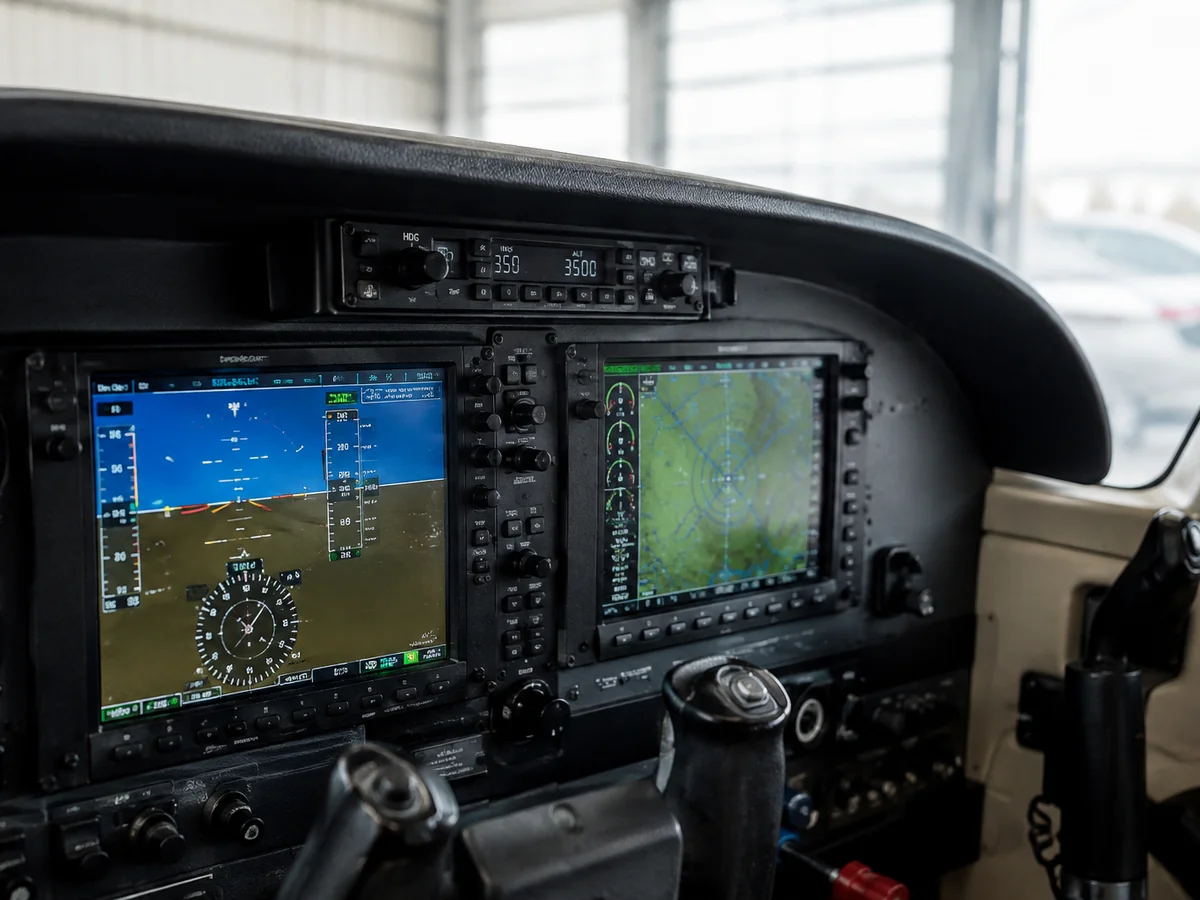
Pay attention to in-motion versus not-in-motion hull coverage. Most policies cover the aircraft while flying, but some have different terms for ground damage, hangar incidents, or taxiing accidents. Read the exclusions. Also confirm whether your avionics and glass cockpit upgrades are factored into the stated hull value. Many owners underinsure because they forget that a Perspective+ or G1000 NXi upgrade adds significant value.
Medical payments, personal injury, and passengers-for-hire exclusions are also worth reviewing with your broker. The FAA rules around compensation and hire are specific, and your insurance policy may have different definitions of what counts as commercial use.
Reducing your premium over time
The first year is the most expensive. After that, consistent logging of hours, completing your instrument rating if you do not have it, adding Cirrus-specific training, and staying incident-free all work in your favor at renewal. Most pilots see meaningful premium reductions between year one and year three as they build a track record and accumulate time in type.
A few specific actions that reliably move the number: completing a Cirrus pilot proficiency program (CPP) annually, adding an instrument rating, reaching 300 or 500 hour milestones, and working with a broker who will actively re-market your policy at renewal rather than just rolling it over.
If you are also in the market for aircraft renters insurance while you build time before purchasing, that is a much lower-cost way to get flying before committing to ownership.
Common questions pilots ask
Can I fly a friend's SR22 if I am listed as an additional insured? It depends entirely on the policy terms. Some named-pilot policies allow additional named insureds. Others do not. Do not assume coverage transfers just because you are friends with the owner. Get it in writing from their insurer before you fly.
Does a CFI riding along reduce my premium? Sometimes, particularly if that CFI is a CSIP. The arrangement needs to be disclosed to your insurer and structured correctly. Simply having a high-time pilot in the right seat without formal policy acknowledgment does not guarantee coverage for both occupants.
What happens to my premium if I add instrument training hours? Most insurers will adjust mid-term or at renewal once you have formally added the rating to your certificate. Notify your broker when you pass your instrument checkride. Do not wait until renewal.
Is the SR22 harder to insure than a Cessna 172? Yes, significantly. The hull value, performance envelope, and historical accident data on the SR22 create a different risk model than a 172. That said, the SR22's safety record has improved substantially, and with proper training and qualifications the insurance market is accessible. It just costs more.
For a broader look at what coverage options exist across different aircraft types, the aviation insurance overview at SkyWatch is a useful starting point.