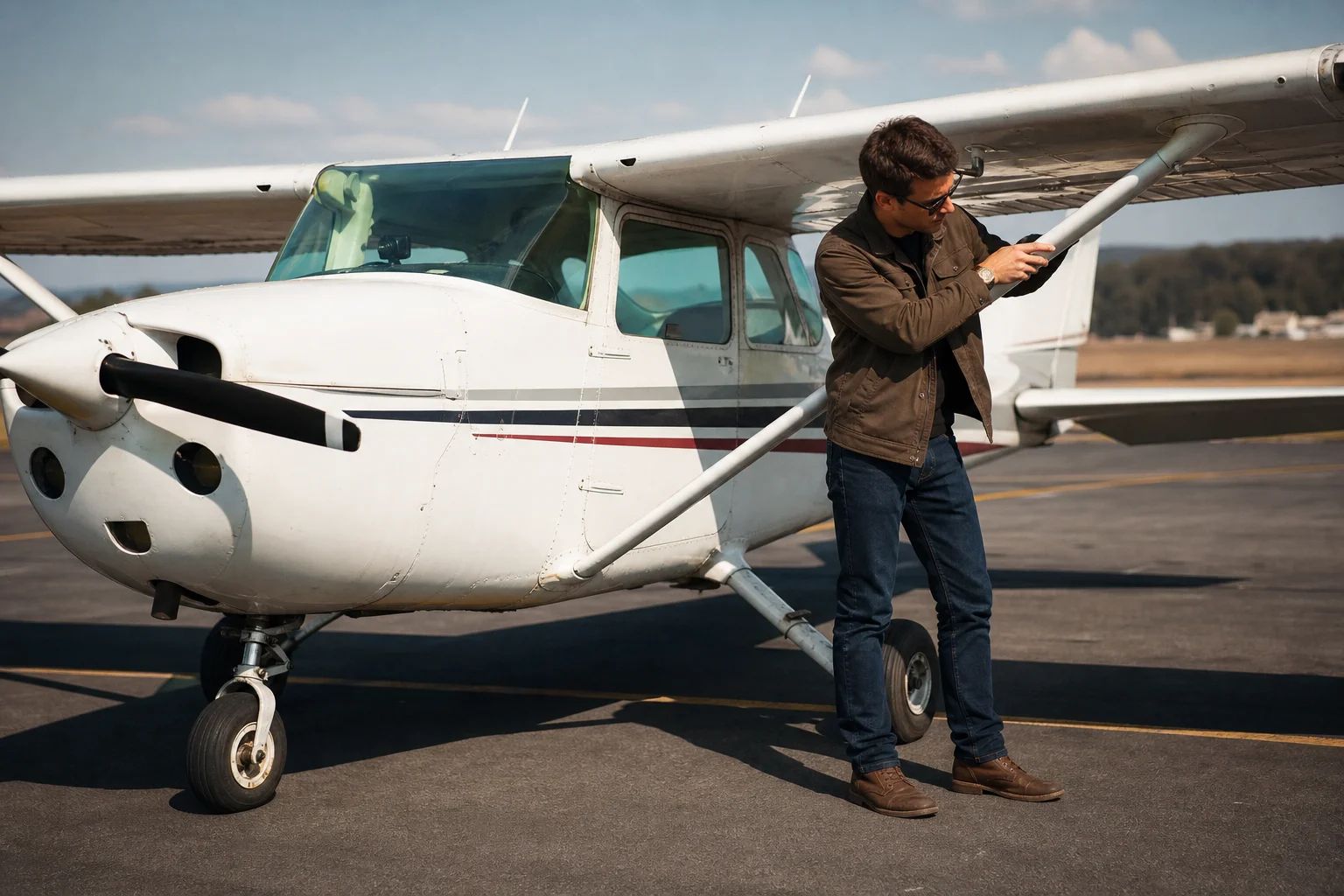

A lot of pilots assume that because the flight school has insurance on the aircraft, they are covered. It makes sense on the surface. The school owns the plane, the school carries the policy, so if something goes wrong during your rental, the school's insurance takes care of it. Right?
Not quite. And this misunderstanding has cost pilots serious money.
Here is what actually happens when you rent a plane and something goes wrong, and why carrying your own non-owned aircraft insurance matters more than most renters realize.
The flight school's insurance covers the flight school
When a flight school buys an aircraft insurance policy, that policy is designed to protect the school. It covers the aircraft itself (hull coverage) and provides liability protection for the school as a business. You, as the renter pilot, are typically listed as an approved pilot under that policy, which sounds reassuring, but there is an important distinction.
Being listed as an approved pilot means the insurance company will not deny a claim simply because you were the one flying. It does not mean you are a named insured with your own liability protection. It does not mean you are shielded from what happens next after a claim is paid.
What subrogation actually means for you
Subrogation is the process where an insurance company, after paying a claim, steps into the shoes of their insured (the flight school) and pursues the person responsible for the loss to recover what they paid out.
So here is the scenario: you rent a Cessna 172, you have a hard landing that causes prop strike damage and an engine teardown, the total repair bill comes to $35,000, the school's insurance pays it, and then the insurance company turns around and sues you personally to get that money back.
This is not hypothetical. It happens. The rental agreement you sign does not necessarily stop the school's insurer from coming after you. Most rental agreements cover what the school can waive, not what the insurer can pursue independently.
One commenter in a popular Reddit thread about renter insurance put it clearly: being listed on the school's policy protects the school from the insurer denying the claim. It does not protect you from subrogation.
What your own non-owned aircraft insurance actually does
An aircraft renters insurance policy, also called non-owned aircraft insurance, is a policy you carry for yourself. It provides two main things:
- Liability coverage in case you injure someone or damage property while flying a rented or borrowed aircraft
- Physical damage coverage for the aircraft itself, up to the policy limit you choose
On the liability side, a $1 million policy runs most pilots somewhere between $150 and $300 per year. That is the cost of a couple of hours of Hobbs time.
On the physical damage side, you can select limits that match what the school requires or what makes sense for the aircraft you are renting. If you are training in a Cessna 172 at a school that requires $100,000 in hull coverage, your own policy with that limit will respond first if you are found liable, and it will absorb the subrogation claim rather than your personal bank account.
Students and CFIs face the same exposure
Student pilots often assume they carry less risk because they are flying with an instructor. In some ways that is true, but once you are acting as pilot in command, even under instruction, you can carry liability. And once you are at the solo stage, your exposure is even more direct.
Flight student insurance is available and priced for early-stage pilots. You do not need a private certificate to get a policy. Most providers will cover you as a student, and the premiums reflect the lower hours and training context.
For CFIs, the situation is slightly different. When you are instructing in someone else's aircraft, whether it is the school's plane or a student's rented aircraft, your personal CFI insurance provides coverage that the aircraft owner's policy may not extend to you as an instructor. A dedicated CFI non-owned policy responds specifically while you are providing instruction.
What to check before your next rental
Before you fly a rented aircraft, a few things worth confirming:
- Does the school's policy include a waiver of subrogation for approved pilots? Ask directly. Not every school has this, and many do not know what their own policy says.
- What is the aircraft's insured value and what deductible are you responsible for under the rental agreement?
- Does your own non-owned policy cover the aircraft type and hull value you are flying?
If you cannot get a clear answer on the waiver of subrogation question, carry your own policy. The annual cost of an aircraft renters policy is almost always less than the deductible you would owe after a single incident.
Frequently asked questions
If I am listed as an approved pilot on the flight school's insurance, am I covered?
Being an approved pilot means the insurer will process a claim without excluding you as the cause. It does not make you a named insured, and it does not protect you from subrogation if the insurer pays a claim and then seeks to recover from you personally.
Can the flight school's insurance company come after me directly?
Yes. Through subrogation, the insurer can pursue the pilot responsible for a loss after they have paid the claim to the school. Your rental agreement with the school does not automatically stop this from happening.
How much does non-owned aircraft insurance cost?
Liability-only coverage at $1 million typically runs between $150 and $300 per year for most private pilots. Policies that include physical damage coverage cost more depending on the aircraft value and limits you select. Monthly and short-term options are also available for pilots who fly infrequently.
Do student pilots need their own insurance?
Yes. Most flight schools require some minimum level of coverage before solo, and even if yours does not, carrying your own policy protects you once you are acting as pilot in command. Student pilot insurance is available and priced for early training phases.
Does a CFI need non-owned aircraft insurance separately from the school's policy?
Generally, yes. When instructing in a non-owned aircraft, a CFI's personal exposure is not always covered under the aircraft owner's or school's policy. A dedicated CFI non-owned policy is the clean way to protect yourself while instructing in aircraft you do not own.