Ag drone operators face a coverage question that comes up constantly: how much is actually enough? The answer depends on more variables than most pilots expect. Field size, chemical payload, contract requirements, and the type of clients you work with all factor into what your policy should look like. Getting this wrong in either direction costs you. Too little coverage and one incident wipes out your season. Too much and you're bleeding margin on premiums that don't match your actual exposure.
At SkyWatch, we've issued more than 300,000 commercial drone insurance policies, and we see operators across the spectrum. Some are running small acreage jobs for a handful of local farms. Others are managing multi-county spray contracts with enterprise ag clients. The right agriculture drone insurance coverage limits for one operation look nothing like the right limits for another.
Matching Your Coverage to Field Size, Payload, and Client Contracts
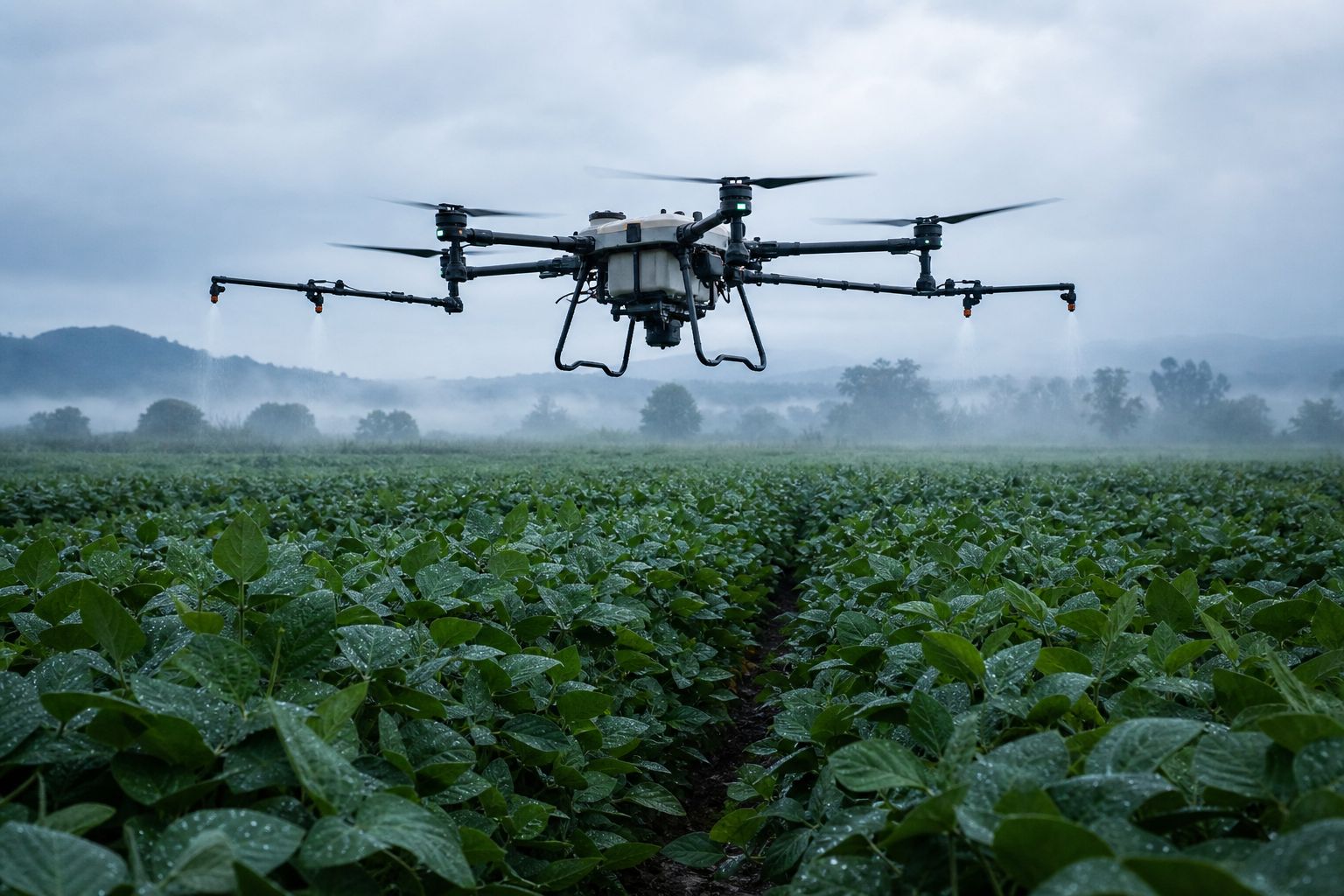
Start with the work itself. A drone applying fungicide over a 200-acre wheat operation carries different risk than one doing aerial imaging over a vineyard. Spray applications involve payload liability, potential crop damage from drift, and the possibility of hitting irrigation equipment or livestock. Each of those exposures should be reflected in your ag drone liability coverage.
Field size matters because larger operations typically mean larger potential losses if something goes wrong. If you're regularly working fields over 500 acres, a $1 million liability limit may not be enough to cover crop loss claims, equipment damage, and legal costs if a serious incident happens. Many commercial ag clients now require $2 million per occurrence as a baseline. Some enterprise contracts push that to $5 million. Before you settle on a number, read your contracts carefully. The required limits are often buried in the service agreement.
Payload is another factor that gets underestimated. Chemical application drones, sometimes carrying 40 liters or more per flight, introduce product liability exposure. If a spray drift event damages an adjacent organic crop, that claim can escalate fast. Your agriculture drone insurance should reflect that exposure, not just cover the drone itself. Hull coverage on a high-end spray drone running $15,000 to $30,000 needs to be part of the calculation too.
The question of how much drone insurance do I need gets easier to answer when you break it into separate buckets. Liability is one. Hull is another. If you have employees or subcontractors flying for you, non-owned aircraft liability becomes relevant. And if clients are providing data deliverables, professional liability starts to come into play. Not every ag operator needs all of these, but understanding what each covers helps you build a policy that fits the actual work.
We work with underwriters who specialize in ag drone operations, which means the policies we offer are built around the real exposures in this industry, not adapted from general aviation templates. That specificity matters when you're filing a claim. A policy that wasn't written with ag operations in mind may have exclusions that catch you off guard at the worst possible time.
Commercial drone insurance limits also need to track with your growth. If you're adding spray capacity, expanding into new states, or picking up larger contracts, revisit your coverage. A policy that worked well for last season may be underbuilt for where you are now. Coverage gaps tend to show up right after an operation scales up and before the pilot has updated their policy.
One thing worth knowing: drone insurance through SkyWatch is flexible enough to adjust as your operation changes. You don't have to lock into a fixed annual policy and hope it still fits in October. Our nearly perfect 5-star customer support is there when you need to make changes or ask questions about what your current coverage actually includes.
For most mid-size ag drone operators working spray applications on farms over 300 acres, a reasonable starting point is $1 million to $2 million in liability with hull coverage matching the replacement cost of your aircraft. Larger operations or those with enterprise contracts should plan for higher limits from the start. Agriculture drone insurance coverage limits aren't a set-it-and-forget-it decision. They're something to revisit every season as your contracts, equipment, and client base evolve.
If you're unsure where your current coverage stands, pull out your existing policy and compare it against your most recent service contracts. The gap between what clients require and what your policy provides is the number you need to close.
Frequently Asked Questions
What liability limits do most ag drone service contracts require?
Most commercial ag clients require a minimum of $1 million per occurrence in liability coverage. Enterprise farm operations and large corporate clients frequently require $2 million to $5 million per occurrence. Always review contract language directly, as coverage requirements vary by client and crop type.
Does agriculture drone insurance cover spray drift damage to neighboring crops?
Spray drift damage to third-party crops can be covered under ag drone liability policies, but coverage depends on the specific policy terms and whether chemical application is listed as a covered operation. Operators should confirm that their policy explicitly includes pesticide or herbicide application and check for any exclusions related to drift events.
How are agriculture drone insurance coverage limits different for spray drones versus imaging drones?
Spray drones carry higher liability exposure due to chemical payload, potential crop damage, and product liability risk. Imaging drones generally require lower liability limits since the primary exposure is equipment damage and data errors. Coverage limits for spray operations should account for the value of adjacent crops and the cost of regulatory compliance if a chemical incident occurs.
Is hull coverage included in standard commercial drone insurance policies for ag operations?
Hull coverage is not always included by default and is often purchased separately or as an add-on. For high-value spray drones costing $15,000 or more, hull coverage is strongly recommended. Operators should verify that the insured value reflects the actual replacement cost of the aircraft, including any specialized spray systems or sensors.
Get a quote at skywatch.ai.