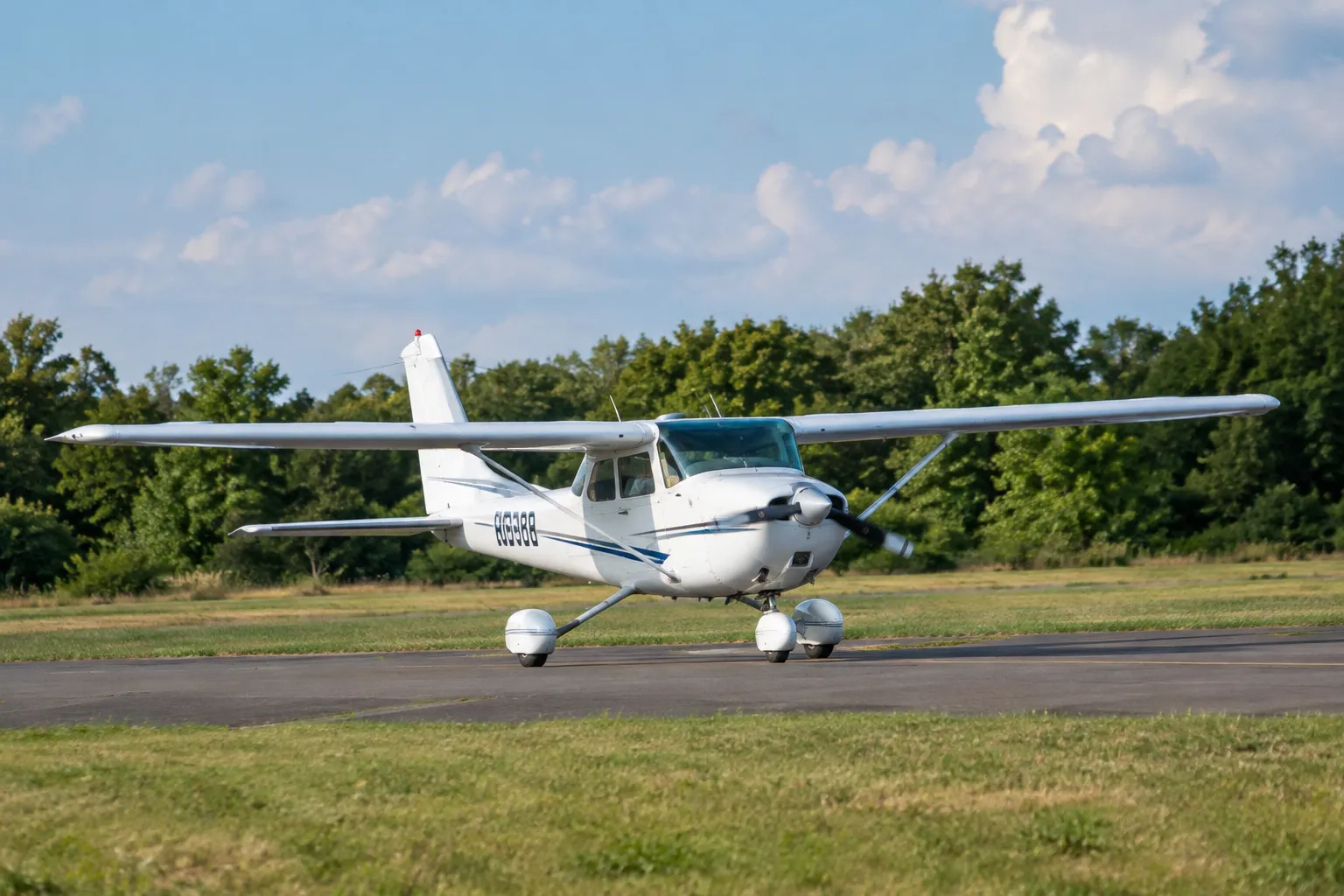


A lot of pilots assume that because the flight school carries insurance on its aircraft, they are covered too. It's a reasonable assumption. The school owns the plane. The school has insurance. If something goes wrong during your rental, you are probably fine.
That assumption has cost pilots a lot of money.
The flight school's policy is written to protect the school. The aircraft owner, the FBO, the flight school operator, these are the named insureds. When you rent a Cessna 172 and something happens, their carrier's first job is to make their client whole. Your financial exposure as the renter is a separate matter entirely.
The excess coverage problem
Here's how most aircraft renters insurance actually works: it sits on top of whatever the aircraft owner's policy pays out. Technically called excess coverage, your policy responds only after the primary coverage (the school's) is exhausted or doesn't apply to you specifically. That's fine as far as it goes, but it creates a gap that catches pilots off guard.
The school's policy may not extend liability protection to you as a named pilot. Many commercial flight school policies specifically exclude coverage for the individual renter. That means if there's a ground collision, a runway incursion, or property damage during your flight, the school's carrier may pay the claim and then turn around and come after you for reimbursement. This is called subrogation, and it's perfectly legal.
Subrogation is not hypothetical. It shows up in real claims. A pilot dents a wingtip on a fuel truck, the school files on their policy, the carrier pays the repair, and then the carrier's subrogation unit looks at who was operating the aircraft. If that's you, and you don't have your own student pilot insurance or renter's policy, you could be personally responsible for thousands of dollars.
What hull coverage requirements actually mean
Flight schools increasingly require renters to carry physical damage coverage, often called hull coverage, as a condition of renting. You might see a requirement for $50,000, $100,000, or more depending on the aircraft. A newer Cessna 172 can be worth $250,000 to $350,000 on the used market today. A Diamond DA40 or Cirrus SR20 costs more than that.
The school's policy typically covers their hull, but the deductible can be significant, anywhere from $2,500 to $10,000 or higher. The school may require you to cover that deductible as part of your rental agreement. Some schools go further and require you to cover a portion of the hull value outright, especially if their policy has limitations on student-operated flights.
Before you sign anything with a flight school, read the rental agreement carefully. Look for language about what you owe in the event of damage. Look for whether they waive subrogation rights against renters or not. Most don't. If the agreement is vague on this point, ask directly.
CFI coverage is a separate question
Flight instructors who teach in aircraft they don't own face the same exposure. When a CFI provides instruction in a school aircraft or a student's rental, they are operating as pilot in command in a non-owned aircraft. The school may or may not extend liability protection to the CFI through its policy. Many don't. A CFI insurance policy gives instructors their own liability coverage that travels with them regardless of which aircraft they're flying.
This matters more than it sounds. If a student makes an error during a lesson and the CFI is named in a liability claim, coverage under the school's policy may be contested. The CFI having their own coverage removes that ambiguity.
What your own policy actually does
A personal non-owned aircraft insurance policy gives you liability coverage that follows you as the pilot, not the aircraft. It covers bodily injury and property damage to third parties when you're operating as PIC in an aircraft you don't own. Some policies also include physical damage coverage for the aircraft itself, which addresses the hull requirement that many flight schools now impose.
At SkyWatch, we offer on-demand policies for renter pilots that you can start and stop based on when you actually fly. If you rent once a month, you pay for once a month. If you're in the middle of training and flying three times a week, you scale accordingly. There's no reason to carry an annual policy at full cost if your flying schedule doesn't call for it.
The core point is this: the flight school's insurance was not designed to protect you. It was designed to protect them. Your policy fills the gap between what their carrier will pay and what you could owe. That gap can be large enough to cause serious financial harm if you're not covered.
If you're renting aircraft or going through flight training, getting your own non-owned aircraft insurance is worth doing before your next flight, not after something goes wrong.
Frequently asked questions
Does the flight school's insurance cover me as a renter pilot?
Not necessarily. The flight school's policy is written to protect the school and its aircraft. It may not extend liability coverage to individual renters. If the school's carrier pays a claim related to your flight, they may pursue subrogation against you to recover that cost. Your own renter's policy provides liability protection that covers you specifically.
What is subrogation and how does it affect renter pilots?
Subrogation is when an insurance carrier that paid a claim seeks reimbursement from the party responsible for the loss. If you damage a school aircraft, their insurer pays the claim, then looks at who was flying. If the rental agreement doesn't include a waiver of subrogation against renters, the carrier can come after you directly. Your own policy covers you in this scenario.
How much hull coverage do I actually need to rent from a flight school?
Requirements vary by school. Many require between $50,000 and $150,000 in physical damage coverage. The best approach is to ask the school for their exact requirement before purchasing a policy, then match or exceed it. Some on-demand policies offer coverage tiers that let you choose the hull limit that fits the aircraft you're renting.
Do CFIs need their own non-owned aircraft insurance?
Yes, if they provide instruction in aircraft they don't own. The flight school's policy often does not extend full liability coverage to instructors. A CFI policy provides personal liability protection that follows the instructor regardless of which aircraft they're flying or which school they're teaching at.
Can I get short-term non-owned aircraft insurance instead of an annual policy?
Yes. On-demand aircraft renters insurance lets you purchase coverage by the day or month rather than committing to a full year. This is practical for student pilots who are in training and flying regularly for a defined period, or for certificated pilots who rent occasionally and don't need year-round coverage at full cost.