
One of the most common questions we get from pilots buying their first aircraft is some version of the same thing: "What should I expect to pay for insurance?" It sounds straightforward. It is not.
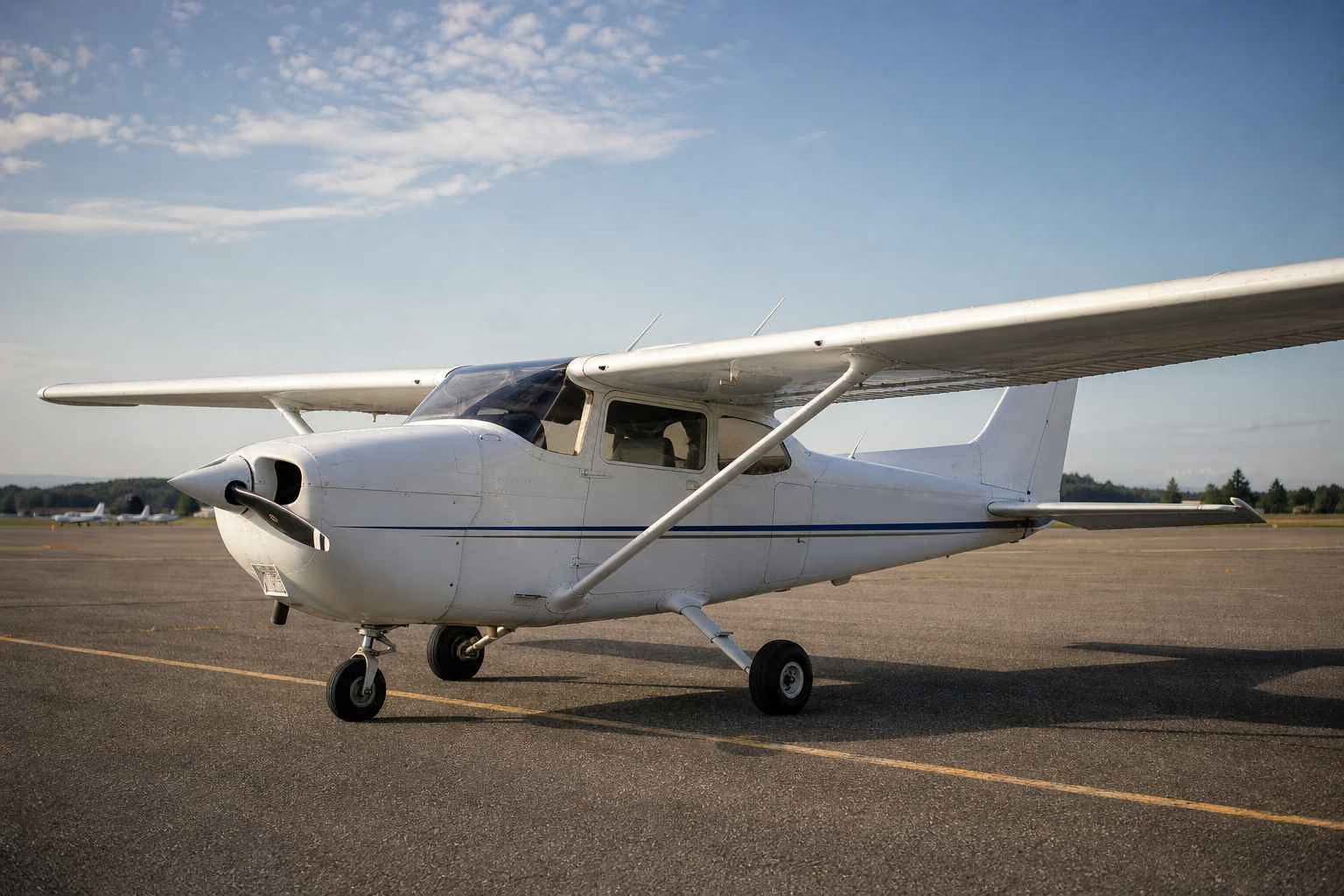
Aircraft insurance premiums vary a lot, and that's not a dodge. A Cessna 172 owned by a 500-hour private pilot with an instrument rating will cost somewhere between $1,200 and $2,500 per year. That same airplane owned by a 50-hour student fresh out of discovery flights? Closer to $3,500 or more. Add a retractable gear aircraft or a high-performance single into the mix and you're looking at a completely different set of numbers.
Here is what actually drives the cost, broken down in plain terms.
Your flight experience is the biggest variable
Underwriters look at total logged hours, hours in the specific make and model, and your ratings. Time in type matters more than people expect. If you have 1,000 hours total but just bought a Beechcraft Bonanza and have zero time in a retractable, expect your first-year premium to reflect that gap. Instrument ratings, on the other hand, tend to bring premiums down because statistically they improve safety outcomes in marginal weather.
The aircraft itself matters too
Insured hull value is a factor, but so is the aircraft type. Fixed-gear singles like the Cessna 172 or Piper Cherokee sit at the lower end of the cost range because of their forgiving handling and wide pilot base. Retractables cost more to insure. High-performance aircraft cost more still. Part of this reflects the cost of hull damage claims, part reflects the statistical risk profile of pilots stepping into more complex machines.
As a rough guide, annual premiums often fall somewhere between 1% and 2% of the insured hull value for experienced owners, and can run 3% or more for newer pilots or complex aircraft. These are starting points, not guarantees.
Liability limits and hull coverage are separate decisions
Most policies separate liability coverage from hull coverage. Liability protects you from third-party claims for bodily injury and property damage. Hull covers physical damage to the aircraft itself. Some owners with older, lower-value aircraft opt for liability-only policies and self-insure the hull. That can make sense when the hull value is low enough that a total loss wouldn't be catastrophic. For most owners with aircraft valued above $40,000 or $50,000, carrying hull coverage is usually worth the added premium.
Liability limits of $1 million per occurrence are common. Some owners go higher, particularly if they fly passengers regularly or operate near populated areas. We recommend talking through your specific situation rather than defaulting to minimums.
Other factors that move the number
Geographic location affects rates in some cases. Pilots flying primarily in mountainous terrain or through areas with limited alternate airports may see higher premiums. Hangar storage versus tie-down affects hull rates, sometimes meaningfully. Adding other pilots to your policy raises or lowers your rate depending on their qualifications, and the least-qualified named pilot on a policy tends to drive the overall rate.
The annual does not matter for underwriting purposes. What matters is what happened between annuals, specifically whether you've maintained currency and whether there are any claims on your record.
What you can do to lower your premium
Build time in type before you buy if possible. Get your instrument rating if you plan to fly cross-country with any regularity. Choose a hangar over tie-down if the option is available. Take a Wings course or complete a proficiency program. Some carriers recognize recent training as a rate-reducing factor. And when you shop, compare quotes from carriers who specialize in general aviation rather than general insurers who dabble in it.
SkyWatch makes it simple to get a real quote online, without sitting through a sales call. You enter your details, we run it through underwriting, and you get a number that reflects your actual situation. It takes a few minutes and there's no commitment.
If you own a single-engine aircraft and want to understand your options in detail, take a look at our single-engine aircraft insurance page. For owners of multi-engine aircraft, our multi-engine coverage section covers the specific factors that affect those policies. And if you're still in the early stages of figuring out aircraft ownership, our general aircraft insurance overview is a good starting point.
Frequently asked questions
How much does aircraft insurance cost per year on average?
For a straightforward single-engine aircraft like a Cessna 172 or Piper Cherokee, experienced pilots typically pay between $1,200 and $2,500 per year for full coverage. Less experienced pilots or those flying more complex aircraft will pay more. The range is wide because pilot experience and aircraft type drive the number significantly.
Does aircraft insurance go up with a high-performance or retractable aircraft?
Yes, both factors increase premiums. Retractable gear adds a common risk factor, and high-performance aircraft attract a higher rate because the cost of hull damage and the complexity of the machine both increase. First-year premiums in a new aircraft type tend to be higher and often come down as you build time in type.
Can I get aircraft insurance with low total hours?
Yes, though your options may be more limited and your premium will be higher. Some carriers require minimum hours or specific training before they'll offer coverage for certain aircraft types. Many also require a checkout with a certified flight instructor as a policy condition. Low-time pilots can still get solid coverage, and working with a carrier who knows general aviation makes a real difference.
What is the difference between hull and liability coverage in aircraft insurance?
Liability coverage pays for damage or injury you cause to third parties. Hull coverage pays for physical damage to your own aircraft. They're sold together in most policies but priced and structured separately. Some owners choose liability-only policies for lower-value aircraft and accept the risk on the hull themselves.
Does it cost more to add a second pilot to my aircraft insurance policy?
It depends on that pilot's qualifications. Adding a similarly experienced pilot can have little effect on your premium or even bring it down slightly. Adding a low-time pilot will raise your rate, often significantly, because insurers price the policy based on the least experienced named pilot. Think through who you plan to let fly before listing pilots on your policy.