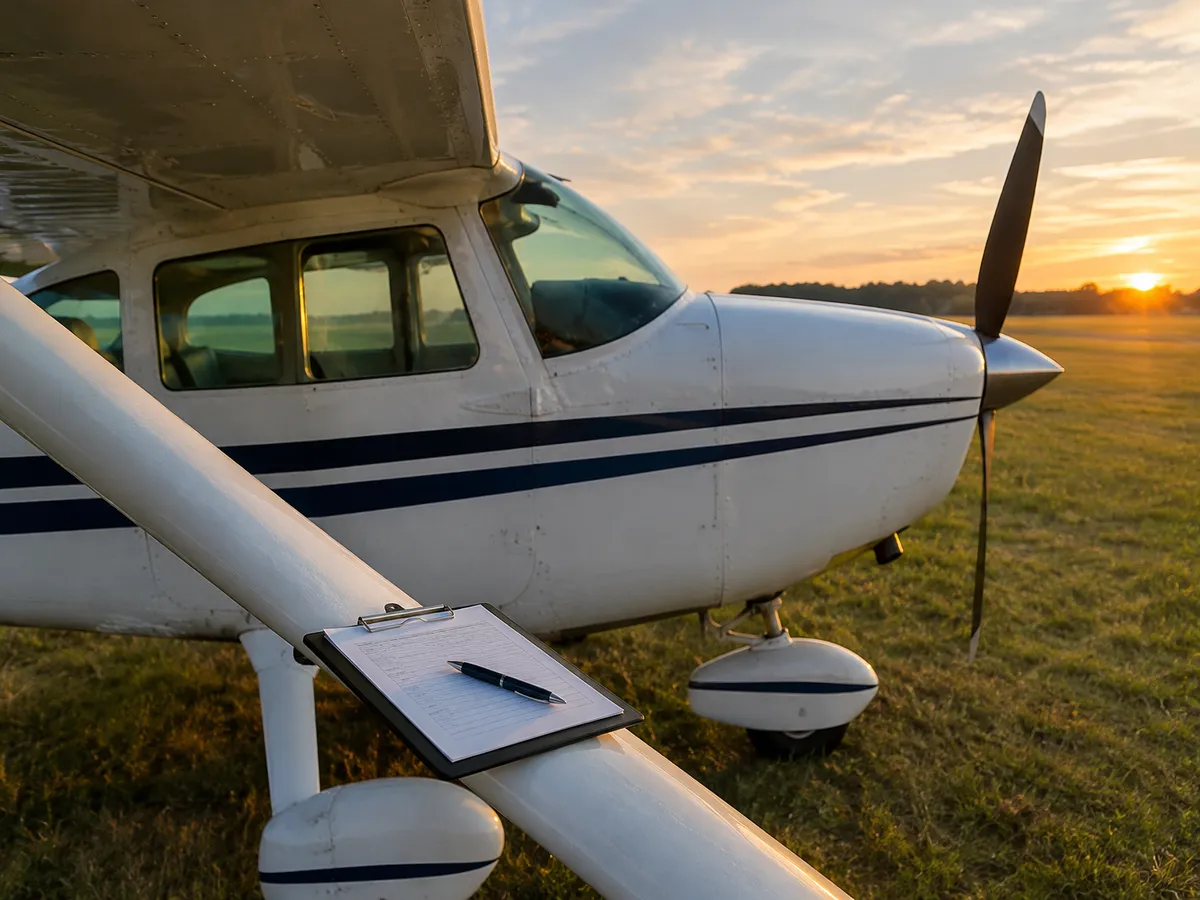

If you rent aircraft, here's something worth knowing before your next flight: the school's insurance policy does not protect you. It protects the school. Once their insurer pays out a claim, they can come after you personally to recover every dollar.
That process is called subrogation. It's one of the most misunderstood concepts in aviation, and it catches renters off guard regularly.
How subrogation works
When an insurance company pays a claim, they inherit the right to sue whoever caused the damage. If you damage a C-172 and the school's insurer covers the $40,000 repair, that insurer can now pursue you for $40,000. Your name is not on the school's policy. You're just the person who caused the loss.
Aviation insurers exercise subrogation regularly, especially on high-dollar losses.
What the school's policy actually covers
Most flight school policies cover the aircraft hull and the school's liability to third parties. Some include a waiver of subrogation for students, but many don't. Ask your school directly: does your hull policy include a waiver of subrogation against renting pilots? If they can't give you a clear yes in writing, treat it as a no.
What your own policy does
A non-owned aircraft insurance policy puts coverage between you and that subrogation claim. Coverage typically includes damage to the aircraft you were flying up to your hull limit, third-party bodily injury, property damage, and passenger liability.
At SkyWatch, policies are available by the day, week, month, or year. A student finishing training can get a monthly policy. A weekend renter who flies occasionally can buy per-flight coverage instead of paying for a full year.
Student pilots and CFIs
The moment you act as pilot-in-command, whether solo or renting after your certificate, you carry legal responsibility for the flight. The school's policy doesn't follow you into that role. Your own aircraft renters insurance does.
For flight instructors teaching in aircraft you don't own, your subrogation exposure is the same as any renter. A dedicated CFI insurance policy covers that situation and travels with you across aircraft and schools.
What it costs
An annual non-owned policy with solid liability and hull coverage typically runs a few hundred dollars. Monthly costs even less. The average school deductible runs $1,500 to $5,000. Get a quote in minutes at skywatch.ai.
Frequently asked questions
What is subrogation in aviation insurance?
Subrogation is when an insurer, after paying a claim, pursues the person who caused the loss to recover that money. If the school's insurer covers a repair you're responsible for, they can come after you personally. Your own non-owned policy covers this exposure.
Does the flight school's insurance cover me?
Generally no. The school's policy protects the school. Some include a subrogation waiver for students, but most don't. Confirm with your school in writing.
Do I need coverage if I only fly occasionally?
Yes. One accident can create liability that exceeds your personal assets. SkyWatch offers daily policies for infrequent flyers so you carry real coverage without paying for a full year.
What is the difference between liability and hull coverage?
Liability covers damage or injury to third parties. Hull covers damage to the aircraft you were flying. Without hull coverage, you're still exposed to subrogation even if you carry liability.
How much coverage do I actually need?
Start with what your school requires, typically $1,000,000 in liability and enough hull to cover their deductible. Match your limits to your own financial exposure from there.