

Why a Structured Checklist Matters Before You Buy
Buying your first light aircraft is a significant financial and logistical commitment. Unlike a car purchase, there is no Carfax report, no standardized dealer inspection, and no manufacturer warranty waiting on the other side. What you get is exactly what the seller is willing to show you, and what your own due diligence uncovers. A disciplined checklist approach protects you from expensive surprises after the keys change hands, and it also sets the foundation for getting proper owned aircraft insurance from day one.
Work through these categories in order. Each one builds on the last, and skipping ahead tends to create gaps that cost money later.
Step 1: Pre-Purchase Inspection Basics
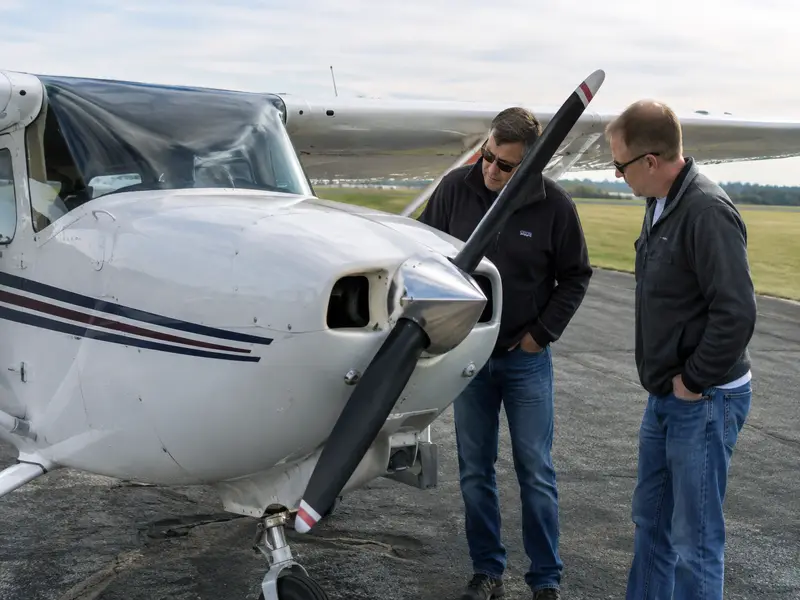
Before anything else, hire an independent A&P mechanic, preferably one with IA authority and direct experience with the make and model you are buying. Do not use the seller's mechanic. The inspection should take place at a maintenance facility, not a tie-down spot or hangar ramp, so the mechanic has proper lighting, a lift if needed, and the time to do the job properly.
Budget between $500 and $1,500 for a thorough pre-purchase inspection depending on aircraft complexity. This is not the place to economize. A missed issue at this stage can turn into a five-figure repair bill six months after purchase.
Ask the mechanic to give you a written squawk sheet, not just a verbal summary. You want a document you can use in price negotiations and, later, in conversations with your insurance provider about the aircraft's condition.
Step 2: Airframe Inspection
Skin and Structure
Check for corrosion, especially in low-lying areas, around fuel caps, and along the belly of the aircraft. On metal airframes, look for popped rivets, skin wrinkles, or patches that may indicate previous repairs. On composite aircraft, look for delamination, stress cracks, and poorly finished repairs.
Inspect control surfaces for proper travel, cable tension, and hinge condition. Any binding or slop in the controls warrants further investigation.
Landing Gear and Doors
Examine the gear attachment points and firewall for signs of hard-landing damage. Retractable gear aircraft add complexity here. Check actuator condition, gear doors, and microswitches carefully. Review the aircraft's history for any gear-up incidents.
Fuel System
Drain and inspect fuel sumps for water and debris. Inspect fuel caps for proper sealing. On older aircraft, fuel bladder condition is worth specific attention since replacements can run several thousand dollars per tank.
Step 3: Engine Inspection
Time Since Overhaul
Ask where the engine sits relative to its TBO (time between overhaul) recommended by the manufacturer. An engine at mid-time is generally preferable for a first-time buyer. An engine near or past TBO should either factor heavily into the purchase price negotiation or be viewed as an upcoming capital expense.
Compression Test
A differential compression test gives you a snapshot of cylinder health. Most mechanics want to see readings above 72/80. Cylinders in the 60s are worth watching. Anything lower warrants a more detailed look.
Oil Analysis and Inspection
Request oil analysis results if the seller has them on file. During the pre-purchase inspection, the mechanic should cut the oil filter and inspect it for metal particles. This single step has saved buyers from inheriting engines in early failure mode.
Engine Logbook Correlation
Confirm that every annual inspection entry in the airframe log corresponds with a matching entry in the engine log. Discrepancies here should be resolved before closing the deal.
Step 4: Avionics Check
Aviation electronics age quickly and replacement costs are steep. Verify the status of every installed avionics unit against the aircraft's equipment list.
- Confirm the transponder has a current Mode C or ADS-B Out certification. ADS-B Out compliance has been required in most controlled airspace since January 2020. If the aircraft is not equipped, factor in the cost of an upgrade.
- Check the ELT for a current battery and registration. ELTs that are out of date are a squawk item at every annual.
- Verify that GPS databases are current or understand the cost of subscription renewals.
- Test all communication and navigation radios in the air if possible, or at minimum on the ground with headsets.
Avionics panels that look impressive on a photo can mask outdated or inoperative units underneath. Inspect, do not assume.
Step 5: Logbook Review
Logbooks are the legal and historical record of the aircraft. Missing logbooks are a red flag. Incomplete entries are a yellow flag worth investigating.
Look for the following in a thorough logbook review:
- Continuous, unbroken annual inspection entries signed by an A&P with IA authority
- AD (Airworthiness Directive) compliance notes for both airframe and engine
- STC (Supplemental Type Certificate) documentation for any modifications
- Major repair or alteration entries on Form 337
- Prop strike history, even if recorded as minor
Any significant repairs should have corresponding 337 forms on file with the FAA. You can request these directly from the FAA records office as part of your due diligence.
Step 6: Title Search and Aircraft Records
Run an aircraft title search through the FAA Civil Aviation Registry before closing. This step confirms that the seller actually owns the aircraft free and clear, and that there are no outstanding liens attached to the registration.
Title search services specific to aviation typically cost between $100 and $300. Some buyers also opt for title insurance on the transaction. If a lien exists that the seller was unaware of, or chose not to disclose, that debt can follow the aircraft registration to you as the new owner.
Verify the aircraft's N-number registration is current, confirm the make, model, and serial number match the airframe data plate, and request a copy of the current airworthiness certificate before closing.
Insurance Considerations for First-Time Buyers
Once your purchase closes, coverage needs to be in place before you fly. First-time aircraft owners often underestimate how specific aviation insurance requirements can be, particularly around pilot experience and currency. Your insurer will ask about your total hours, hours in make and model, and whether you have an instrument rating.
If you are purchasing a single-engine piston, review options for single-engine aircraft insurance early. Rates and coverage terms vary based on the aircraft's hull value, your flight history, and how the aircraft will be used.
Some buyers also transition from renting to owning gradually. If you plan to keep flying club or rental aircraft during the transition period, check whether your policy as an owner extends to non-owned aircraft or whether you need separate aircraft renters insurance to cover those flights.
Have your documentation ready when applying: airframe and engine total time, current annual date, avionics list, and the pre-purchase inspection report. The more complete your submission, the faster the underwriting process moves.
Frequently Asked Questions
Do I need a pre-purchase inspection if the aircraft has a current annual?
Yes. A current annual confirms the aircraft met minimum airworthiness standards at the time of inspection. A pre-purchase inspection is a buyer-focused review that looks at condition, maintenance trends, and items that may be legal but approaching the end of their service life. These are two different things with two different purposes.
What documents should the seller provide at closing?
At minimum: airframe logbook, engine logbook, propeller logbook if applicable, current airworthiness certificate, aircraft registration, weight and balance documentation, flight manual or POH, and any 337 forms for modifications. Missing documents create headaches at registration and at annual inspections.
Can I get aircraft insurance before I close on the purchase?
You can apply for a quote and have coverage bound to take effect on the closing date. Most insurers can move quickly once they have your pilot information and aircraft details. Waiting until after closing to think about insurance leaves a gap that a ferry flight or test flight can fall into.
How does my flight experience affect my insurance rate as a first-time owner?
Significantly. Insurers look at total logged hours, hours in the specific make and model, and recent flight activity. Pilots with lower total time or limited time in make and model may be required to complete transition training with a CFI as a condition of coverage. Factor this into your post-purchase planning and budget.
What happens if the title search reveals a lien on the aircraft?
The deal should pause until the lien is resolved. The seller needs to satisfy the lien before transfer, or the purchase price can be structured to pay off the lien at closing through an escrow arrangement. Do not accept an aircraft registration transfer with an unresolved lien attached.
Ready to protect your aircraft? Get a quote in minutes.
Get a Quote