

Start With the Mission and the Budget
Before you look at a single listing, define what you will fly, where, and how often. A four-seat cross-country airplane and a two-seat local flyer have very different ownership costs. Build a budget that covers more than the purchase price: annual inspection, hangar or tie-down, fuel, engine reserve, database subscriptions, and insurance. First-time owners often underestimate that last group, so get an insurance estimate before you make an offer.
Your insurance cost depends on the aircraft, your total time, time in type, and your training plans. Knowing the number early keeps you from overpaying for a plane you cannot afford to insure well.
Pre-Purchase Inspection (PPI)
Choose the Right Shop
Hire an independent mechanic or shop with deep experience in the specific make and model. Do not use the seller's mechanic. Ask whether they know the common airworthiness directives (ADs), service bulletins, and known problem areas for that type. Type-specific clubs and owner forums can point you to reputable shops.
Agree on Scope in Writing
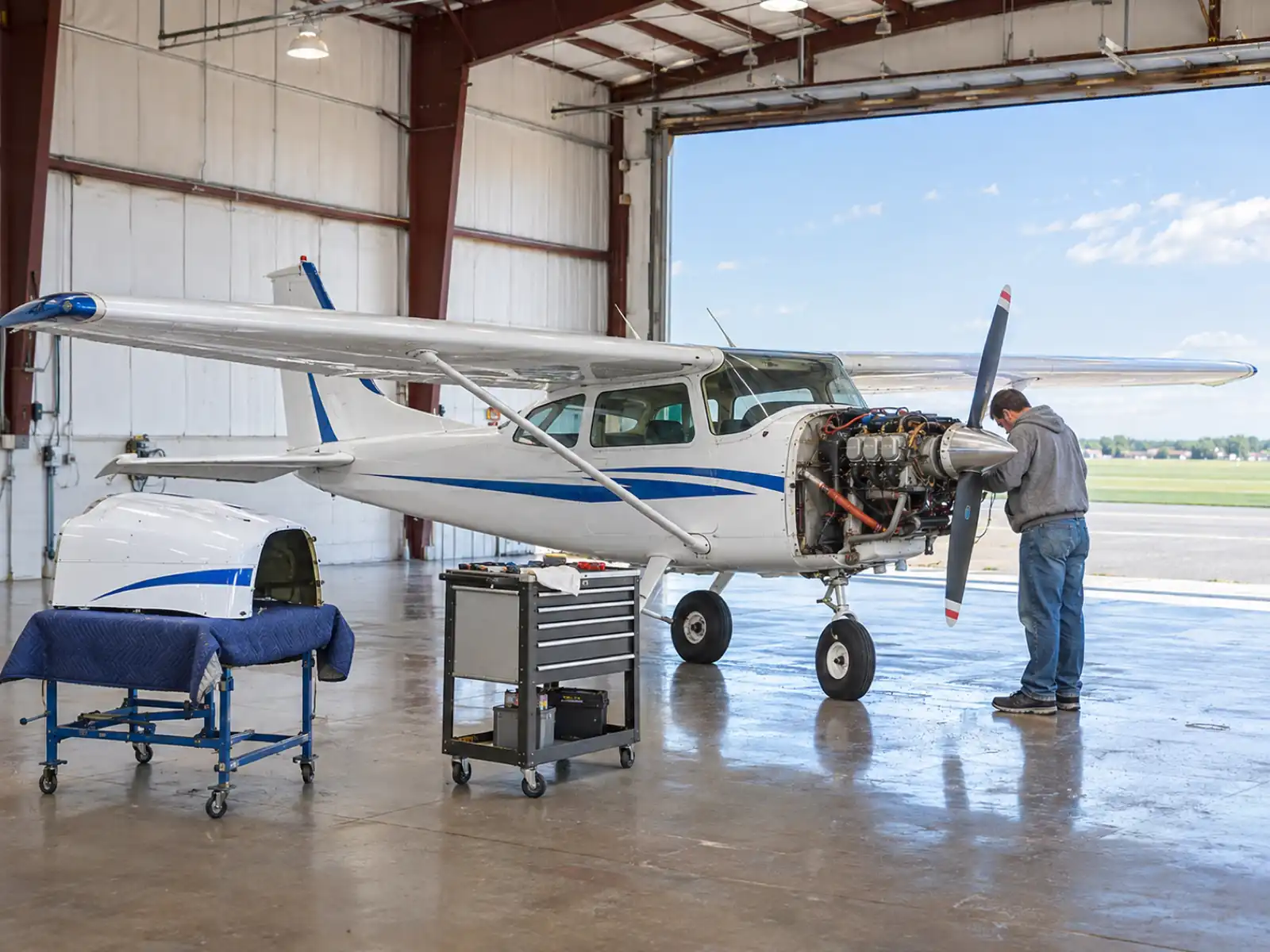
A proper PPI is more than an annual inspection. Ask for a written scope that includes a borescope of all cylinders, a compression test, an oil analysis, a full records review, and a flight test. Plan on paying for it yourself. If the PPI finds problems, you can negotiate the price, ask the seller to fix them, or walk away.
Where the Inspection Happens
Have the PPI done away from the seller's home field when possible. This tests the aircraft in a real cross-country trip. Make sure your insurance is in place before any flight, since the ferry flight home is when many new owners are most exposed. Ask about owned aircraft insurance that can be bound before closing.
Airframe Checklist
- Corrosion: Check wing roots, control surface hinges, belly skins, battery boxes, and lap joints on metal aircraft.
- Damage history: Look for wrinkled skins, mismatched paint, replaced panels, and non-original rivets. Cross-check against the logbooks.
- Control surfaces: Check for play in hinges, cables, and pulleys. Confirm correct cable tension.
- Landing gear: Inspect struts, shimmy dampers, brakes, and tires. Look for leaks and uneven wear.
- Fabric or composite: If applicable, check fabric condition and cure dates, or look for delamination and gelcoat cracks.
- Windows and seals: Look for crazing, cracks, and leaks that point to water intrusion.
Engine Checklist
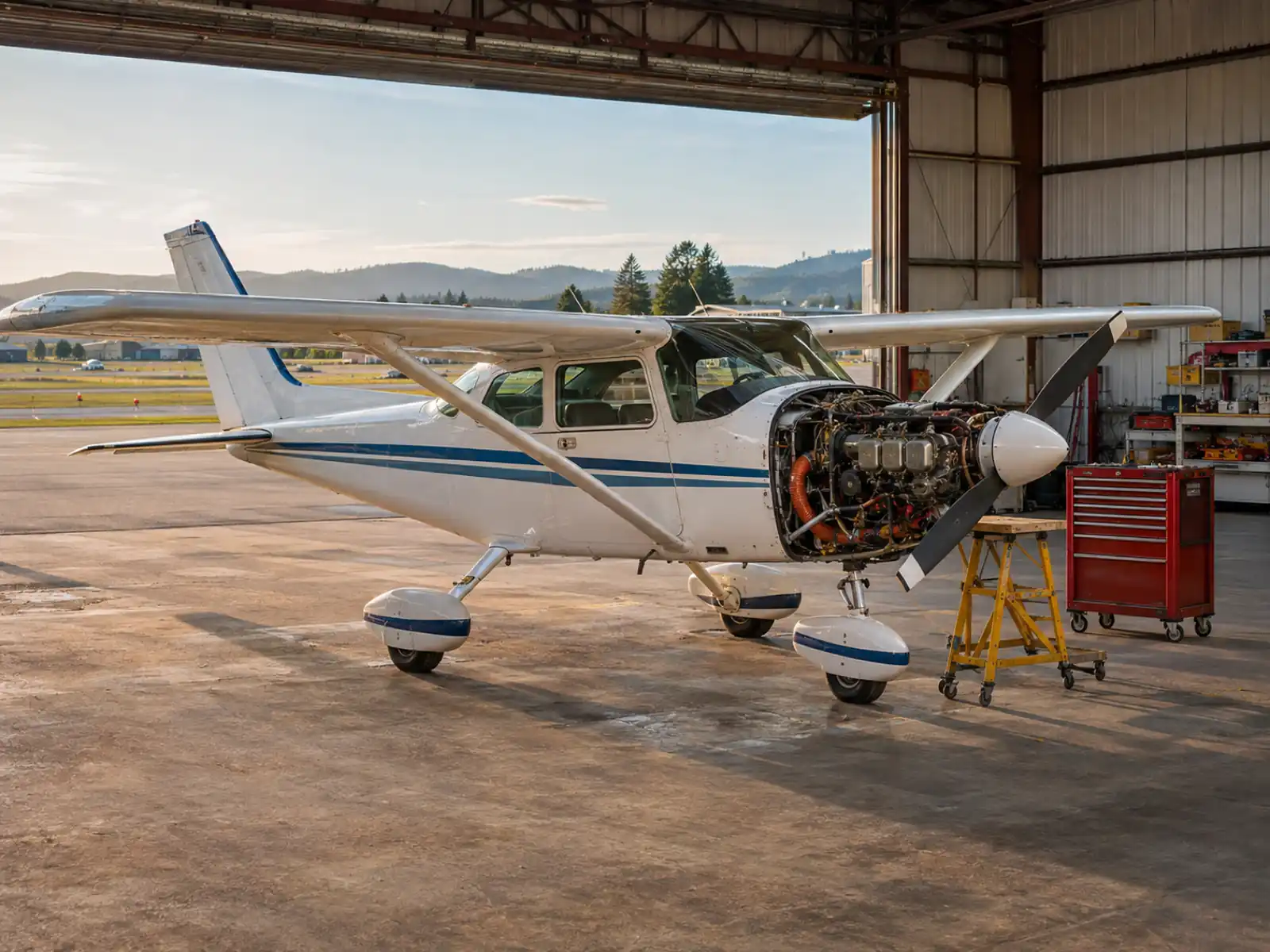
The engine is usually the most expensive single component. Ask for the total time, time since major overhaul (SMOH), and the exact type of overhaul. A factory remanufactured engine is not the same as a field overhaul, and calendar age matters as much as hours. Engines that sit unused often develop internal corrosion.
- Review compression numbers and compare them with past tests in the logs.
- Read oil analysis reports over time, not just the latest one.
- Inspect the exhaust, baffling, and engine mounts for cracks.
- Confirm the propeller overhaul date and check for nicks, leaks, and governor condition.
- Check that all engine-related ADs are complied with and signed off.
Engine condition affects both reliability and insurability. Underwriters ask about it, especially for aircraft near or past TBO. If you are buying a Skyhawk or similar type, review single-engine aircraft insurance options so you know what underwriters expect.
Avionics Checklist
Avionics age faster than airframes. Test every unit during the flight test, not just on the ground.
- Confirm the transponder and ADS-B Out meet current requirements, and obtain the most recent certification test results.
- Verify IFR certification dates for the altimeter, static system, and transponder if you plan to fly instruments.
- Check GPS database currency and how updates are handled. Subscription costs add up.
- Look at the autopilot for proper operation in all modes, and ask who services it.
- Check wiring quality behind the panel. Messy or undocumented installs signal future headaches.
- Confirm that all installed equipment appears on the weight and balance and equipment list.
Logbooks and Records
Logbooks are the aircraft's history. Gaps, missing entries, or unexplained repairs reduce value and can raise insurance questions. Read every page, not just the recent entries.
What to Verify
- Complete sets for airframe, engine, and propeller, starting from the first entry.
- Annual inspections performed at consistent intervals.
- All AD compliance entries, including recurring ADs with next due dates.
- Major repairs and alterations with proper FAA Form 337 documentation.
- Any damage history, with the repair method and who performed it.
- Original airworthiness certificate, registration, weight and balance, and the current equipment list.
If records are missing, treat that as a price issue or a reason to walk. Reconstructing lost logs is expensive and sometimes impossible.
Title Search and Ownership Check
A clean title search protects you from liens and ownership disputes. Use an aircraft title company in the Oklahoma City area to search the FAA registry records for the aircraft. The search should confirm the seller is the registered owner and show any recorded liens, security interests, or encumbrances.
- Confirm the registration is current and the N-number matches the aircraft data plate.
- Request lien releases in writing for any recorded loans.
- Use an escrow service for the transaction, so funds and documents move together.
- Check for import, export, or foreign registration history that complicates the paperwork.
Insurance Before You Close
Lenders and many airports require proof of coverage, and flying uninsured exposes you to the full cost of any accident or hangar incident. Sort out aircraft insurance before closing so coverage starts the moment you take ownership.
Compare agreed hull value coverage, liability limits, and any pilot warranty requirements. If you have been flying rentals, remember that coverage for owners works differently from aircraft renters insurance, and your needs shift once you are responsible for the whole aircraft.
Frequently Asked Questions
How much does a pre-purchase inspection cost?
Costs vary by aircraft type and shop. Expect a few hundred dollars to a few thousand for complex aircraft. The fee is small compared with the cost of an undiscovered engine or corrosion problem.
Do I need insurance before the ferry flight?
Yes. Arrange coverage before you fly the aircraft. Most insurers can bind a policy ahead of closing if you provide the aircraft details and your pilot information.
How does low pilot time affect insurance for first-time owners?
Premiums are usually higher, and insurers may require dual instruction in the make and model before you fly solo. Completing a transition training course often helps.
What is the most common problem found in logbooks?
Missing or incomplete AD compliance entries and undocumented repairs. Both can reduce value and complicate coverage.
Should I buy an aircraft with damage history?
It depends on the severity and quality of the repair. Properly documented minor damage may be acceptable at a lower price. Major damage can affect resale value and insurance terms.
Ready to protect your aircraft? Get a quote in minutes.
Get a Quote