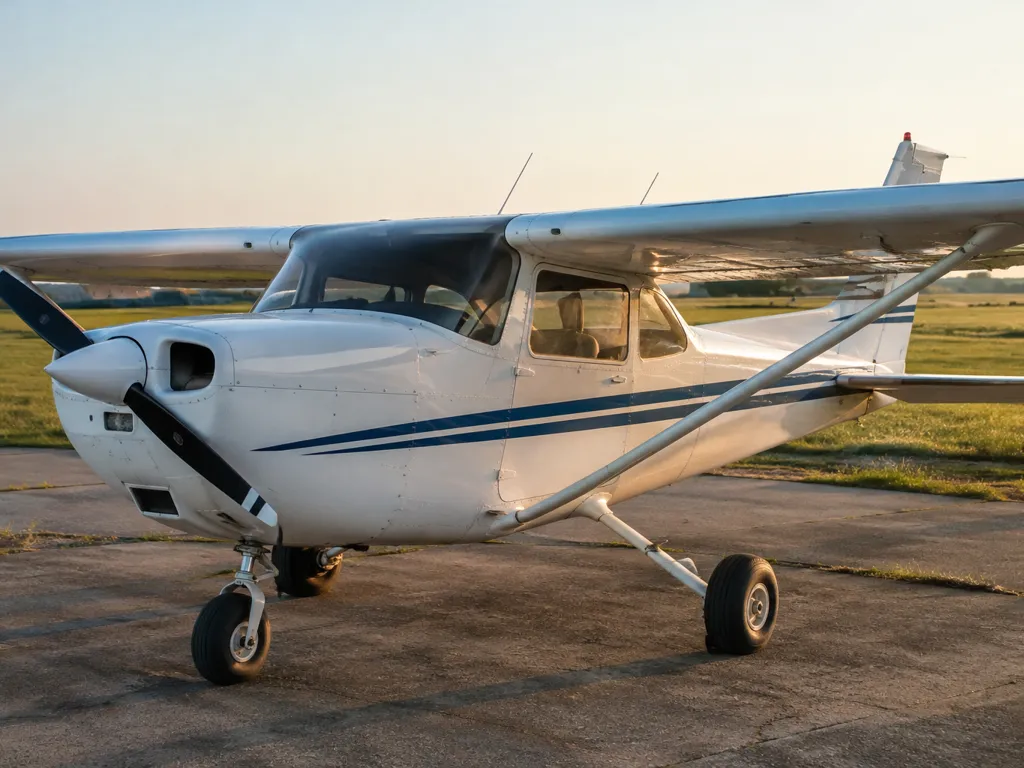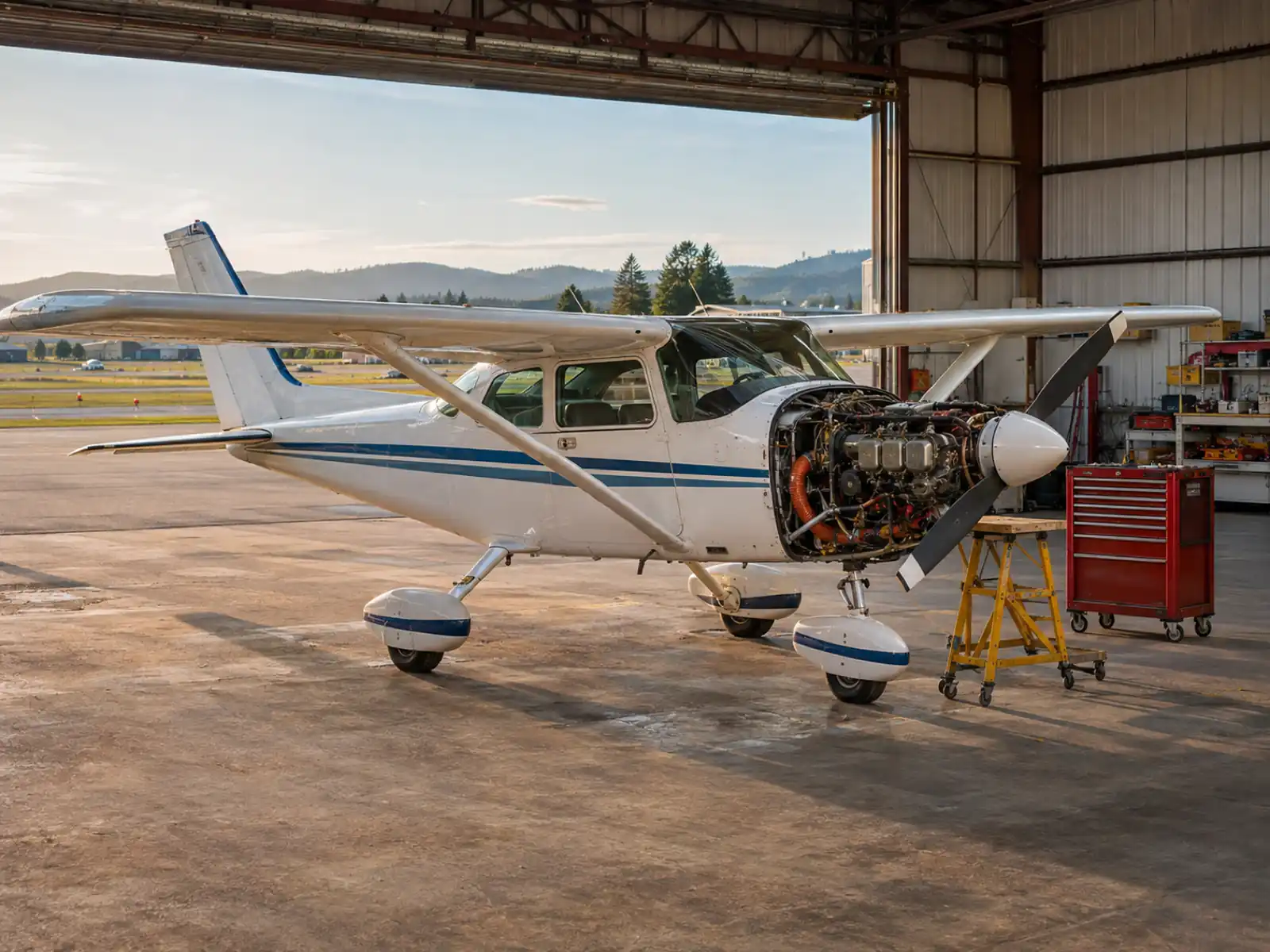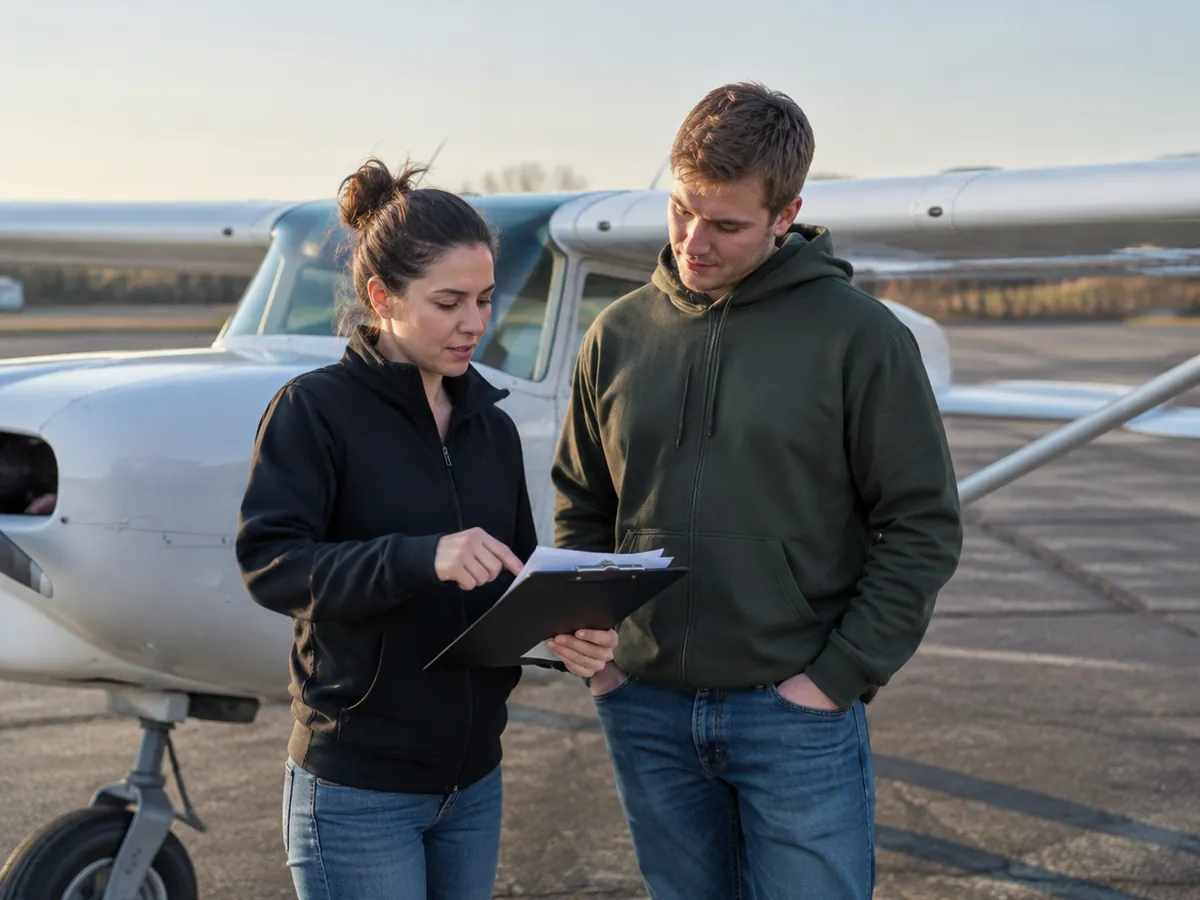
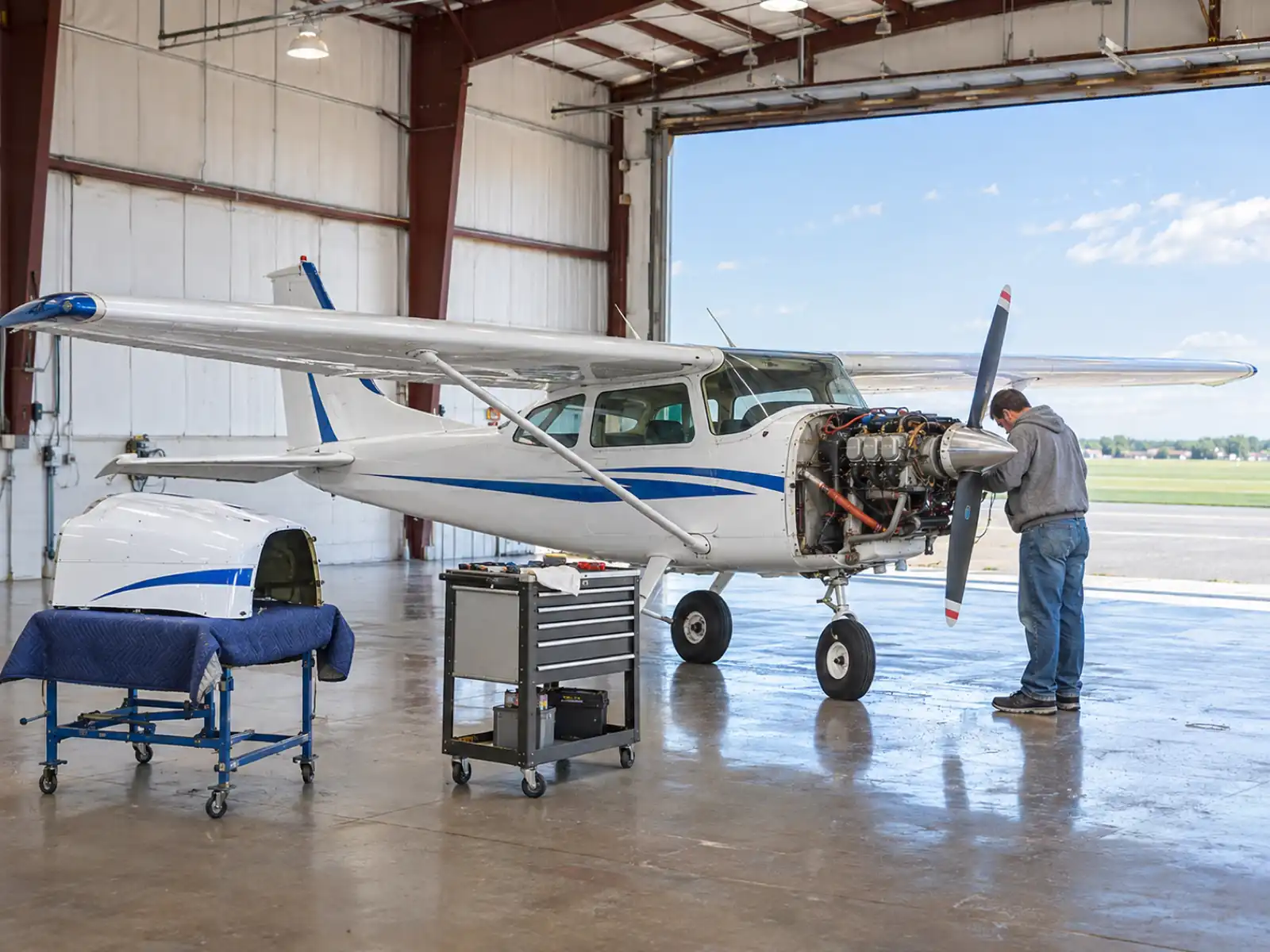
Every owner knows the routine. Once every 12 calendar months the airplane goes in for its annual inspection, and for a while somebody else has the keys. Cowlings come off, the plane gets towed around a busy hangar, and the engine gets run with you nowhere near it. Usually it comes back fine. Now and then it comes back with hangar rash or a scratch nobody mentioned.
So who pays? Owners ask us this a lot, and the answer is that two policies can be involved, not one.
Two policies can respond
Your own hull coverage protects the aircraft against physical damage, and if it applies on the ground, it does not stop at the shop door. For owners carrying single-engine aircraft insurance, a towing accident in a maintenance hangar is the kind of sudden, accidental loss hull coverage is built for.
The shop usually carries hangarkeepers liability. It covers the business's legal liability for aircraft it does not own but has in its care, custody or control. The key word is liability: it responds when the shop's negligence caused the damage, not automatically.
When fault is unclear, your hull insurer typically pays for the repair and then pursues the shop's insurer to recover the money. That is called subrogation.
What hull coverage will not pay for
Hull coverage is for sudden, accidental damage. Wear and tear, corrosion and mechanical breakdown are excluded, so the squawks found during the annual are still a maintenance bill. Diminished value and loss of use are generally not covered under a hull and liability policy either.
Read the shop agreement first
Some work orders and hangar agreements include language that waives your right to recover against the shop. Your aircraft insurance policy generally expects you not to give away your insurer's recovery rights, so a waiver can complicate a claim. Send any release language to your insurer or broker before you sign.
A drop off checklist
- Ask whether the shop carries hangarkeepers liability, and what limit.
- Walk around the aircraft with the shop and take dated photos, including the nose gear and prop.
- Get written estimates before you authorize work.
- Ask who will taxi, run up or test fly the aircraft, and confirm with your insurer that this person meets your policy's pilot requirements.
- Inspect the aircraft carefully at pickup, before you sign anything.
Reviewing your coverage before the next annual? Skywatch owner policies offer liability limits up to $1 million per incident and $200,000 per passenger, with liability only coverage or hull coverage that is ground only or in flight.
FAQ
Is my plane covered while it is in the shop?
If your hull coverage applies on the ground, sudden accidental damage at the shop is generally the kind of loss it is designed for. Check which hull option you chose.
Who pays if the mechanic damages my aircraft?
If the shop was negligent, its hangarkeepers liability should respond. If fault is unclear, your hull insurer typically pays and then seeks recovery from the shop's insurer.
Will insurance pay for problems found during the annual?
No. Wear and tear, corrosion and mechanical breakdown are excluded from hull coverage.
Should I sign the shop's hangar agreement?
Read it first. If it waives your right to recover from the shop, check with your insurer or broker before signing.
How often does my aircraft need an annual?
Under 14 CFR 91.409, no one may operate the aircraft unless it has had an annual inspection within the preceding 12 calendar months.