
Why a Checklist Matters Before You Buy
Buying a light aircraft is a significant financial and legal commitment. Unlike purchasing a car, there is no Carfax report, no manufacturer warranty, and no dealer inspection standing between you and a potentially expensive mistake. The burden of due diligence falls entirely on you, the buyer. Working through a structured checklist before you sign anything keeps emotion out of the process and gives you the information you need to negotiate, walk away, or move forward with confidence.
This guide covers the five areas every first-time buyer should examine in detail: the pre-purchase inspection, airframe condition, engine status, avionics, and paperwork, including logbooks and title history.
Step 1: Schedule a Pre-Purchase Inspection
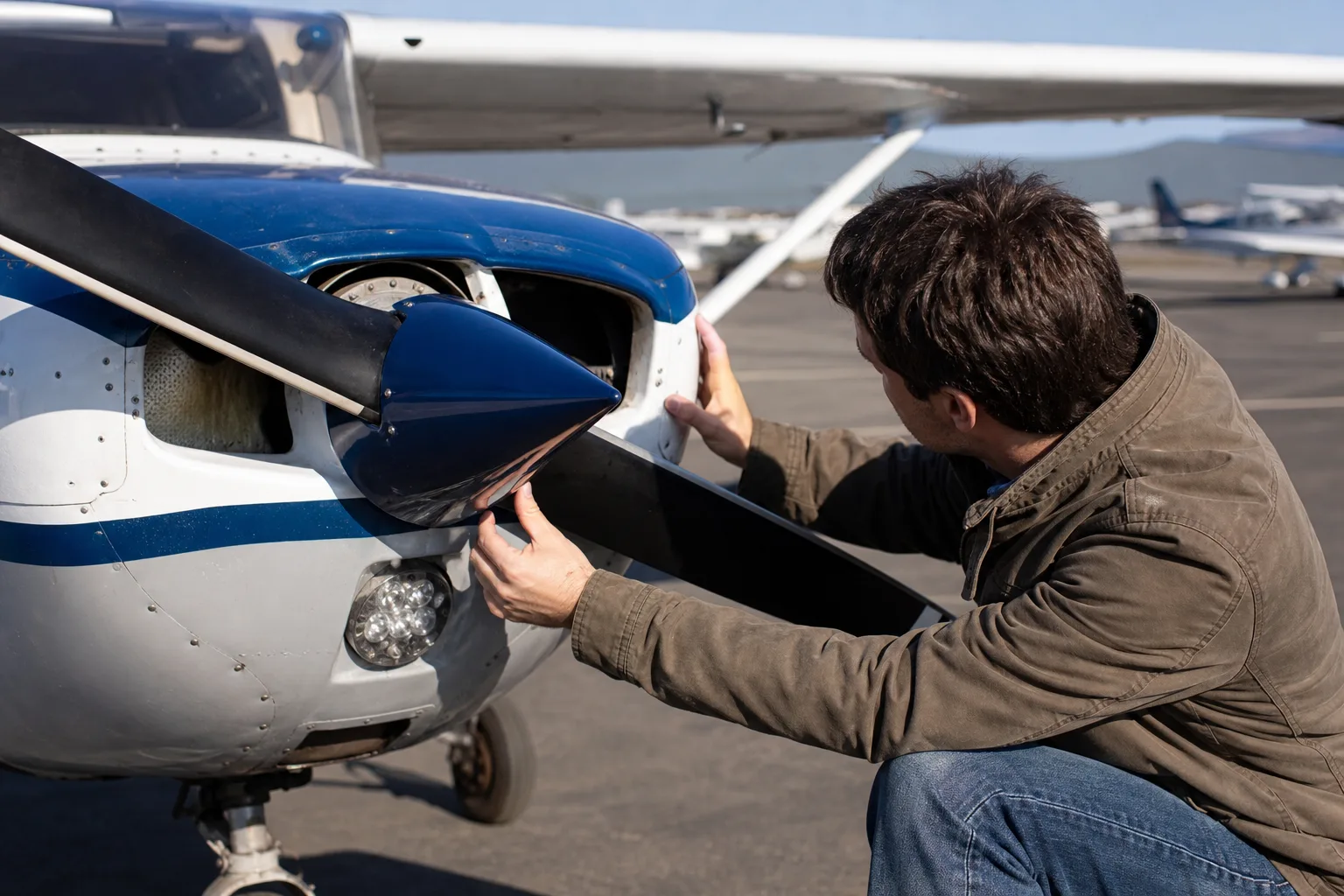
Before anything else, hire an independent Airframe and Powerplant (A&P) mechanic to inspect the aircraft. Do not use the seller's mechanic. Your inspector should have no financial relationship with the seller and, ideally, experience with the specific make and model you are buying.
What the inspection should cover
- A full annual inspection scope, even if the current annual is not yet expired
- Compression test on all cylinders
- Borescope inspection of cylinder walls and valves
- Control surface condition and cable tension
- Landing gear, brakes, and tires
- Fuel system integrity, including bladders or tanks for signs of deterioration
- Any existing Airworthiness Directives (ADs) and whether they have been complied with
Expect to pay between $400 and $1,200 for a thorough pre-purchase inspection depending on aircraft complexity and your location. That cost is trivial relative to what you might inherit if you skip it.
Step 2: Evaluate Airframe Condition
The airframe is the structural backbone of the aircraft. Damage history here carries real consequences for both safety and resale value.
Check for prior damage
Ask the seller directly about any history of hard landings, prop strikes, or accidents. Then verify their answer against the logbooks and the NTSB accident database. Your A&P inspector should look for signs of repaired corrosion, re-skinned panels, misaligned rivet lines, and evidence of structural repairs that may not have been fully documented.
Corrosion inspection
Corrosion is one of the most expensive problems to correct on an older airframe. Pay particular attention to:
- Wing spar caps and attach fittings
- Tailcone and empennage structure
- Flap and aileron hinge brackets
- Any area where moisture can pool or is slow to dry
Aircraft stored outdoors in humid coastal environments are at higher risk. That does not make them a bad purchase, but the inspection scope should be more thorough.
Total airframe time
Note the total airframe time (TTSN) and compare it to the type's known service life. High airframe time alone is not a disqualifier if maintenance has been consistent, but it does affect your insurance options. Carriers that offer owned aircraft insurance will factor in airframe age and total time when calculating your premium.
Step 3: Assess Engine Status
For most piston-engine light aircraft, the engine is the single most expensive component to overhaul or replace. Getting a clear picture of where the engine stands is not optional.
Time Since Major Overhaul (SMOH) and Time Before Overhaul (TBO)
Find out the engine's current time since major overhaul (SMOH) and compare it to the manufacturer's recommended time before overhaul (TBO). An engine at or near TBO is not necessarily a red flag if it is running well and compression checks are solid, but it will affect your negotiating position and your short-term budget planning.
Factory new vs. field overhaul
There is a meaningful difference between a factory remanufactured engine and a field overhaul done at a local shop. Factory reman engines come with new limits and are generally viewed more favorably by both buyers and underwriters offering aviation insurance.
Oil analysis history
Ask for any Blackstone or similar oil analysis reports. Regular oil analysis gives you a trend line on metal particle counts, which is a reliable early indicator of internal wear. A seller who has kept consistent records here is showing you something important about how they maintained the aircraft overall.
Step 4: Review the Avionics Suite
Avionics add complexity to the value calculation. A well-equipped panel can justify a higher purchase price, but outdated equipment can mean near-term upgrade costs that are easy to underestimate.
What to look for
- ADS-B Out compliance: required for most controlled airspace since January 2020. Confirm the installed unit meets FAA requirements.
- GPS navigator make, model, and database subscription status
- Autopilot age and whether it has been recently serviced
- Transponder certification currency (required every 24 months)
- Com and nav radio condition and age
- Any experimental or non-TSO'd components that could affect insurance coverage
Avionics upgrades are expensive. A basic ADS-B installation alone can run $2,000 to $6,000 installed. Factor that into your offer if the existing equipment needs work.
Step 5: Audit the Logbooks and Title
Paper records tell the story the aircraft cannot tell you directly. Incomplete or altered logbooks are a serious warning sign.
Logbook review
Both the airframe logbook and engine logbook should have continuous entries with no unexplained gaps. Look for:
- Annual inspections signed off every 12 calendar months without interruption
- AD compliance entries matching the current AD list for the type
- All STCs (Supplemental Type Certificates) for modifications, with paperwork
- Any 337 forms for major repairs or alterations filed with the FAA
Missing logbooks do not make an aircraft unairworthy, but they significantly reduce its value and can create complications with insurance underwriting and future resale.
Title search and lien check
Run a title search through the FAA Aircraft Registry before closing. This confirms the seller actually owns the aircraft and that there are no outstanding liens from a lender or other party. Title searches can be done directly through the FAA or through a third-party aviation title company for a modest fee. Do not skip this step. Purchasing an aircraft with an undisclosed lien transfers that problem to you.
Getting Insurance Right From the Start
Once you have completed your due diligence and are ready to close, securing the right coverage should happen before the aircraft changes hands. First-time buyers often underestimate how much their training background, total flight hours, and aircraft category affect what coverage is available and at what cost.
If you are moving from renting to owning, note that aircraft renters insurance does not carry over to owned aircraft. You will need a dedicated policy. Buyers purchasing single-engine piston aircraft should look specifically at single-engine aircraft insurance options, which are priced and structured to match that category of aircraft and pilot.
Insurers will ask about your total pilot hours, hours in type, whether you will be getting transition training, and how the aircraft will be used. Have that information ready when you request quotes.
Frequently Asked Questions
Do I need a pre-purchase inspection if the aircraft just had an annual?
Yes. An annual inspection confirms airworthiness at a point in time but is not the same as a buyer-focused pre-purchase inspection. Your A&P is looking specifically for deferred maintenance, undisclosed damage history, and items the seller may have addressed minimally to pass the annual without long-term solutions.
How much should I budget beyond the purchase price?
A commonly used rule of thumb is to set aside 10 to 15 percent of the purchase price for immediate post-purchase expenses. This covers your pre-purchase inspection, title search, insurance down payment, any squawks found during inspection, and initial maintenance items. Aircraft at or near TBO will require a larger reserve.
Can I get insurance if I have low total flight hours?
Yes, but your options and pricing will reflect your experience level. Most insurers will require or strongly recommend transition training in type for low-time buyers. Some policies include training requirements as a condition of coverage. Being transparent about your hours and training history when applying is important. Misrepresenting your experience can void a claim.
What happens if the logbooks have gaps?
Gaps in the logbooks require investigation, not automatic rejection. Find out why the gap exists and whether maintenance records from that period can be sourced another way. Your A&P can help evaluate what the missing records mean practically. From an insurance standpoint, missing logbooks can affect how underwriters assess the aircraft and may be a factor in determining coverage terms.
How long does the aircraft buying process typically take?
For a straightforward purchase with a willing seller, plan on two to four weeks from serious offer to closing. That timeline accommodates scheduling the pre-purchase inspection, running the title search, negotiating any repairs or price adjustments, and getting insurance in place before you take possession. Rushing any of these steps is how buyers end up with expensive surprises.
Ready to protect your aircraft? Get a quote in minutes.
Get a Quote