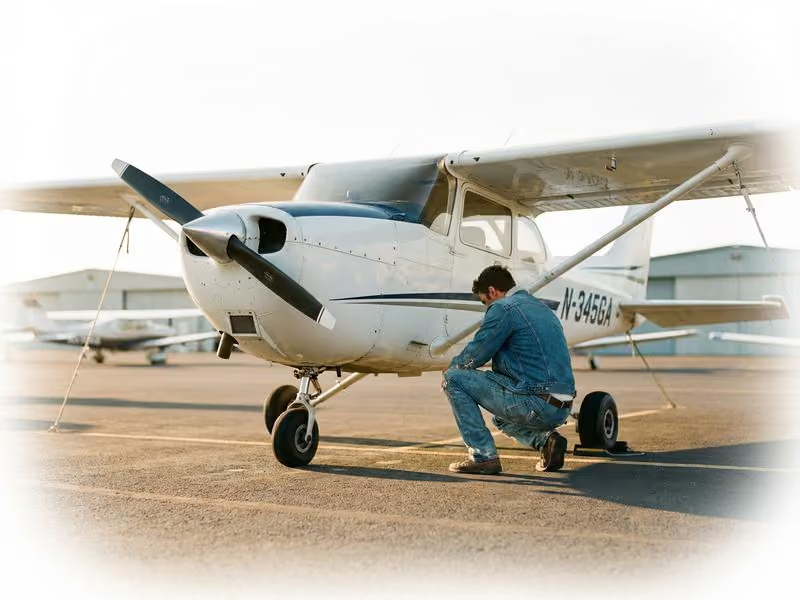

If you rent aircraft regularly, there is a conversation you need to have before your next flight. Not with your CFI. Not with the tower. With yourself, about what actually happens if something goes wrong.
A lot of pilots assume the flight school has it handled. The school has insurance. You are flying their plane. So you are covered. That assumption is wrong in ways that can cost you tens of thousands of dollars.
The gap most pilots never think about
Flight school insurance exists to protect the school and the aircraft owner. Its primary job is to cover the hull value of the airplane in case of a major loss. The school's policy is not designed to protect you.
Here is what catches renters off guard: most flight school policies do not waive their right to come after you if you caused the damage. That is called subrogation. You damage the wing on landing, the school files a claim, their insurer pays out, and then that insurer turns around and pursues you for reimbursement. The school itself may also come after you directly for the deductible, which on a Cessna 172 can run $5,000 to $20,000 depending on the policy.
Pilots are regularly shocked to find this out after an incident. Not before.
What a non-owned aircraft insurance policy actually does
A non-owned aircraft insurance policy, sometimes called aircraft renters insurance, puts a layer of protection between you and those costs. It pays for physical damage you cause to an aircraft you do not own, up to your policy's hull coverage limit. It also covers your liability if someone is injured as a result of an accident where you are the pilot in command.
This matters for renters. It matters for student pilots doing solo cross-countries. It matters for CFIs instructing in aircraft owned by the school or a private owner. And it matters any time you climb into the left seat of an airplane that has someone else's name on the title.
The student pilot situation
A lot of students ask whether they really need their own policy while training. Many flight schools now require non-owned coverage before they will allow solo flight. Others strongly recommend it. Either way, getting a non-owned policy as a student is not about meeting a checkbox. It is about the reality that student pilots make mistakes, instructors are not always on board, and the school's policy was not written with your financial protection in mind.
Policies for student pilots are inexpensive. SkyWatch offers daily, weekly, monthly, and annual options so you pay for exactly what you need at whatever stage of training you are in.
The CFI situation is different, and often misunderstood
If you are an employee of a flight school, the school's policy likely covers you while you are on duty. But independent CFIs, contractors, and instructors who moonlight outside their primary employer are in a different position. If you are instructing in a student's aircraft, a club plane, or any airplane you do not own and are not covered under an employer's policy, you need your own non-owned coverage.
The CFI non-owned insurance endorsement specifically covers you while giving instruction. It is not the same as a basic renters policy and it is worth understanding the distinction before you take on any outside students.
How much coverage do you actually need
A common starting point is $1 million in liability coverage, which most flight schools and flying clubs require as a minimum. Hull coverage for physical damage is trickier because different schools handle it differently. Some will only ask you to cover their deductible. Others, particularly smaller operations without robust fleet policies, may actually require you to carry hull coverage that matches a significant portion of the aircraft's value.
Ask your flight school directly: what is your deductible? Do you waive subrogation for renters? What are your minimum coverage requirements? The answers will tell you exactly how much protection you need to build into your own policy.
SkyWatch's aircraft renters insurance lets you get coverage for single-engine aircraft starting with a daily policy, so whether you fly twice a month or every weekend, you can match your coverage to how you actually fly. For student pilots and CFIs looking for flexible options, visit student pilot insurance and CFI insurance pages to see what applies to your situation.
The flight school's policy is not your safety net. Your own policy is.
Frequently asked questions
Does the flight school's insurance cover me if I damage the aircraft?
Not necessarily. Most flight school policies cover the aircraft owner's interest, not the renter's liability. After a claim, the school's insurer may pursue you directly to recover the cost of repairs. The school may also hold you responsible for their deductible. Your own non-owned policy is what covers you in that situation.
Do I need non-owned insurance as a student pilot?
Many flight schools require it before they allow solo flight. Even where it is not required, it is a practical necessity. Once you are flying solo, you are the pilot in command and you bear responsibility for what happens. A non-owned policy covers you for damage and liability in that seat.
I am a CFI employed by a flight school. Do I still need my own insurance?
If you are a W-2 employee instructing only within your employer's operations, the school's policy usually covers you. If you are an independent contractor, freelance CFI, or you instruct outside your primary employer in aircraft not covered by that employer's policy, you need your own CFI non-owned coverage.
What is subrogation and why does it matter for renters?
Subrogation is the right of an insurance company to recover money from the party responsible for a loss after they have paid out a claim. If you damage a rental aircraft and the school's insurer pays for repairs, that insurer can then come after you to recover what they paid. A non-owned policy with the right provisions can protect you against this scenario.
Can I get non-owned aircraft insurance for just one day?
Yes. SkyWatch offers daily non-owned aircraft insurance policies, so you can get coverage for a single flight or a weekend trip without committing to a full annual policy. This is useful for pilots who rent occasionally or who are in early stages of flight training and want to match their coverage to their actual flying schedule. Learn more at SkyWatch aircraft renters insurance.