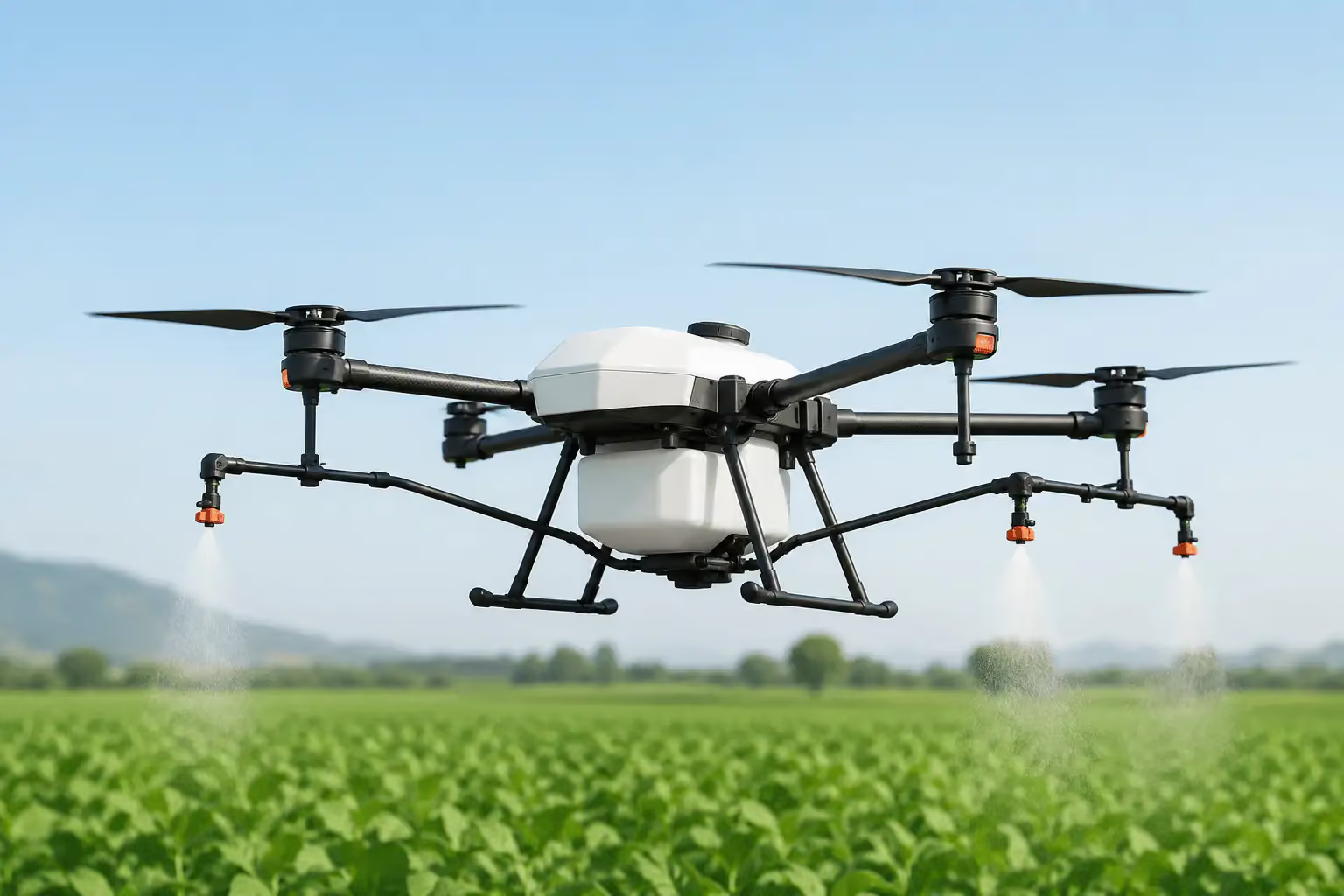
Agricultural drone work is some of the most demanding commercial flying you can do. You are operating over large acreage, often in variable weather, with expensive sensor and spray payloads attached to aircraft worth tens of thousands of dollars. The stakes on the ground are high too: crops, irrigation equipment, livestock, and farm structures are all in the operating area.
We work with a lot of commercial drone pilots who fly agricultural jobs, and the insurance questions that come up in ag work are consistently different from what general commercial operators deal with. If you are entering this space or expanding your ag client list, here is what you need to have sorted before the season starts.
Your Payload Is Not Automatically Covered
An agricultural drone outfitted with a multispectral sensor or a precision spray system can easily reach $30,000 to $60,000 in total equipment value. The drone airframe is one line item. The payload is another. And in most commercial drone insurance policies, they are not automatically treated as the same thing.
Hull coverage protects the drone itself. Payload coverage protects the sensors, cameras, and specialized equipment mounted to it. Before you fly a single ag job this season, confirm that your policy explicitly covers your payload at its actual replacement value. If you are running a spray system, confirm that chemical-related incidents are addressed in your policy terms. These are not edge cases in ag work. They come up.
Liability Requirements Vary by Farm and Client
Farm operators and agricultural cooperatives are increasingly sophisticated buyers of drone services. Many now include insurance requirements in their service contracts, and those requirements can vary significantly depending on the scale of the operation and the type of work being done.
A $1 million per occurrence liability limit is a reasonable baseline for most commercial drone work. Agricultural work near livestock, over high-value specialty crops, or adjacent to neighboring properties can carry higher exposure. If you are flying precision agriculture jobs for larger clients, review their contract requirements before you show up on day one. Being asked to add a client as an additional insured is common in ag work, and it is something your policy needs to support quickly.
With SkyWatch commercial drone insurance, you can generate a Certificate of Insurance with a named additional insured in minutes. That kind of speed matters in agriculture, where seasonal timelines leave little room for administrative delays.
Seasonal Operations Need Flexible Coverage
Agricultural drone work does not run on a 12-month schedule. Planting season, crop monitoring windows, and harvest support periods are concentrated bursts of activity. Paying for a full annual policy when you are only actively flying for a portion of the year is a real cost consideration for independent operators.
On-demand and flexible coverage models are particularly well suited to ag drone pilots. You can activate coverage when work comes in, adjust your limits based on the scale of the job, and avoid carrying unnecessary premium expense during your off season. This is one of the areas where how you buy insurance matters as much as what you buy.
Operating Near Farm Structures and Equipment Adds Complexity
Agricultural environments are full of hazards that do not show up on a standard aerial survey. Irrigation pivots, grain bins, power lines running along field edges, and farm equipment moving through the operating area are all real considerations for ag drone pilots. Operating near structures and equipment increases the likelihood that a drone incident involves property damage beyond the drone itself.
Make sure your liability coverage reflects the type of environment you are operating in. Flying over open fields is different from flying a precision application job in a working farmyard. Your insurer should understand the distinction, and your policy limits should reflect the exposure you are actually taking on.
Documentation Before the Season Matters
The start of a busy agricultural season is not the time to discover a gap in your coverage. Before your first job of the year, photograph your complete equipment setup, confirm your payload values are accurately declared on your policy, and make sure your liability limits match the contracts you have signed or are likely to sign.
At SkyWatch, we built our platform for commercial operators who need real coverage that keeps up with how they work, not just a policy that checks a box. If you want to make sure your commercial drone insurance is properly structured for the agricultural season ahead, start with a quote at skywatch.ai.