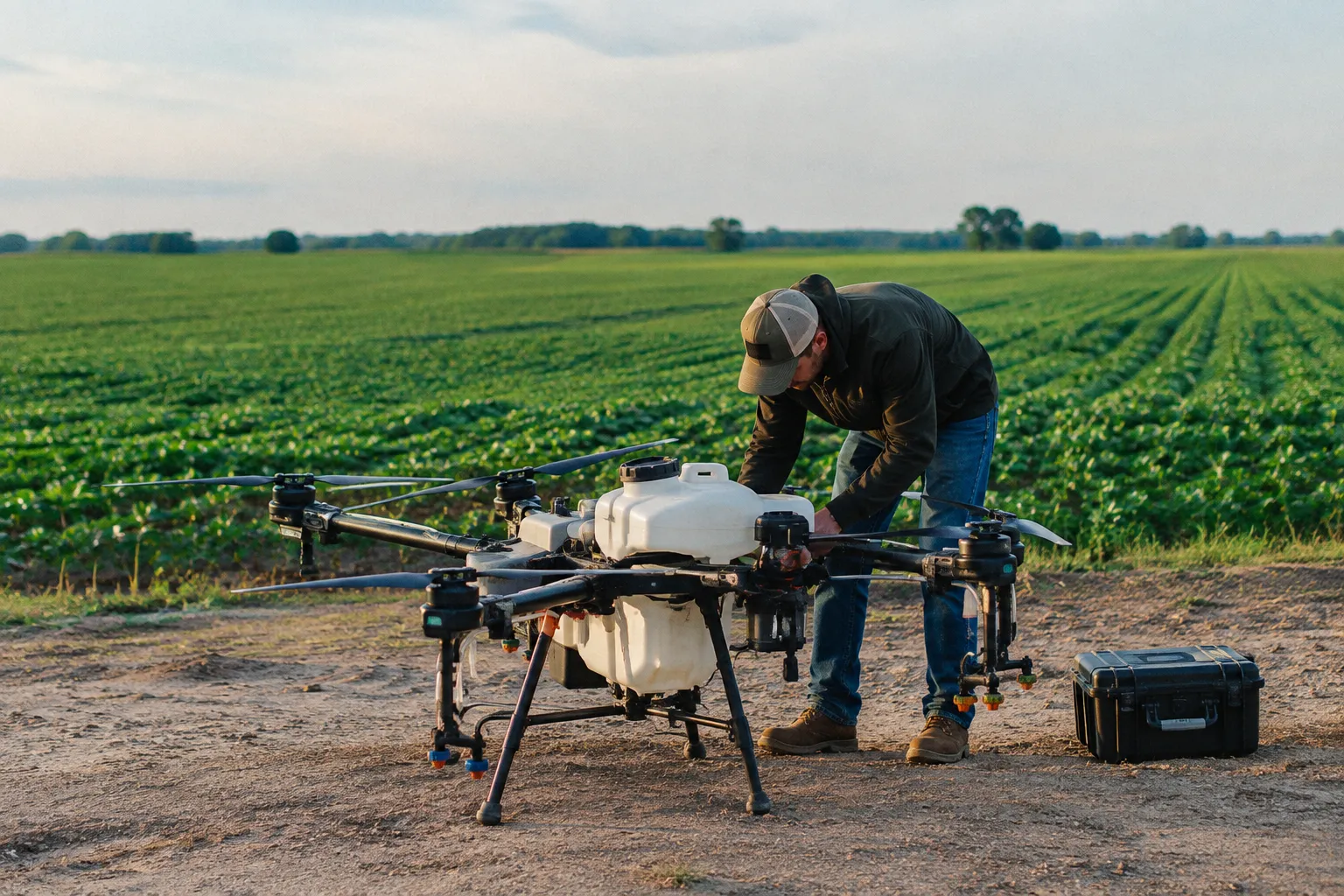
If you fly drones for agricultural work, you already know that your risk profile looks nothing like a real estate photographer or a construction inspector. You're often flying over crops worth hundreds of thousands of dollars, working in remote areas, and logging serious hours during short seasonal windows. That means the question of annual vs on-demand ag drone insurance isn't just about cost. It's about making sure your coverage actually fits the way you operate.
Both options have real merit depending on your situation. Let's break down what each one means in practice, so you can make a smart call before your next flight.
Annual ag drone insurance works exactly the way it sounds. You pay a fixed premium and you're covered for a full twelve months, regardless of how many flights you complete. For operators who fly consistently throughout the season or work across multiple farms and clients, this structure tends to make sense. Your cost per flight drops the more you fly, and you don't have to think about activating coverage before each operation. It's a set-it-and-forget-it approach, which has genuine value when you're busy managing equipment, clients, and weather windows all at once.
On-demand drone insurance for agriculture is a different model. You activate coverage by the hour or by the day, and you only pay for the time you're actually flying. This works well for operators who have a short, concentrated season or who fly drones for ag work as a secondary service rather than their primary business. If you're only in the air a handful of times per month, paying for a full annual policy can feel like leaving money on the table. On-demand policies give you flexibility without locking you into a fixed cost.
We've issued more than 300,000 commercial drone insurance policies across every kind of operation, and ag drone operators consistently ask us the same question: which is cheaper? The honest answer is that it depends entirely on flight frequency. A grower or ag service provider flying three or four days a week during a six-month season will almost certainly spend less with an annual policy. Someone flying two or three times a month for spot spraying or imagery work might come out ahead with on-demand coverage. The math isn't complicated, but you do have to actually run the numbers for your specific operation.
It's also worth thinking about what you're covering, not just how long. Agriculture drone insurance typically includes liability coverage for third-party property damage and bodily injury, and you can often add hull coverage for the drone itself. The ag drone coverage types available to you, whether annual or on-demand, should address the specific hazards of flying over crops, near irrigation equipment, and in areas where a downed drone could cause real damage. We work with underwriters who specialize in ag drone operations, which means the policy language is built for what you actually do, not retrofitted from a generic commercial drone form.
Choosing the Right Policy Type for Your Flying Schedule
Your flying schedule is the single most useful factor when comparing ag drone policy options. Think about the last full season. How many days did you actually fly? How many hours were you in the air? If you can answer those questions, you can get a quote for both coverage types and compare them directly.
There's another consideration that doesn't get talked about enough: client requirements. Some farm operations, co-ops, or ag service contracts require proof of commercial drone insurance before you ever set foot on the property. An annual policy gives you a certificate of insurance you can share quickly and repeatedly. With on-demand coverage, you'll need to be more organized about activating your policy before each job and having documentation ready. Neither approach is wrong, but annual coverage tends to be simpler to manage from an administrative standpoint.
The good news is that annual vs on-demand ag drone insurance doesn't have to be a permanent commitment either way. Many operators start with on-demand coverage when they're newer to commercial ag drone work, then switch to an annual policy once their flight volume justifies it. That kind of flexibility is part of what makes modern ag drone insurance different from older commercial aviation models where you were stuck with whatever policy you signed at the start of the year.
Our team has a nearly perfect 5-star customer support rating, and questions about annual vs on-demand ag drone insurance are among the most common ones we field. The answer is rarely one-size-fits-all, but it's almost always findable once you know your actual flight data.
Frequently Asked Questions
How much does annual ag drone insurance cost compared to on-demand coverage?
Annual ag drone insurance typically ranges from a few hundred to several thousand dollars depending on the coverage limits, drone value, and your operation type. On-demand policies for agriculture drone work are usually priced by the hour or day, which makes them more cost-effective for low-frequency flyers. Operators flying more than 50 to 60 days per year generally see better value from an annual policy.
Does on-demand drone insurance cover agricultural spraying operations?
Coverage for agricultural spraying depends on the insurer and the specific policy, not just whether it's on-demand or annual. Some on-demand policies exclude high-risk operations like chemical application or require additional endorsements. Always confirm that the policy explicitly covers your intended use case before activating coverage for a spray operation.
What liability limits do ag drone operators typically need?
Most landowners and agricultural businesses require at least $1 million in liability coverage per occurrence before allowing drone operations on their property. Some larger operations or government contracts require $2 million or more. Your specific liability limit should reflect the value of the crops, equipment, and third-party property in your operating area.
Can I switch from on-demand to annual ag drone insurance mid-season?
Yes, in most cases you can switch policy types between seasons or even mid-season depending on your provider. If your flight volume increases significantly, moving to an annual policy mid-year can reduce your total cost for the remainder of the season. Contact your insurer directly to get a prorated quote and compare it against your remaining on-demand costs.
Ready to compare your options? Get a quote at skywatch.ai.