
Why a Checklist Matters Before You Sign Anything
Buying your first aircraft is a significant financial decision, and the used aircraft market does not come with the same consumer protections you might expect from other major purchases. Sellers are not always forthcoming about maintenance history, previous damage, or outstanding liens. A structured checklist helps you catch problems before they become your problems, and it gives you a clear framework for negotiating price or walking away entirely.
This guide covers the key areas to examine before you commit: the pre-purchase inspection process, airframe condition, engine health, avionics, logbook review, and title search. It also touches on where aviation insurance fits into the picture, because coverage decisions should be part of your planning from day one, not an afterthought after closing.
Step 1: Hire an Independent IA for the Pre-Purchase Inspection
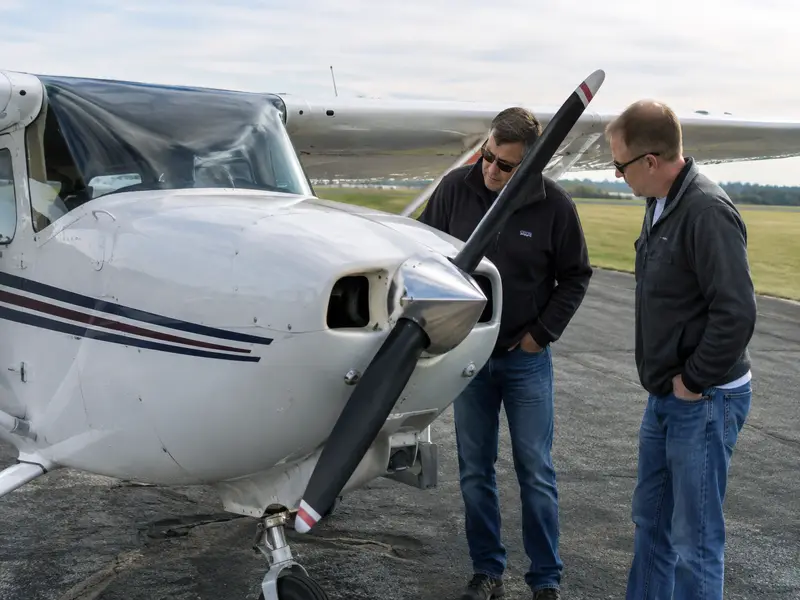
The single most important thing you can do before buying a used aircraft is pay for an independent pre-purchase inspection performed by an FAA-certificated Airframe and Powerplant (A&P) mechanic who holds an Inspection Authorization (IA). The word "independent" matters here. Do not use a mechanic recommended by the seller or one who has previously maintained the aircraft. You need someone whose only loyalty is to an accurate assessment.
The inspection should take place at a maintenance facility with proper equipment, not at the seller's home airport ramp. Budget for the full cost, typically several hundred to a few thousand dollars depending on aircraft type and scope, and consider it money well spent even if the deal falls through.
What the Inspection Should Cover
- Complete review of all logbooks and maintenance records
- Compression test on all engine cylinders
- Borescope inspection of cylinders and combustion chambers
- Oil analysis if not recently performed
- Inspection of control surfaces, cables, and pulleys
- Fuel system integrity check
- Landing gear, brakes, and tires
- Electrical system and avionics function check
- Check for any open Airworthiness Directives (ADs)
Step 2: Assess the Airframe
The airframe is the backbone of the aircraft. Damage here, if not properly repaired and documented, can affect structural integrity and resale value. Ask specifically whether the aircraft has ever had any damage history beyond minor skin repairs.
Key Things to Check
- Corrosion: Look in areas that trap moisture, including wing spars, belly skins, and control surface hinge points. Surface corrosion is manageable; exfoliation or intergranular corrosion is a serious red flag.
- Skin repairs and fabric condition: Any repair that required a Form 337 (Major Repair or Alteration) should be documented. Request copies and verify the repairs were signed off correctly.
- Previous accident damage: Run the tail number through the FAA Accident and Incident Data System (AIDS) and cross-reference with NTSB records. Also check the logbooks for any damage notation.
- Time remaining before major inspections: Know where the airframe stands relative to any manufacturer-required structural inspections.
Step 3: Evaluate the Engine
Engine condition often has the biggest impact on value and near-term cost of ownership. There are a few key numbers and observations to focus on.
Hours and Time Since Overhaul
Every piston engine has a manufacturer-published Time Between Overhaul (TBO), typically expressed in hours. An engine approaching or past TBO is not automatically a dealbreaker, but it affects your out-of-pocket costs in the near term and should be reflected in the asking price. Confirm whether any overhaul was a factory rebuild, major overhaul by an FAA-certificated shop, or a field overhaul, since these are not equivalent in terms of warranty and longevity expectations.
Compression and Oil Consumption
Low compression on even one cylinder can indicate worn rings, valve problems, or cylinder damage. Ask the seller about oil consumption trends. More than a quart per hour is worth investigating further. Oil analysis from a recent sample can reveal metal contamination that points to internal wear.
Step 4: Review the Avionics
Modern avionics add to the utility and resale value of an aircraft, but aging or non-standard equipment can create compliance headaches and unexpected costs. Verify the following before you finalize any deal.
- ADS-B Out compliance: Confirm the aircraft meets FAA ADS-B Out requirements for operating in controlled airspace. If it does not, factor in the cost of an approved installation.
- Transponder and altimeter certification: These require periodic testing under FAR 91.411 and 91.413. Check when the last tests were performed.
- ELT battery and registration: The ELT battery must be replaced at specific intervals, and the unit must be registered with NOAA. Verify both.
- Overall avionics condition: Power up all radios, the GPS, and any autopilot during the pre-purchase inspection. Non-functional equipment should either be repaired before closing or reflected in the purchase price.
Step 5: Dig Into the Logbooks
Logbooks are the legal history of the aircraft. Missing entries, gaps in time, or pages that look altered are serious warning signs. A complete set should include the airframe logbook, engine logbook, and propeller logbook. Some aircraft also have avionics logs.
Look for: annual inspection sign-offs for every year the aircraft has been flying, AD compliance entries, documentation of any major repairs or alterations, and notes on any engine events such as prop strikes or sudden stoppage. A prop strike that was not followed by a documented teardown inspection is a liability you do not want to inherit.
If you are purchasing a single-engine aircraft, reviewing the logs carefully becomes even more important since the entire airworthiness story is contained in those books. Proper single-engine aircraft insurance will also require accurate information about the aircraft's history and current condition, so knowing what is in those logs puts you in a better position when it is time to apply for coverage.
Step 6: Run a Title Search and Check for Liens
Aircraft title in the United States is recorded through the FAA Registry in Oklahoma City. Before you close, order a full title search to confirm the seller is the legal owner and that there are no outstanding liens against the aircraft.
You can search the FAA Registry yourself at no cost, but a professional title search from an aviation title company will also check for UCC filings and other encumbrances that a basic registry search might miss. Expect to pay a modest fee for this service. It is worth every dollar, since taking title to an aircraft with an existing lien can result in that lien becoming your legal responsibility.
After the search comes back clean, consider using an escrow service to handle the closing funds. This protects both parties and ensures the title transfer is completed properly before money changes hands.
Where Aviation Insurance Fits Into This Process
Many first-time buyers treat insurance as the last box to check. That is the wrong approach. You should be researching owned aircraft insurance options well before you reach the closing table, for a few practical reasons.
First, your lender, if you are financing the aircraft, will require proof of insurance before funding the loan. Second, your hangar or tie-down agreement may require a minimum liability coverage level. Third, understanding what coverage will cost helps you budget accurately for total cost of ownership.
The pre-purchase inspection findings also directly affect your insurability. A hull with documented damage history, an engine well past TBO, or missing logbooks can result in coverage exclusions or higher premiums. Knowing the aircraft's actual condition before you own it gives you the information you need to make an informed decision.
If you are not yet at the ownership stage and are still flying club or rental aircraft, aircraft renters insurance is a practical option that covers your liability exposure in the meantime. Once you are ready to own, the transition to aviation insurance for your own aircraft is straightforward.
Quick Pre-Purchase Checklist Summary
- Hire an independent IA for a thorough pre-purchase inspection
- Check airframe for corrosion, damage history, and Form 337 repairs
- Verify engine hours, TBO status, compression, and oil analysis
- Confirm ADS-B Out compliance and avionics certification currency
- Review all logbooks for completeness and AD compliance
- Order a professional title search and check for liens
- Use an escrow service for closing
- Obtain insurance quotes before finalizing the purchase
Frequently Asked Questions
How much does a pre-purchase inspection typically cost?
Costs vary by aircraft type and inspection scope, but expect to spend anywhere from $500 to $2,000 or more for a thorough inspection on a light single-engine aircraft. Turbine aircraft or complex types will cost more. Do not skip this step to save money. A missed defect can cost far more to fix post-purchase.
What happens if logbooks are missing?
Missing logbooks are a significant problem. Without them, you cannot verify AD compliance, annual inspection history, or repair documentation. The aircraft can still be legal to fly if there is an annual inspection on record and the current owner can attest to the status, but the lack of complete records will affect resale value and may complicate insurance placement. Factor this into the purchase price accordingly, and consult an aviation attorney if you are still considering the purchase.
Do I need aviation insurance before I complete the purchase?
You will need coverage in place at or before the moment you take ownership, and often before you fly the aircraft home from the seller. If you are financing, the lender will require it before funding. Start shopping for quotes during the inspection phase so you are ready to bind coverage on closing day.
What is the difference between a major overhaul and a factory rebuild?
A factory rebuild is performed by the original equipment manufacturer and the engine is remanufactured to new tolerances with a zero-time logbook. A major overhaul is performed by an FAA-certificated repair station and restores the engine to serviceable limits, which are slightly less than new tolerances. Both are acceptable, but factory rebuilds typically command a premium and often carry a manufacturer warranty.
Can I buy aircraft insurance if the plane has damage history?
Yes, in most cases, but documented damage history will be reviewed by the underwriter. Properly repaired and documented repairs with a Form 337 sign-off are generally insurable. Undocumented repairs or damage that was never properly assessed are more problematic. Transparent disclosure during the application process is always the right approach.
Ready to protect your aircraft? Get a quote in minutes.
Get a Quote