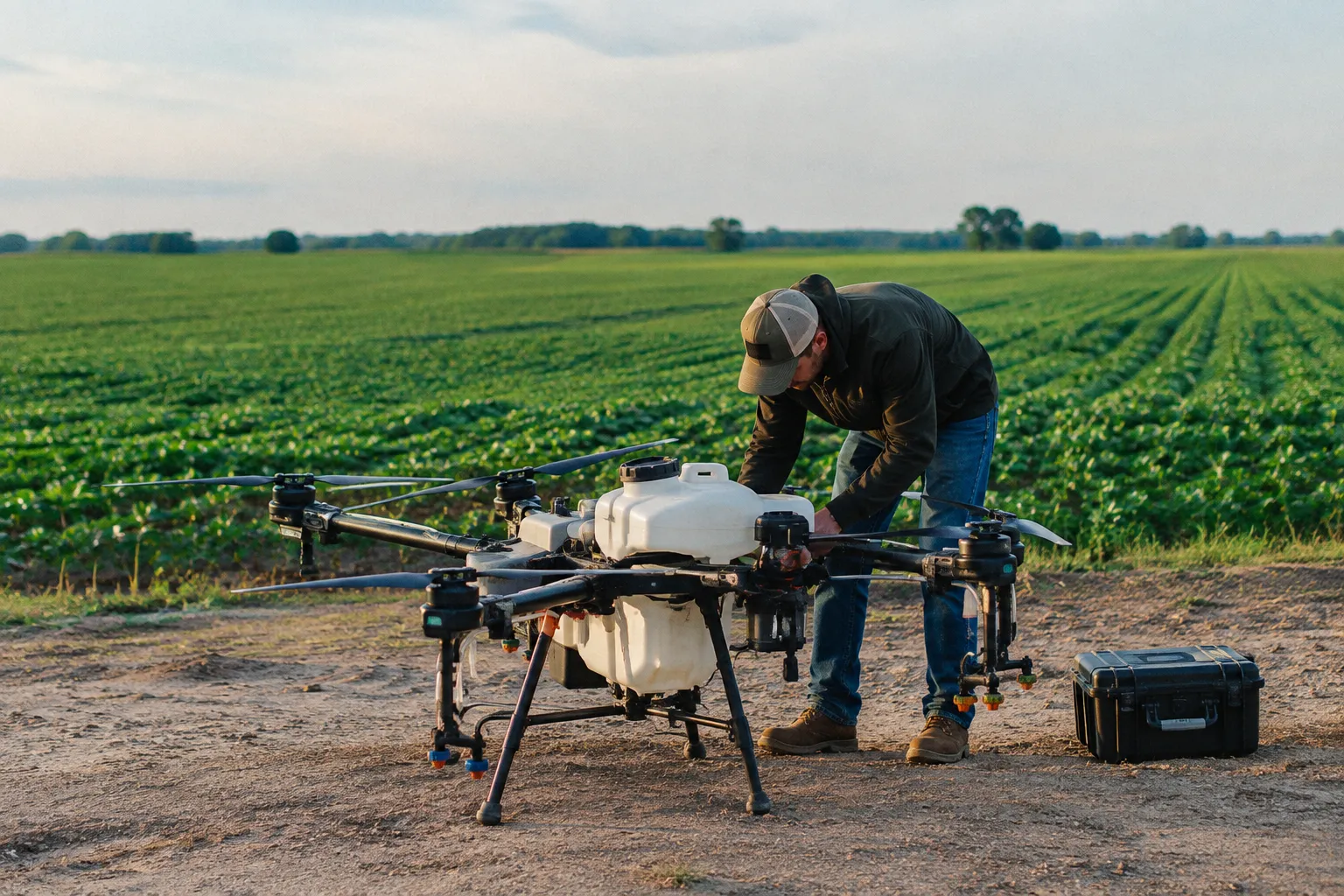
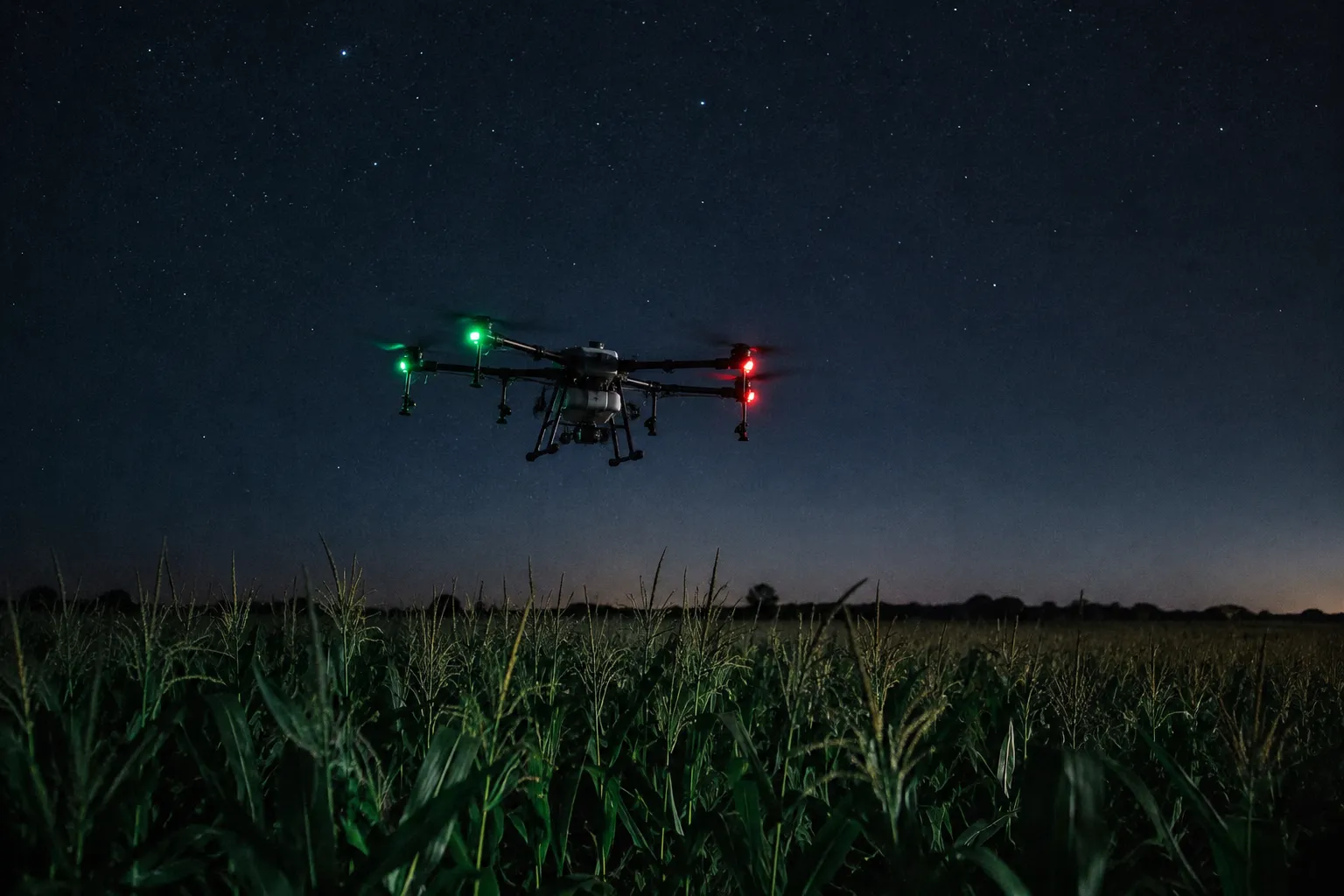
Flying an agricultural drone at night is not the same operation as flying one at noon. The risk profile changes, the regulatory requirements change, and yes, your insurance situation changes too. If you're running spray missions or crop scouting flights after sunset, understanding night flight ag drone insurance is not optional. It's the difference between being covered and finding out the hard way that you weren't.
Agriculture drone operators are pushing into nighttime operations for good reasons. Cooler temperatures reduce spray drift. Winds tend to calm down. Crops are less stressed. But the FAA doesn't just wave you through after dark, and neither does an insurance policy that wasn't written with your actual operation in mind.
How FAA Authorization for Night Flights Affects Your Coverage
Under Part 107, commercial drone pilots must have either a Part 107 night waiver drone authorization or operate under the updated rules that require anti-collision lighting visible from at least three statute miles. This isn't just a regulatory checkbox. Insurance underwriters look at your authorization status when evaluating risk. If you're flying at night without the proper documentation, you may be operating outside the scope of your policy without even knowing it.
We work with underwriters who specialize in ag drone operations, and this comes up constantly. A pilot assumes their general commercial drone insurance covers everything they do with the aircraft. Then a night flight goes sideways, a claim gets submitted, and the underwriter asks for the FAA authorization. If it isn't there, the claim can be denied. That's a painful lesson for something that's entirely preventable.
Nighttime drone agriculture insurance needs to account for the specific conditions of after-dark ag work. Reduced visibility, obstacle detection limitations, and the technical demands on the aircraft itself all factor into how a policy should be structured. A policy that's right for daytime row crop spraying may not automatically extend the same protections when you flip to a night schedule. Read the language carefully, or work with someone who can explain what it actually says.
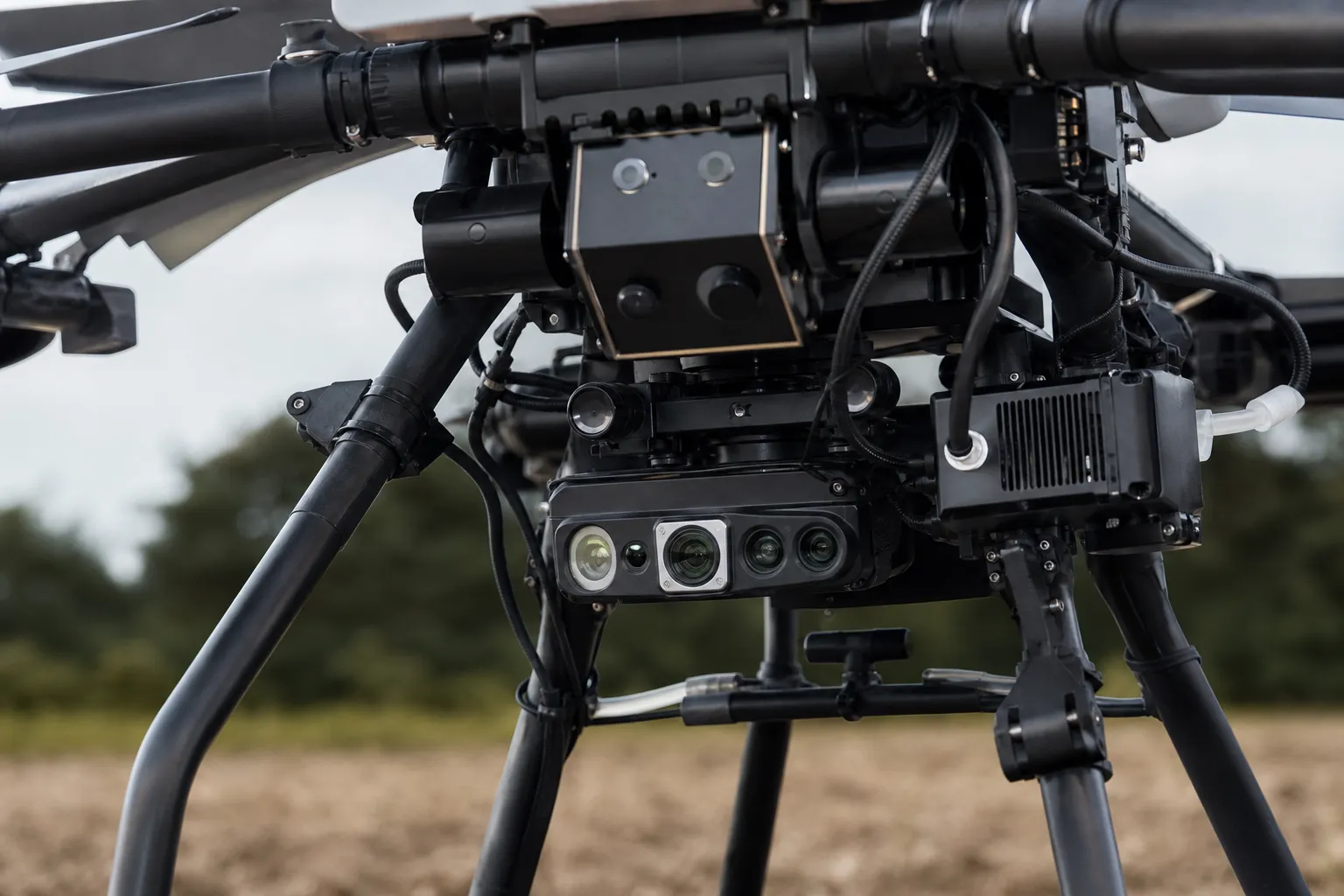
Night flight ag drone insurance also intersects with equipment considerations that don't come up as often during daylight work. Thermal imaging sensors, specialized lighting rigs, and navigation systems all represent additional value that needs to be covered. If your drone is kitted out for nighttime precision agriculture and your policy was quoted on a basic setup, you may be underinsured on the payload alone.
We've issued more than 300,000 commercial drone insurance policies, and ag operations are some of the most complex we work with. The combination of high-value aircraft, expensive payloads, chemical liability exposure, and now after-dark flying means there's a lot that can fall through the cracks if your coverage isn't specific enough. Ag drone after dark coverage should address the aircraft hull, payload, liability for chemical application, and any third-party property that might be affected by a malfunction during a low-light mission.
Getting the right agriculture drone insurance means telling your insurer exactly how you operate. That includes the hours you fly, the terrain you cover, and whether you're running night missions with a waiver or under the updated anti-collision lighting rules. Vague answers at the quote stage lead to gaps in coverage when it matters most. Be specific about your operation, and make sure the policy reflects what you actually do.
Operators with nearly perfect 5-star customer support backing them up don't just get a policy number. They get someone who can walk them through what their nighttime ag coverage actually covers before a claim ever happens. That kind of clarity is worth a lot when you're flying a $15,000 sprayer over someone else's crops at 11 PM.
Frequently Asked Questions
Does standard ag drone insurance automatically cover night flights?
Not always. Many standard agricultural drone insurance policies cover operations as described at the time of quoting. If you add night operations after the fact without notifying your insurer, you may have a coverage gap. Always disclose nighttime flying as part of your operational profile when getting a quote.
Do I need a Part 107 night waiver to be covered for after-dark ag drone operations?
You need to be legally authorized to fly at night under FAA rules, whether that's through a Part 107 night waiver or the current anti-collision lighting requirement under the updated Part 107 regulations. Insurance underwriters will verify your authorization status during a claim. Flying without proper FAA authorization can void your coverage.
How much does night flight ag drone insurance cost compared to daytime-only coverage?
Night operations typically carry higher risk, which can affect premium pricing. The increase depends on factors like aircraft value, payload type, geographic area, and how frequently you fly at night. The best way to get an accurate number is to request a quote that specifically includes your nighttime operational details.
Does ag drone insurance cover chemical liability during night spray missions?
Chemical or pesticide liability coverage is a separate component from hull and general liability coverage. Some ag drone policies include it, others offer it as an add-on. If you're running spray operations at night, confirm explicitly that your policy covers chemical drift or application errors during nighttime missions, not just daytime work.
Get a quote at skywatch.ai