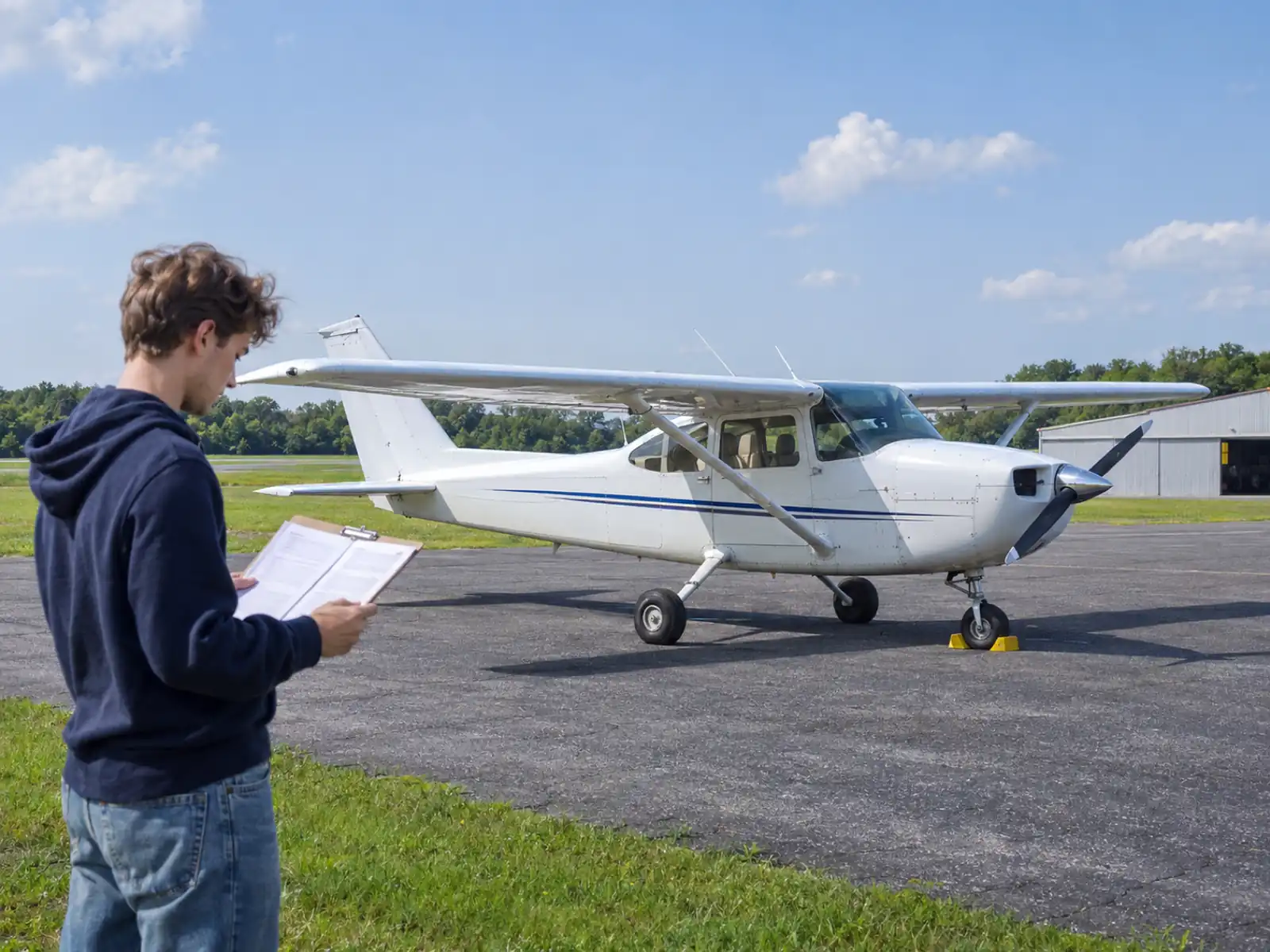
Most student pilots sign the flight school's rental agreement on day one, somewhere between the medical paperwork and the first preflight. Few read it. Yet that page decides who pays if the airplane is damaged, how much of the school's deductible lands on you, and whether you promised to cover the school's losses.
Here is what the Skywatch team suggests you check first.
The damage responsibility clause
Many agreements make the renter responsible for any loss or damage during the rental. One flight school's published FAQ says renters are responsible for "any loss or damage to the aircraft during the rental period" and may owe any portion of its $2,500 physical damage deductible. Other agreements shared on aviation forums make the renter liable for a first slice of damage "however caused."
Those words can make you responsible even when nobody was at fault, like hail or a bird strike.
"Same condition" language
A common line asks you to return the aircraft in the same condition you received it, normal wear and tear excepted. Pilots debating this wording on the Jetcareers forum agreed it depends on how the contract is read. Their advice: ask the school what it means in writing, and ask your insurer how it reads the clause.
Indemnity and hold harmless wording
Some clubs and schools ask renters to indemnify them for losses from operating their aircraft. You promise to cover their costs, which can reach further than what you would owe for your own mistake.
Insurance is usually written around legal liability. Skywatch's aircraft renters insurance applies to damage to a non-owned aircraft in your care that you are legally liable to pay. If a clause makes you pay simply because you signed, ask your insurer whether that amount is covered first.
The school's own policy
The school's insurance protects the school. AOPA's Flight Training magazine has warned that after paying a claim, the school's insurer "can turn around and sue you for what it paid," a process called subrogation. Ask whether renters get a waiver of subrogation, in writing.
A quick checklist before you sign
- Find the damage clause and look for "however caused."
- Note the deductible and how much of it you could owe.
- Look for indemnify or hold harmless wording.
- Check for charges that run until the aircraft is returned.
- Ask for the school's certificate of insurance.
- Ask about a waiver of subrogation for renters.
Then compare that with your coverage. A Skywatch renters policy includes physical damage to non-owned aircraft, with loss of use inside the damage limit, plus optional deductible reimbursement with a minimum $5,000 limit. In training? Our student pilot insurance page shows how coverage fits around lessons.
FAQ
Do I have to sign the flight school's rental agreement?
Most schools require one. You can still ask for unclear wording to be explained in writing first.
Does the school's insurance cover me as the renter?
Some schools say renters fall under their policy with specific liability limits. That policy protects the school first, and its insurer may pursue you after a claim.
What does "however caused" mean?
You may owe for damage even when you were not at fault, up to the amount the clause sets.
Will renters insurance pay what the agreement says I owe?
It depends on the policy and why you owe it. Coverage typically responds to damage you are legally liable for, so ask your insurer about specific clauses.
Can I buy coverage only for my training period?
Yes. Skywatch offers aviation insurance for renters by the day, week, month or year.