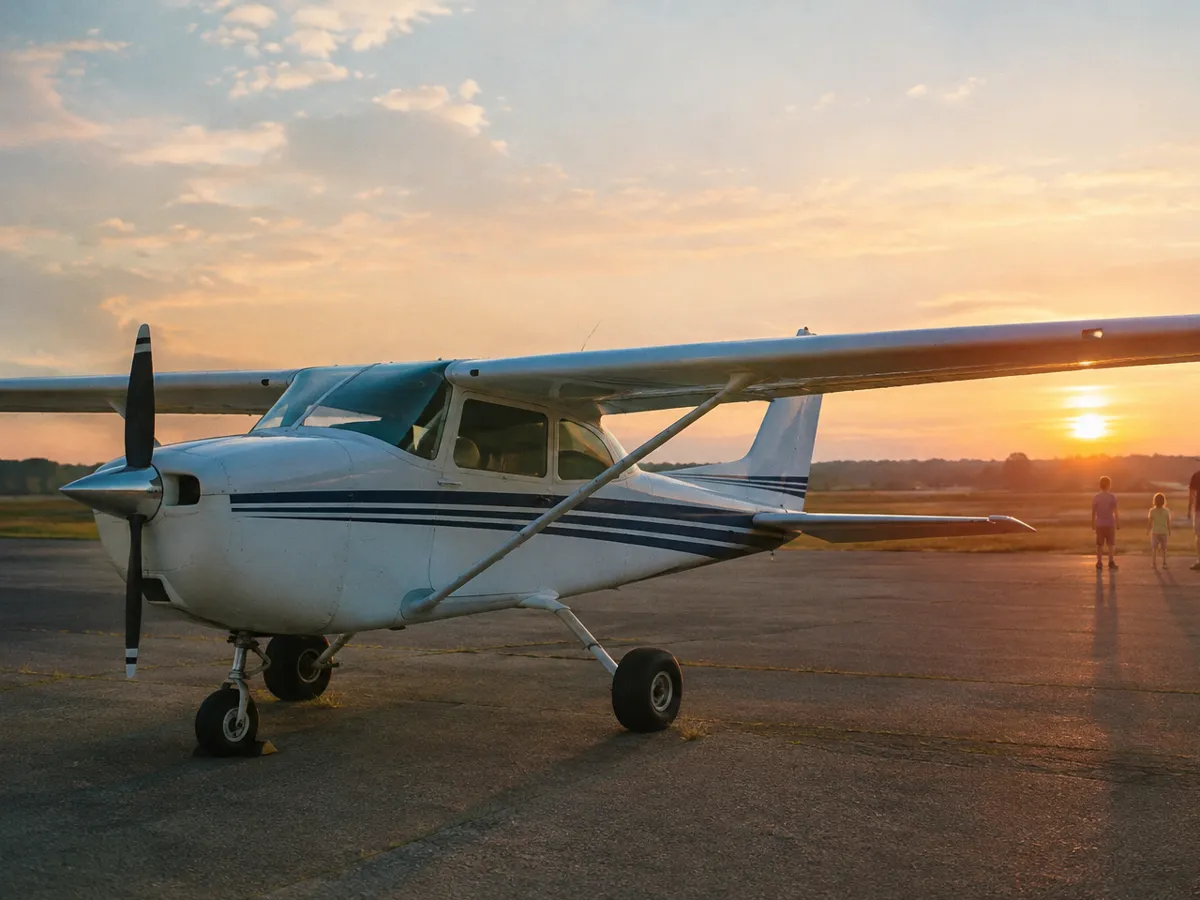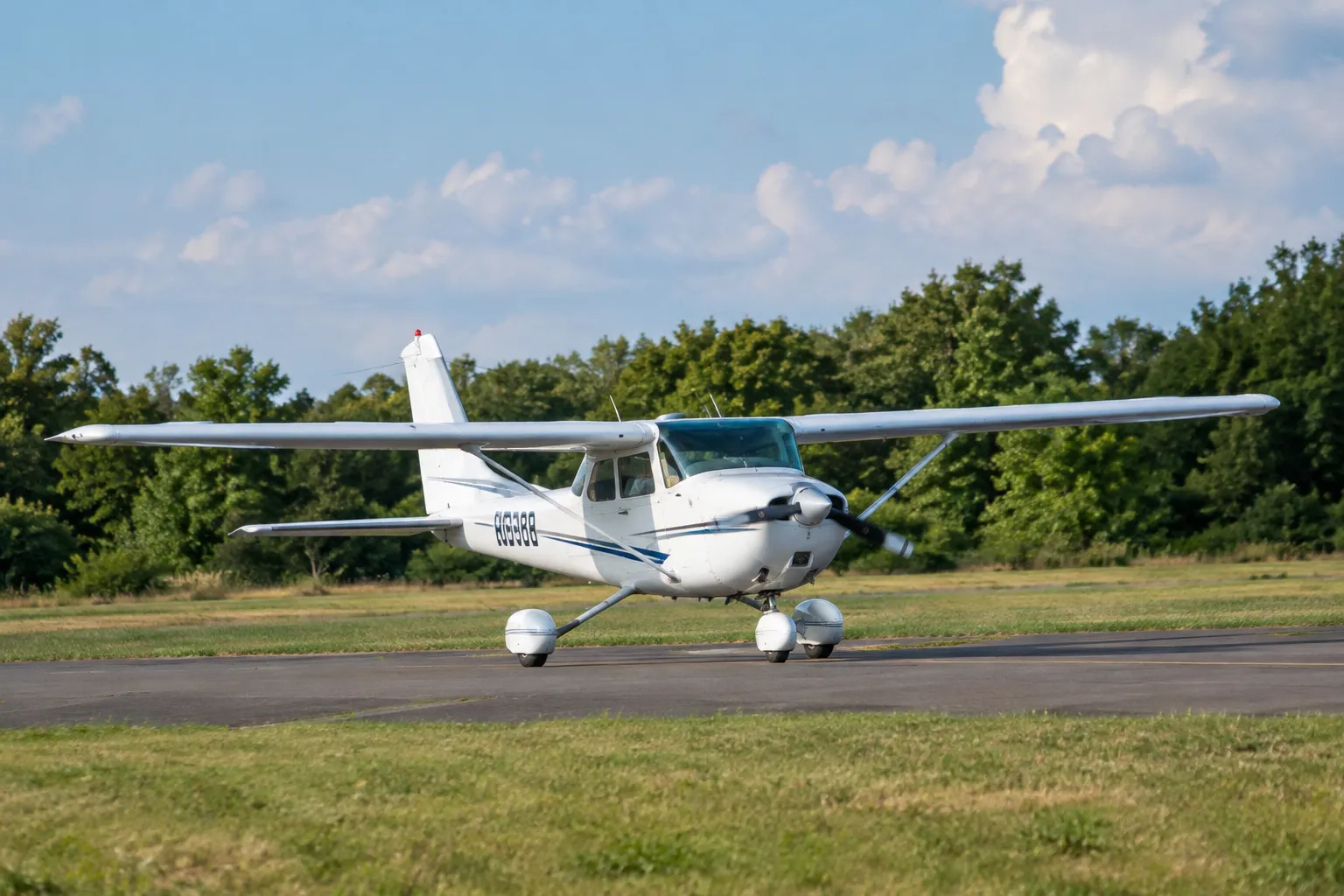


If you are training at a flight school or renting regularly at an FBO, you have probably seen a list of insurance requirements in your rental agreement. They usually look something like: $1,000,000 liability, $50,000 physical damage, $5,000 deductible. Most pilots sign on the dotted line without fully understanding what those numbers actually mean for them personally, or what happens if they come up short.
This is one of the questions we hear from student pilots and renter pilots constantly. So here is a straightforward breakdown of what flight school insurance requirements mean, why they vary so much, and what you actually need to protect yourself.
The school's insurance does not cover you
The most important thing to understand is that the flight school has its own insurance policy on the aircraft. That policy is designed to protect the school and the aircraft owner. It is not there for you.
When you rent and something goes wrong, the school files a claim. Their insurer pays out. Then, in many cases, that insurer turns around and comes after you to recover what they paid. This is called subrogation, and it applies even if the school never takes you to court directly. Their insurance company can pursue you independently.
Your aircraft renters insurance is what stands between you and that recovery action. It covers the gaps the school's policy does not, including the deductible, potential loss of use claims, and your personal liability exposure.
Hull coverage: what the school is actually asking for
The physical damage number in your rental agreement is often the most confusing part. You might see $50,000 or $100,000 or even $150,000 for a Cessna 172 that is clearly not worth that much on the used market.
Here is what is actually going on. Schools set these numbers for a few different reasons:
Some schools want you to cover their deductible only. If the school has a $5,000 deductible on their hull policy, they may require $5,000 to $25,000 in physical damage coverage from you, just enough to cover what they would pay out of pocket if you have an incident.
Other schools require coverage closer to the aircraft's replacement value. They either do not carry full hull insurance themselves, or they want to make sure someone can cover a total loss without a protracted dispute. This is more common with schools that run older aircraft where hull coverage is expensive relative to the airframe value.
A third scenario is schools that have worked with an insurance agent who simply set a conservative number, and the school has required it ever since without revisiting whether it still makes sense.
The bottom line: always ask your school what their deductible is and whether their own policy covers full replacement value. That conversation will tell you a lot about what you actually need versus what the requirements say on paper.
Liability limits and what they protect against
Most schools require at least $1,000,000 in liability coverage. Some go higher, particularly if they operate aircraft with four or more seats or instruct in higher-performance types.
Liability coverage is the part of your non-owned aircraft insurance that protects you if someone gets hurt or property gets damaged as a result of an incident where you are found at fault. This includes passengers, people on the ground, and other aircraft.
A million dollars sounds like a lot until you consider what aviation accidents actually cost. A single serious injury lawsuit can easily exceed that number. Many experienced pilots carry $1,000,000 to $2,000,000 in liability as a baseline, not because the school requires it, but because the math makes sense.
Why the numbers vary so much between schools
If you have rented at more than one place, you have probably noticed that requirements are inconsistent. One school wants $25,000 in hull coverage, another wants $100,000. One FBO has no requirements at all.
This inconsistency comes from a few places. Older, lower-value training aircraft like a beat-up Cessna 150 simply cost less to repair or replace, so the exposure is lower. Newer or higher-performance aircraft like a Diamond DA40 or a Cessna 182 carry higher requirements because the cost to repair or replace is significantly more.
Some schools also carry better institutional coverage themselves, which reduces what they need from renters. Others shift more of the risk onto pilots, intentionally or not.
The variation is not a red flag by itself. It is worth asking questions, but it does not necessarily mean one school is safer or more legitimate than another. What matters is that you understand your own exposure and carry enough coverage to close the gap.
What happens if you do not meet the requirement
If you sign a rental agreement with an insurance requirement and fly without meeting it, you are in breach of that agreement. Practically speaking, this means that if you have an incident, you could face personal liability for amounts you thought were covered, a denied claim from your own insurer if the policy terms differ from what you represented, and potential legal action from the school directly on top of any subrogation claim.
For student pilots, this situation comes up most often before a first solo. Some students delay getting coverage because they are not sure what they need. Getting the policy in place before you fly solo is not just a school formality. It is genuinely the right time to have coverage.
On-demand coverage is a practical option
If you are early in training or flying infrequently, paying for annual coverage when you are flying once or twice a month does not always make sense financially. On-demand non-owned aircraft insurance lets you get coverage by the day, week, or month, so you are only paying when you are actually flying.
This is also worth considering for CFIs who instruct in aircraft they do not own. Whether you are instructing at a single school or picking up hours across multiple clubs and FBOs, your own non-owned coverage travels with you and protects you regardless of which aircraft you are in.
Frequently asked questions
Does the flight school's insurance cover me as a student pilot?
No. The school's insurance protects the school and the aircraft. It does not cover your personal liability. If the school's insurer pays out a claim for an incident you caused, they can pursue you through subrogation to recover what they paid. Your own non-owned policy is what protects you from that.
Why does my school require $100,000 in hull coverage when the plane is only worth $40,000?
Requirements do not always reflect the actual aircraft market value. Some schools set figures based on their own policy structure, past incidents, or recommendations from their insurance agent that have not been updated in years. Ask the school what their hull deductible is. That number is often the more relevant figure for what you actually need to cover.
What is the difference between liability and physical damage coverage in a non-owned policy?
Liability covers bodily injury and property damage you cause to others. Physical damage (hull) coverage covers damage to the aircraft you were flying. They are separate parts of the policy and you typically have different limits for each. Both matter, but for most renter pilots, liability is the coverage that protects against the largest financial exposure.
Do I need non-owned aircraft insurance if I am only a student and have not soloed yet?
Yes, and most schools will require it before your first solo anyway. Accidents during training do happen, and being a student does not exempt you from personal liability or subrogation exposure. Getting covered before you solo is the right time to put a policy in place.
Can I get non-owned aircraft insurance for just a few days or one month instead of a full year?
Yes. On-demand coverage is available by the day, week, or month. This works well for student pilots who are early in training and flying infrequently, or for certificated pilots who only fly occasionally. You get the same protection without paying for a full year when you may only need coverage a few times a month.