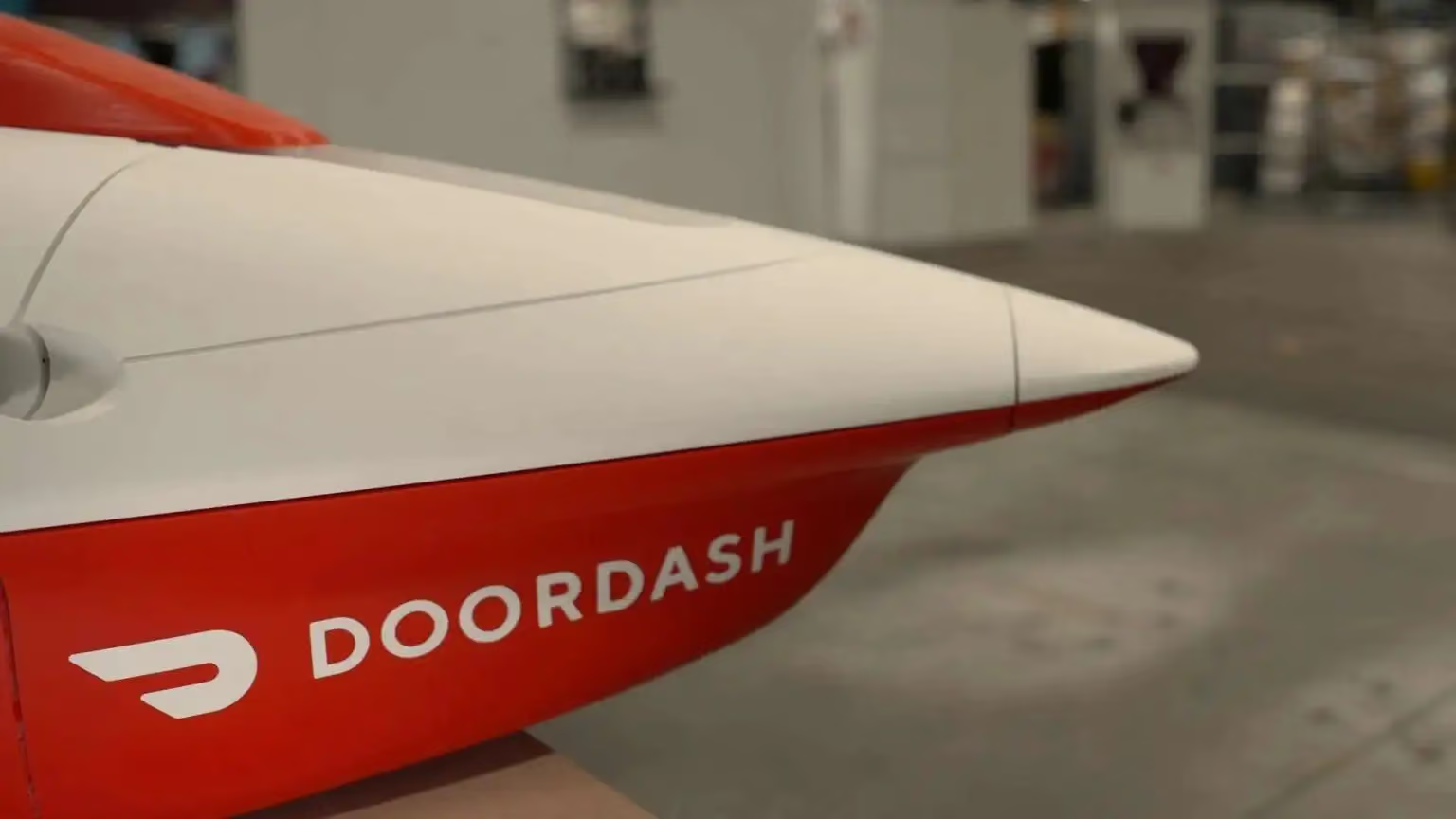
On July 29, 2026, DoorDash Air became the eighth operator in the United States to earn FAA Part 135 certification for drone delivery. That number tells you everything about how exclusive this designation is. For an industry that has been promising autonomous delivery for over a decade, this milestone signals something real: the regulatory infrastructure for commercial drone delivery is finally taking shape.
What Is FAA Part 135 Certification?
FAA Part 135, formally codified under 14 CFR Part 135, is the federal standard for commercial air carrier operations. It is the same regulatory framework that governs charter flights and commuter airlines, and it is not designed with small operators in mind.
Most commercial drone operators work under Part 107, the FAA rule that covers individual pilots flying a single drone for commercial purposes. Part 107 is the entry point for real estate photographers, construction site inspectors, and agricultural operators. It works well at that scale.
Part 135 is a different category entirely. To earn it, an operator must demonstrate:
- Approved operations specifications (ops specs) covering every type of flight they intend to conduct
- Airworthiness documentation for each aircraft in the fleet
- A formal maintenance program with recordkeeping standards
- Crew training and qualification programs
- A functioning Safety Management System (SMS)
Only eight operators in the U.S. currently hold Part 135 drone certification. That group includes Wing, Zipline, UPS Flight Forward, Amazon Prime Air, and now DoorDash Air. Every name on that list is a company that has invested years and significant capital to get there.
Why Part 135 Is So Hard to Get?
DoorDash did not walk into FAA offices in 2025 and walk out with a certificate in 2026. The company spent roughly four years in testing programs, regulatory engagement, and delivery pilots before the certification was granted. That timeline is not unusual for Part 135 drone delivery applicants.
The FAA treats this process with the same rigor it applies to airline certification, which means operators face:
- Airline-level documentation requirements across operations, maintenance, and training
- Environmental review under the National Environmental Policy Act (NEPA) before scaled operations can begin
- Integration with Unmanned Traffic Management (UTM) systems that allow the FAA to track and coordinate drone flights at scale
- Beyond Visual Line of Sight (BVLOS) waivers or authorizations, which are required for most practical delivery routes
Most drone companies operating today rely on Part 107 waivers to push the boundaries of what the standard rule allows. Those waivers are granted case by case, and they do not produce the kind of scalable operational authority that Part 135 provides. The distinction matters enormously when a company wants to run hundreds of simultaneous flights across multiple cities.
What DoorDash Air Is Actually Building?
DoorDash Air is not simply a drone program. It is a logistics platform built around drone delivery as one of several fulfillment modes.
The drone hardware is American-built, but as Harrison Shih, Head of DoorDash Air, stated: "The aircraft is the part everyone sees, but the harder problem is the ground infrastructure." That infrastructure includes SmartScale (automated merchant handoff systems), optimized routing tools, and the Autonomous Delivery Platform, which assigns orders in real time across Dashers, Dot ground robots, drones, and third-party partners.
The business case behind the platform is grounded in a specific delivery problem. Roughly 20 percent of DoorDash orders travel between three and five miles but take 25 percent longer than shorter routes to complete. That gap is exactly where drone delivery provides measurable value. In pilots, merchants connected to DoorDash Air saw order volume increase by approximately 30 percent, reflecting faster delivery times translating directly into customer demand.
The certification unlocks the ability to scale this system. Without Part 135, DoorDash Air is a pilot program. With it, the company has the regulatory authority to operate as a commercial air carrier, expand its fleet, and integrate with national airspace systems in a way that Part 107 operators cannot.
Part 135 vs. Part 107: What Drone Operators Need to Know
If you operate commercially under Part 107 today, understanding where Part 135 fits is important for planning your own business.
Part 107 covers individual commercial operators flying a single unmanned aircraft. It allows for commercial work across many industries but limits operations in meaningful ways, particularly around BVLOS flight, night operations without waivers, and fleet-scale coordination. It is the right framework for most operators at most stages of growth.
Part 135 is the framework for companies that want to operate drone fleets at commercial air carrier scale. It enables large-scale delivery operations, multi-drone fleets, and the kind of airspace integration required for operations in and around populated areas. The certification is not something individual pilots pursue. It belongs to organizations that have built the operational, safety, and documentation infrastructure to support it.
The typical path runs from Part 107, to Part 107 waivers for expanded operations, to years of documented compliance and testing, and eventually to Part 135 if the business model requires it. DoorDash followed that trajectory. So did every other operator that currently holds the certification.
What This Means for Drone Insurance
Part 135 certification changes the insurance picture significantly, both for large operators and for individual commercial pilots watching the industry evolve.
For Part 135 operators, coverage requirements mirror those of commercial aviation. That means hull coverage for the aircraft fleet, liability coverage at commercial air carrier levels, and cargo insurance for the goods being transported. These are not policies a hobbyist plan covers. They require purpose-built commercial aviation insurance structured around fleet operations and the specific risks of autonomous delivery.
For Part 107 commercial operators, the lesson is straightforward: your insurance needs are already real, even at smaller scale. A Part 107 operator performing commercial work is not covered by a client's policy. Hull damage, third-party liability, and payload damage are exposures that require a dedicated drone insurance policy.
As drone delivery scales and Part 135 operations become more common, the insurance industry will continue to align with aviation standards. Underwriters will look at operational records, maintenance logs, pilot qualifications, and safety management practices, exactly the same inputs that matter in traditional aviation.
SkyWatch provides drone insurance for commercial operators at every stage, from solo Part 107 pilots to growing fleets preparing for expanded operations. If you are flying commercially and do not have a dedicated policy in place, now is the time to address that. Get a drone insurance quote at skywatch.ai.
Where the Industry Goes From Here
Eight operators. That is how many organizations have cleared the Part 135 bar for drone delivery in the United States. Wing, Zipline, UPS Flight Forward, Amazon Prime Air, and DoorDash Air are among them. The certification that once looked like a distant regulatory aspiration is becoming the baseline credential for any company serious about commercial drone delivery at scale. As infrastructure matures, airspace integration improves, and consumer demand for fast delivery continues to grow, Part 135 drone delivery will shift from exceptional to expected. The operators building toward that future need the regulatory standing, the operational systems, and the insurance coverage to match.