
Start With the Budget and the Insurance Quote
Buying a light aircraft is a series of decisions that each cost money if you get them wrong. Before you look at a single listing, set a total budget that includes the purchase price, pre-purchase inspection, annual inspection, hangar or tie-down, and insurance. Many first-time buyers fix on the sticker price and ignore the recurring costs.
Get an insurance quote before you make an offer. Premiums vary based on make and model, hull value, your total time, time in type, and whether you hold an instrument rating. A quote on the specific aircraft you are considering tells you what it will cost to own, and some insurers will decline or restrict coverage on certain aircraft or on pilots without enough time in type. Learning that before closing saves you from a hard conversation after you have paid.
If you are comparing options, read up on owned aircraft insurance so you understand hull coverage, liability limits, and what pilot warranty clauses mean for you.
Pre-Purchase Inspection
The pre-purchase inspection (PPI) is the most important money you will spend in the transaction. It is not the same as an annual inspection. An annual confirms the aircraft meets minimum airworthiness standards. A PPI is a buyer-focused evaluation of condition, history, and hidden cost.
Choose the Right Shop
- Use an independent mechanic or shop you select, not the seller's.
- Look for a shop with deep experience on that specific make and model. Type-specific knowledge catches known problem areas that a generalist will miss.
- Agree in writing on scope, hourly rate, and who pays if the aircraft fails and you walk away. Typically the buyer pays.
Set the Terms Before You Fly There
- Make your offer contingent on a satisfactory PPI and a clean title.
- Put the deposit in escrow with a neutral third party.
- Ask the shop to give you a written squawk list with estimated repair costs, then use it to renegotiate or walk.
Airframe Checklist
Airframe problems are expensive and sometimes impossible to repair economically. Have the shop check the following closely.
- Corrosion: Inspect the belly, wheel wells, control surface hinges, and wing spar attach areas. Aircraft based near saltwater need extra attention.
- Damage history: Look for wrinkled skin, mismatched paint, replaced rivets, and uneven panel gaps. Compare findings against the logbooks.
- Control cables and pulleys: Check for fraying, rust, and incorrect tension.
- Landing gear: Check struts, brakes, tires, and any signs of hard landings or prop strikes.
- Windows and interior: Cracked or crazed windows and worn seat rails are replacement items that add up.
- Airworthiness directives (ADs): Confirm every applicable AD is complied with and documented, including recurring ones.
Engine Checklist
The engine is usually the largest single maintenance cost. Do not rely on hours since overhaul alone. Calendar time matters too, because engines that sit unused can corrode internally.
- Time since major overhaul (TSMO): Compare it to the manufacturer's recommended TBO, and understand that TBO is a guideline, not a legal limit for most Part 91 operators.
- Compression test: Have the shop run a differential compression test on every cylinder.
- Oil analysis and filter inspection: Metal in the filter or abnormal analysis results can indicate internal wear.
- Borescope inspection: This lets the mechanic look inside cylinders for scoring, corrosion, or valve damage.
- Accessories and propeller: Check magnetos, alternator, starter, and prop for overhaul times, leaks, and nicks.
- Operating history: Ask how often it flew. Steady regular use is usually better than long periods of storage.
Avionics Checklist
Avionics can add or remove thousands from the value of an aircraft. Verify that everything works and that it meets current requirements.
- Confirm ADS-B Out is installed, compliant, and tested, since it is required in most controlled airspace.
- Verify the transponder and altimeter static system have been inspected within the required 24 calendar months for IFR.
- Check the age and support status of GPS units, and whether the navigation database is current or subscription-based.
- Test the autopilot, intercom, radios, and any engine monitor.
- Make sure all installed equipment has matching paperwork, such as FAA Form 337 or an approved logbook entry for alterations.
Be careful with older panels. A legacy instrument cluster may be reliable, but replacement parts can be hard to find, and upgrades change your hull value and your premium.
Logbooks and Records
Logbooks are the aircraft's history. Missing or incomplete records reduce value and can create airworthiness problems you inherit.
- Confirm you have the airframe, engine, and propeller logbooks, going back to the aircraft's manufacture date if possible.
- Check for gaps in time, especially long periods with no annual inspection entries.
- Match total time in the logs against the tachometer and recent maintenance records.
- Look for documented damage history, major repairs, and any past incidents.
- Review the weight and balance, equipment list, and flight manual or POH for the specific serial number.
- Cross-check the logs with FAA records and any NTSB accident database entries for the registration number.
Title Search and Registration
A clean title proves the seller can legally transfer ownership. Skip this step and you may buy an aircraft with a lien against it.
What to Do
- Order a title search through a reputable aircraft title company. They search FAA aircraft records in Oklahoma City for liens, encumbrances, and ownership chain issues.
- Confirm the seller's name matches the registered owner.
- Verify the registration is current, and check that the airworthiness certificate is valid.
- Use a written bill of sale and file the registration application promptly. Use an escrow service for the closing.
Some insurers want to see proof of ownership or a bill of sale to bind coverage, so keep your closing documents organized.
Match Insurance to the Aircraft You Are Buying
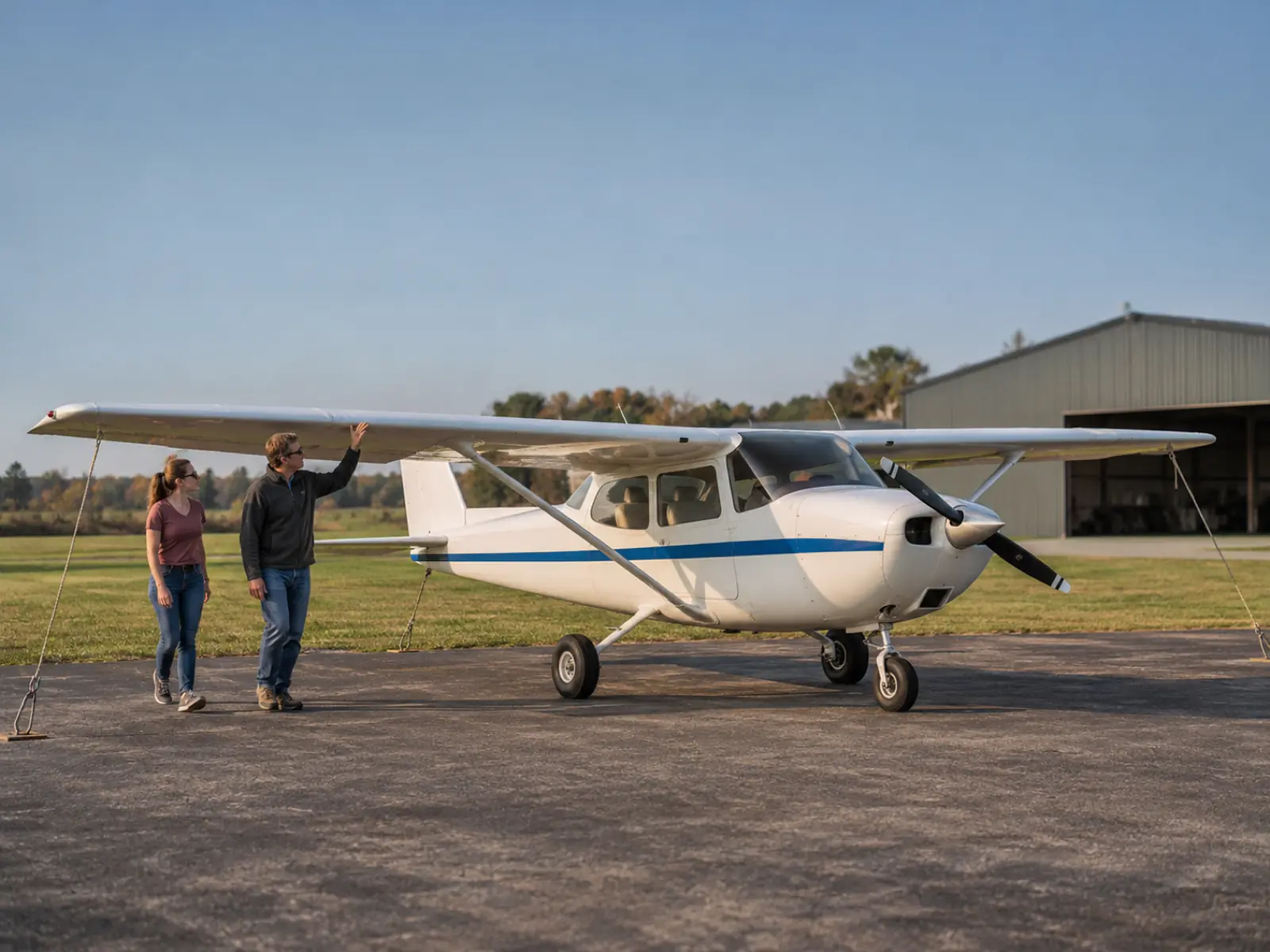
Different aircraft carry different coverage needs. If you are buying a trainer-class airplane such as a Skyhawk, review single-engine aircraft insurance options to see how hull value, liability, and pilot requirements typically work. For a broader view of what policies include, see this overview of aircraft insurance.
If you have been renting until now, note that your rental coverage does not carry over. Many renter pilots carry a non-owned policy, but owning requires its own hull and liability coverage.
Frequently Asked Questions
How much does a pre-purchase inspection cost?
Costs depend on aircraft type and shop rates, but plan for several hundred to a few thousand dollars. Complex aircraft and engine borescope work raise the price.
When should I get aircraft insurance when buying?
Get a quote before you make an offer, and bind coverage before closing so the aircraft is insured the moment you take ownership.
Does insurance cost more for first-time owners?
Often, yes. Lower total time and limited time in type can raise premiums. Completing transition training can help.
Can I skip the title search if the seller is a dealer?
No. Run the search on every purchase. A dealer can still sell an aircraft with an undisclosed lien.
What if the logbooks are missing?
Treat it as a major red flag. Missing records reduce resale value and can make the aircraft difficult to insure. Negotiate hard or walk away.
Ready to protect your aircraft? Get a quote in minutes.
Get a Quote