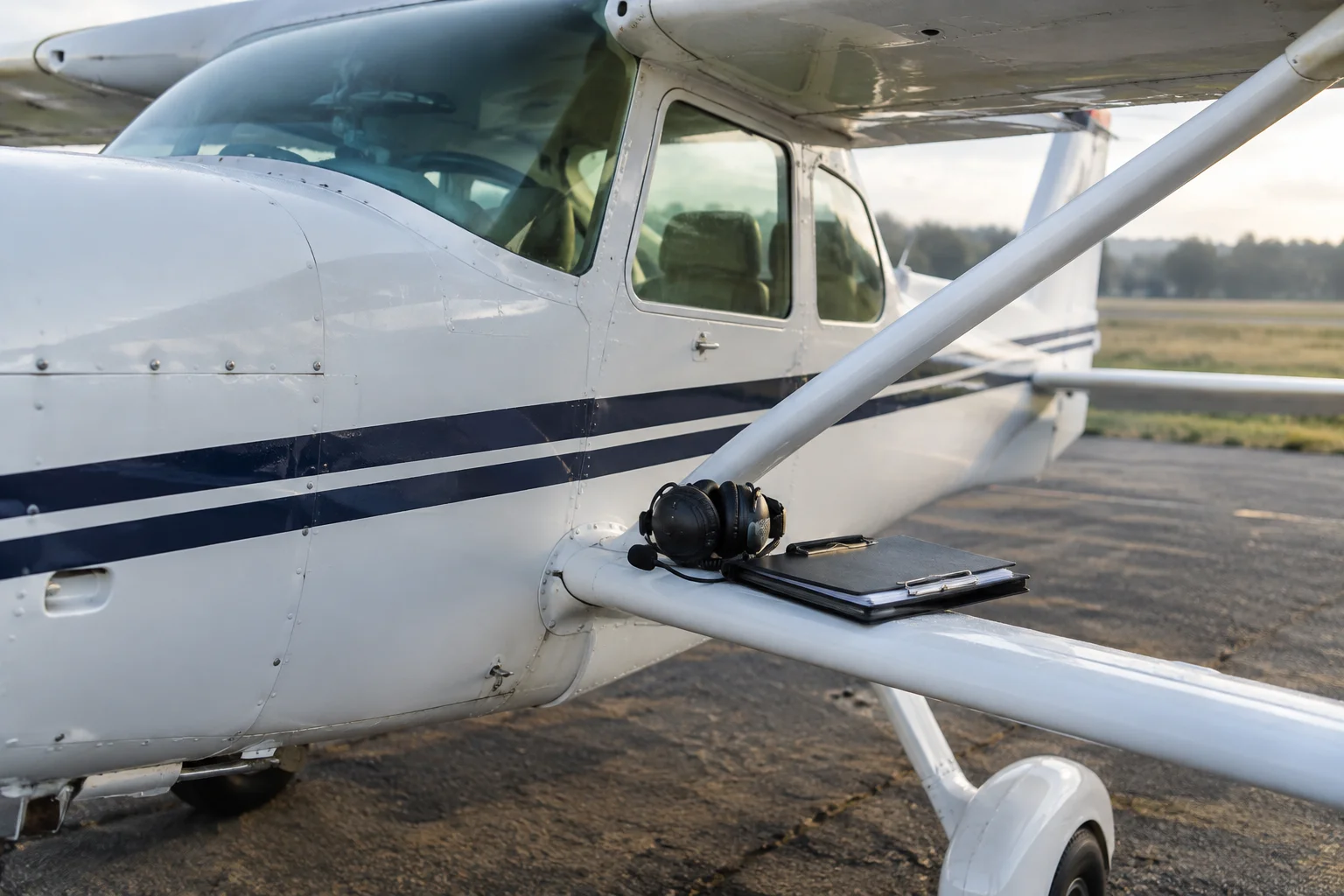

A student pilot on r/flying is about to solo in a Piper. The flight school wants non-owned renters insurance with $50,000 in hull coverage, and he asked for the cheapest option. He also asked whether monthly coverage is fine for solo and cross-country flights instead of an annual policy. The replies were all over the map: one pilot pays $200 a year, another pays $2,300. Both are talking about the same type of insurance.
Why two student policies can differ by $2,000
Price follows the limits. A $200 policy and a $2,300 policy are rarely the same product. One pilot in the thread carries $1,000,000 per occurrence, $200,000 for aircraft damage and $10,000 in medical coverage. Another buys a bare policy built to satisfy a school's minimum. Experience, aircraft type and the insurer's rules move the number too.
Compare these lines side by side before you compare price:
- Hull (aircraft damage) limit and deductible
- Liability limit for injury and property damage
- Passenger and medical coverage
- Whether solo and cross-country flights are covered
Check what the school really requires
Several instructors in the thread suggested confirming the $50,000 hull number in writing. Some schools only ask the renter to cover the deductible because the school's own policy pays for the airplane. Others require full hull coverage. Our guide on how much hull coverage a renter pilot needs explains how to match the limit to a training aircraft.
The school's liability cap can run out fast
One flight school employee explained the gap clearly. Their policy pays for the plane, but liability is capped at $100,000. If a renter taxis through a row of parked airplanes, that cap disappears quickly and the renter can be responsible for the rest. Your own policy is what covers the deductible and any liability above the school's limit. See which policy responds, the school's or yours for a full breakdown.
Monthly or annual: which fits a student?
Monthly coverage is fine if your training has a clear end date. One pilot in the thread pointed out the catch: unless you stop flying after the certificate, you will need insurance afterward, and the trainer type matters less than whether it is complex, multi-engine or tailwheel. Skywatch sells non-owned coverage by the day, week, month or year, so you can start short and move to annual once you know how often you fly. Our flexible coverage guide for students covers the trade-offs.
A simple way to compare quotes
- Get the school's requirements in writing: hull, liability and certificate of insurance.
- Ask each provider for the same hull and liability limits.
- Confirm solo and cross-country flights are included.
- Pick the term that matches your training plan.
- Only then compare price.
Ready to compare? See Skywatch aircraft renters insurance or the student pilot insurance page.
FAQ
How much is renters insurance for a student pilot?
Reddit pilots report anywhere from about $200 to $2,300 a year. The difference comes mostly from hull and liability limits, so compare policies with matching limits.
Is monthly renters insurance okay for solo flights?
Yes, if the policy covers solo and cross-country flying and meets your school's requirements. Plan to keep coverage after your certificate if you will keep renting.
Does the flight school's insurance cover me as a student?
It protects the school first. Its liability cap can be limited, and renters may be responsible for the deductible and anything above the cap.
What hull coverage does a student pilot need?
It depends on the school. Some require $50,000 or more, others only the deductible. Ask for the requirement in writing.
Does the type of trainer change the price?
Not much among standard trainers. Complex, multi-engine and tailwheel aircraft usually cost more or require more dual instruction.