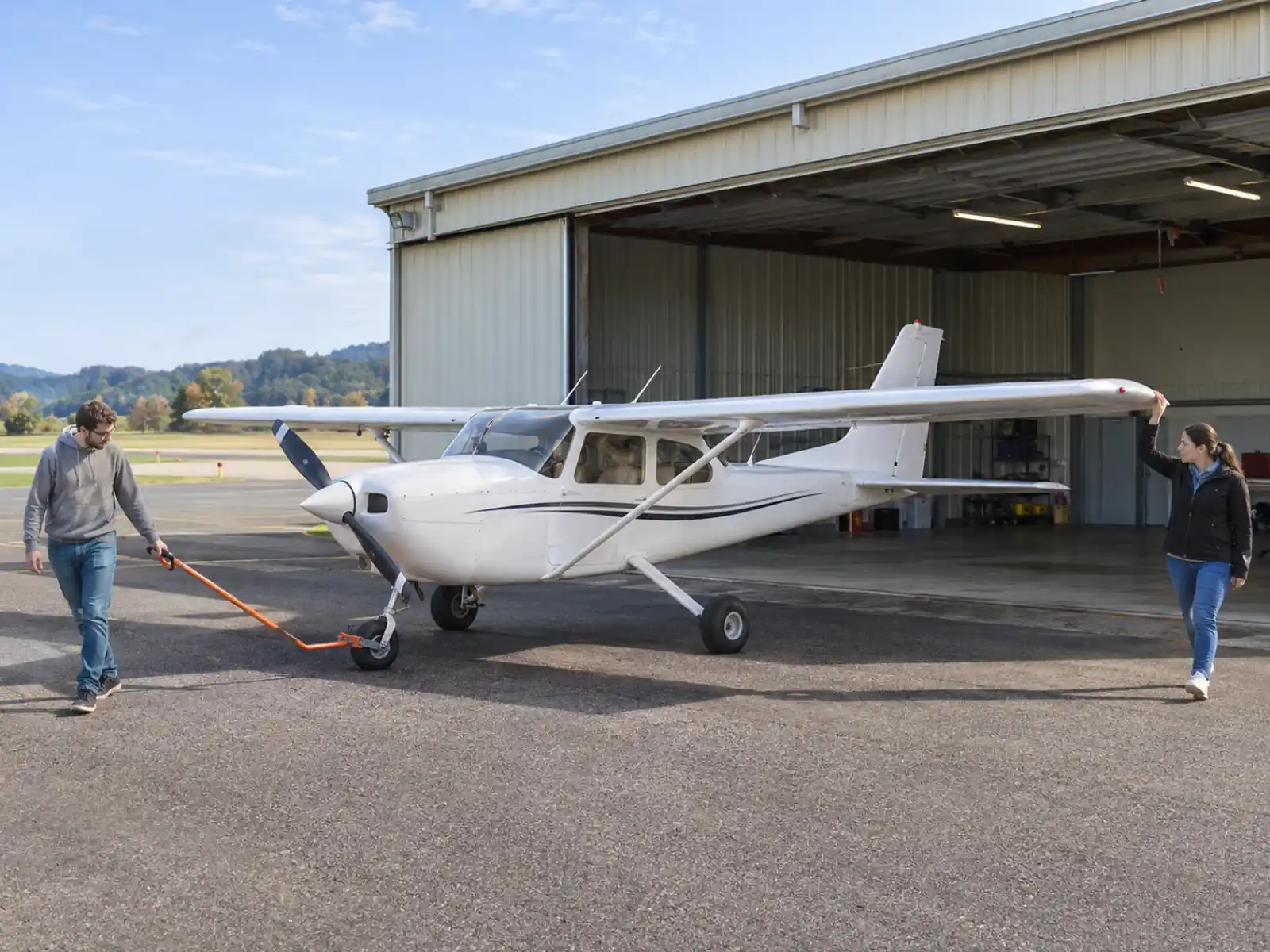
Many first-time owners hear the same pitch: put your new plane on leaseback with the local flight school and let rental income cover a big part of your ownership costs. Sometimes it works. But before you sign, look hard at the line item that changes the most: insurance.
How a leaseback works
You own the aircraft and the school or FBO schedules it for rental and instruction. You get a share of the hourly rental and can still fly it yourself, usually by booking it like any renter. In the arrangement AVweb describes, the owner keeps paying the fixed costs, insurance included, even when the plane sits on the ramp.
Your personal policy probably does not fit anymore
Most owner policies are written for private flying. At Skywatch, our single-engine aircraft insurance covers you for private, non-commercial use of your owned aircraft. Rental and paid instruction are a different kind of use, and the policy has to say it allows them. On Pilots of America, owners describe having to change the policy to allow rentals and quotes several times their personal premium.
That is not a reason to avoid a leaseback. It is a reason to get a rental and instruction quote before you run the math.
Hull value and the deductible
Students and renters put far more landings on a plane than one owner would. Leaseback owners on the same forum say to insure the hull for full value; one described a renter gear-up in a plane that was not.
If a renter blows a tire or bends a wingtip, who pays the deductible: the school, the renter or you? Put the answer in the lease agreement.
Inspections and lender rules
Flight instruction for hire changes your maintenance schedule. Under 14 CFR 91.409(b), an aircraft that a person provides for flight instruction for hire needs an annual or 100-hour inspection within the preceding 100 hours of time in service. Agree in writing who pays for those inspections.
If you are financing the plane, call your lender early. AOPA Finance notes that lenders may limit aircraft age, total time and the number of leaseback hours flown per year, and may ask for a larger down payment.
A leaseback insurance checklist
- Get a quote for rental and instruction use before you sign anything.
- Set the hull value at what it would cost to replace the plane.
- Write down who pays the deductible after renter damage.
- Confirm how the school's instructors and renters fit under the policy.
- Agree who pays for 100-hour inspections and check your loan terms.
If the numbers still work, a leaseback can make sense. If you decide to keep the plane for your own flying, our aircraft insurance options let you choose liability only, ground only or in flight hull coverage. Flying commercially? Contact the Skywatch owners team at owners-support@skywatch.ai.
FAQ
Does a standard owner policy cover a plane on leaseback?
Usually not. Owner policies are commonly written for private use, and rental or instruction for hire has to be allowed by the policy.
Will my premium go up on leaseback?
Expect it to. Forum owners report rental quotes several times their personal premium.
Who pays the deductible if a renter damages my plane?
Whoever the lease agreement says. Settle it in writing before the first rental.
Does a leaseback plane need 100-hour inspections?
If it is provided for flight instruction for hire, 14 CFR 91.409(b) requires an annual or 100-hour inspection within the preceding 100 hours.
Can I still fly my own plane?
Yes, but usually by scheduling it like any renter.