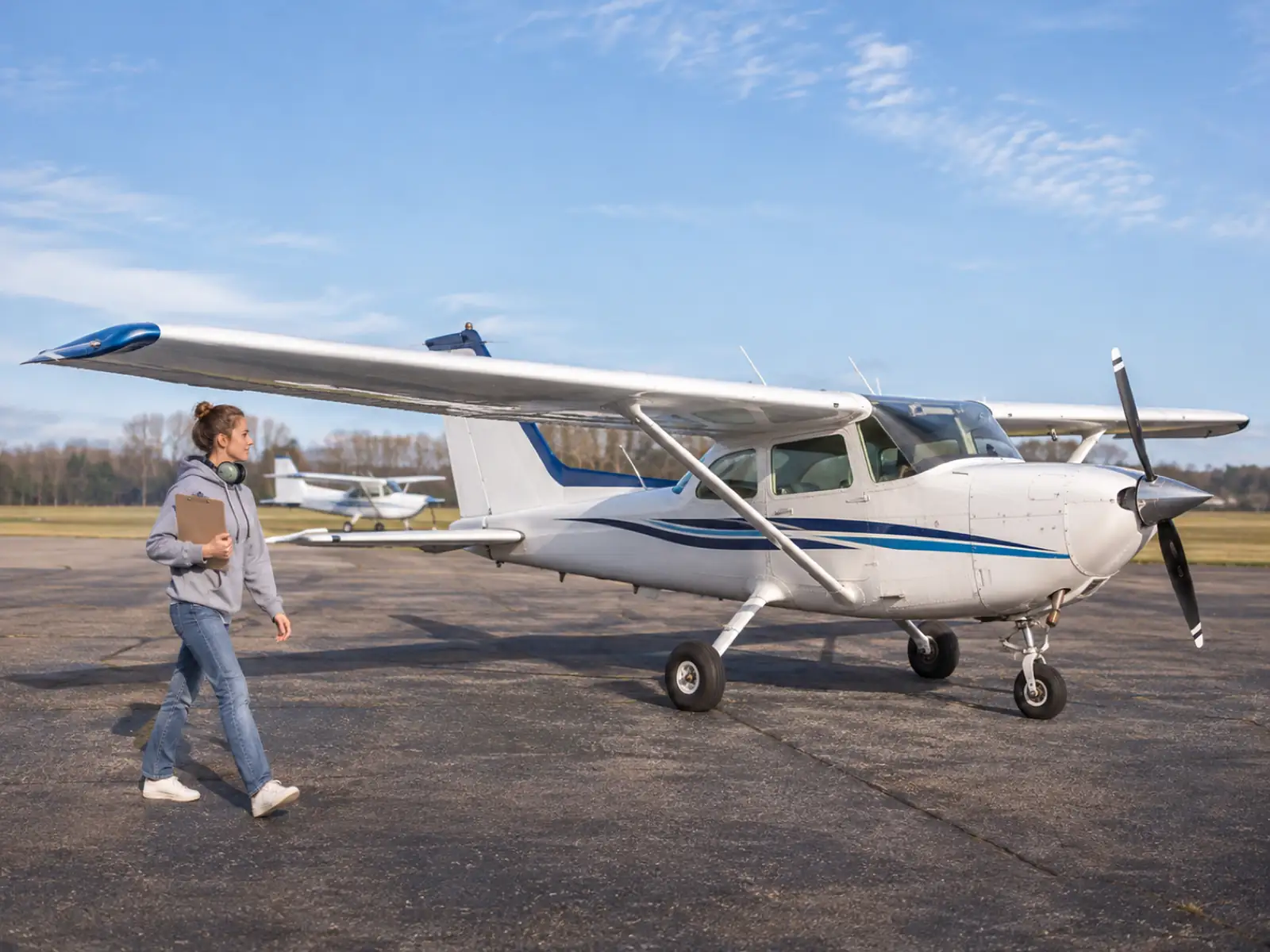
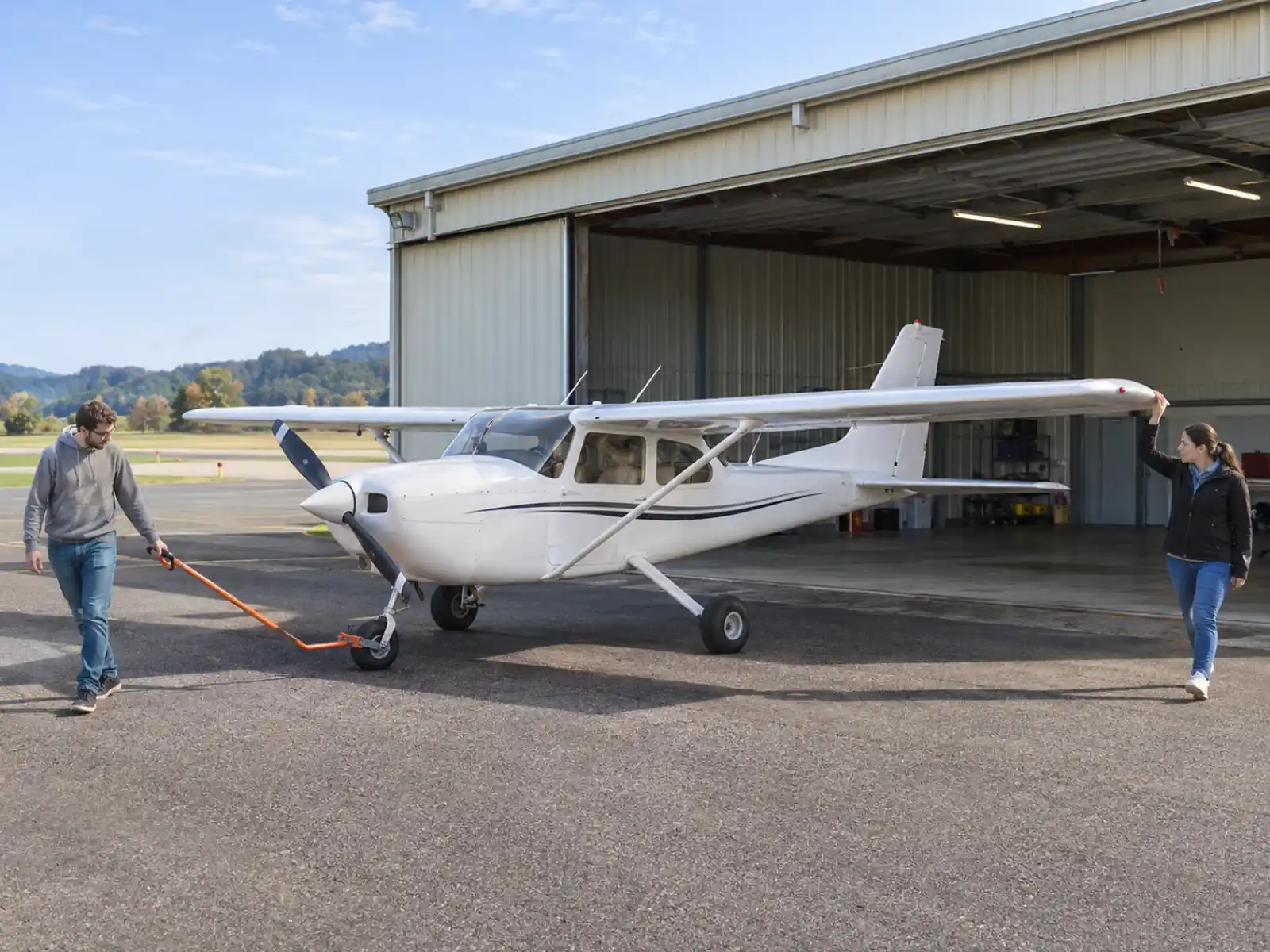
Most renter pilots picture trouble happening in the air. In reality, a lot of the damage we hear about happens with the engine at idle or off: a wingtip that meets a hangar door, a tail that swings into a fuel truck, a wingtip that clips another rental on a crowded ramp. These moments feel minor. The bill that follows often is not.
You are responsible on the ground, too
Your rental agreement does not start at takeoff. Most agreements make the renter responsible from checkout until the aircraft is returned, including towing, fueling, taxiing and tying down. Some limit your share to the school's deductible. Others can hold you responsible for the full repair. Read that clause before you pick up the towbar.
The school's policy protects the school. If its insurer pays for repairs, it may try to recover the cost from the pilot who caused the damage. As our aircraft renters insurance page puts it, whenever you operate an aircraft you do not own, you are exposed if you damage it, so do not expect the owner's policy to protect you.
How renters insurance responds
Renters coverage typically has two parts: liability, and optional coverage for damage to the aircraft. The damage part is built for situations where you are at fault, or accused of it, which is what a towing or taxi mishap looks like. Liability alone does not fix the airplane, so check that you have both.
Small dings can land below a deductible. One renter on a pilot forum clipped a wingtip on another rental's spinner while taxiing. The mechanic estimated no more than $500 for both aircraft, below that pilot's deductible, so no claim was filed. Damage to a nosegear, a wingtip or a tail surface can cost far more.
Is it an NTSB accident?
Usually not. Under 49 CFR 830.2, ground damage to propeller blades and damage to landing gear, wheels, tires, flaps, brakes or wingtips is not considered substantial damage. You still need to tell the school or owner right away.
Ground handling checklist
- Open the hangar door fully and check wingtip and tail clearance.
- Ask for a wing walker in tight spaces.
- Tow and taxi slowly and stop whenever clearance is unclear.
- Chock and secure the aircraft before you walk away.
If you bump something
Stop and shut down. Photograph the damage, tell the school before anyone moves the aircraft, and do not fly it until a mechanic has checked it. Then call your insurer, even if the damage looks small. It is the same habit we suggest to anyone buying student pilot insurance: report early, document everything.
Skywatch offers renters coverage by the day, week, month or year. Compare options on our aviation insurance homepage.
FAQ
Does renters insurance cover damage while towing a rented aircraft?
It depends on your policy and rental agreement. Damage coverage generally responds when you are at fault or accused of it.
Will the flight school's insurance protect me?
It protects the school, and its insurer may seek to recover repair costs from you.
Do I have to report minor ramp damage to the NTSB?
Minor ground damage to propeller blades, wingtips, tires or brakes is not substantial damage under 49 CFR 830.2. Always tell the school and your insurer.
Should I file a claim for a small ding?
If the repair is below your deductible, a claim may pay nothing. Tell your insurer anyway.
Can I buy renters coverage for a single day?
Yes. Skywatch offers renters plans by the day, week, month or year.