
Why a Checklist Matters Before You Sign Anything
Buying a light aircraft is a significant financial commitment, and the used aircraft market has plenty of aircraft that look great in photos but tell a different story in person. A structured checklist keeps you from getting swept up in the excitement and missing something that could cost you thousands after the sale closes. Work through each section methodically, ideally alongside a qualified aviation professional, before you hand over a deposit.
Pre-Purchase Inspection: The Foundation of Everything
A pre-purchase inspection (PPI) is not optional. Hire an FAA-certificated mechanic or an IA (Inspection Authorization holder) who has no relationship with the seller. Ideally, find someone familiar with that specific make and model. The inspection should take place at a maintenance facility, not in a field or on the ramp.
What the Inspection Should Cover
- A full annual inspection review, even if the aircraft has a current annual
- Compression test on all cylinders, with results recorded
- Borescope inspection of cylinder walls and combustion chambers
- Oil filter and oil screen inspection for metal particles
- Control surface travel and rigging check
- Landing gear, brakes, and tire condition
- Fuel system integrity, including tanks and fuel caps
- Corrosion check, particularly in wing roots, control cables, and the belly
Ask the mechanic to give you a written report, not just a verbal summary. This document becomes part of your negotiation if issues are found, and it is useful context when you set up your owned aircraft insurance policy.
Airframe Condition
The airframe is the structure you are betting your life on. Even minor damage history can affect structural integrity, resale value, and insurability.
Key Airframe Items to Verify
- Check for prior damage history in the logbooks and ask the seller directly
- Look for repaired skin, mismatched rivets, or overspray paint that suggests repairs
- Inspect the firewall for cracks or deformation, which often results from hard landings
- Review any Airworthiness Directives (ADs) that apply to the airframe and confirm compliance
- Check the aircraft data plate to confirm the serial number matches all paperwork
Damage history is not always a dealbreaker, but it must be fully documented and repaired to approved data. Undisclosed damage is a serious problem, both mechanically and legally.
Engine and Propeller
The engine is often the biggest variable in a light aircraft purchase. Time since new (TSN) and time since major overhaul (SMOH) are the numbers you will see most often, but they only tell part of the story.
Engine Hours and History
- Compare total time and SMOH against the manufacturer's recommended TBO (time between overhaul)
- Ask whether the engine was overhauled by a factory or a field shop, and request the overhaul records
- Find out if the engine has sat for long periods without flying, since inactivity causes corrosion
- Review oil analysis history if available. Consistent oil analysis records are a good sign
Propeller
- Check for nicks, leading edge damage, and tip straightness
- Confirm the prop has had overhauls per the manufacturer's schedule
- If the aircraft has a constant-speed prop, verify the governor and prop hub are in good condition
- Ask whether the prop was ever struck, since even a ground strike requires documented inspection
Avionics and Electrical Systems
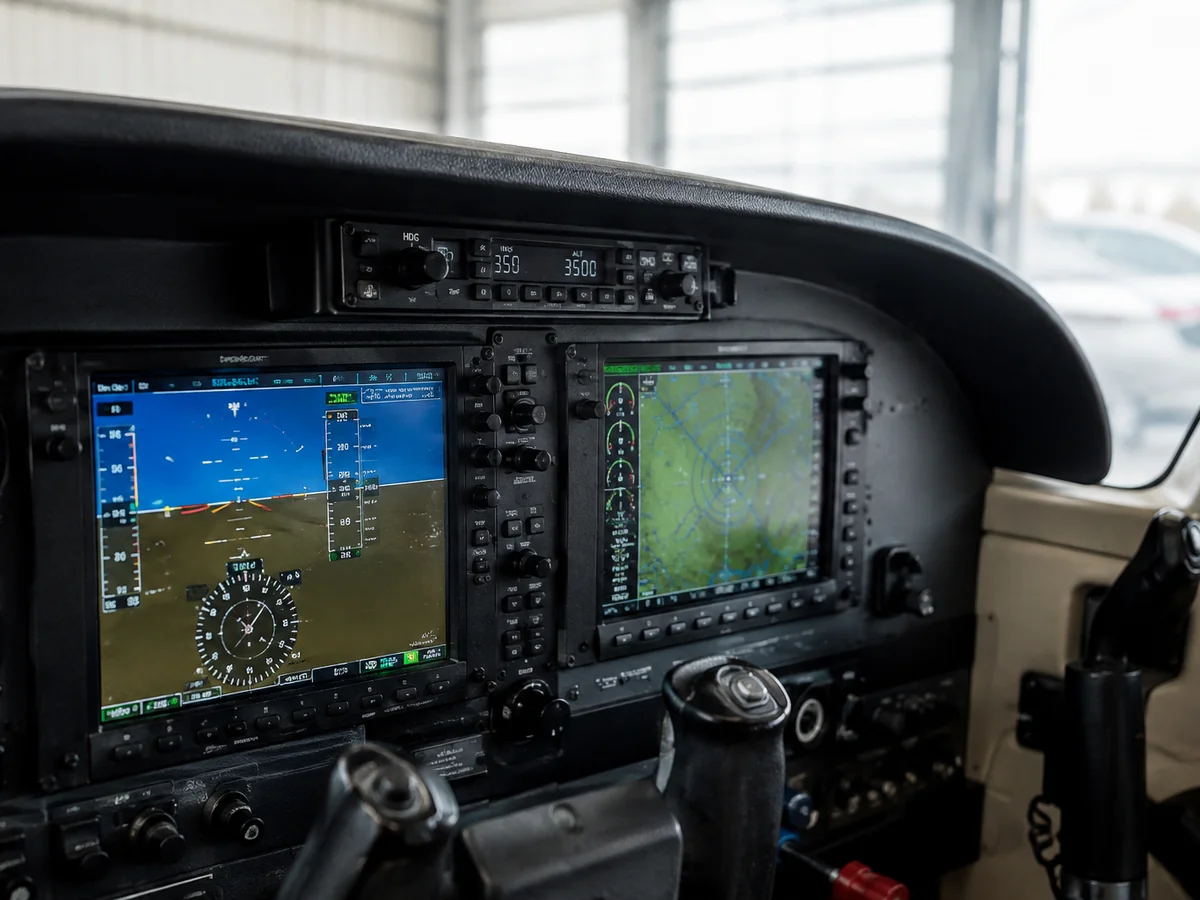
Modern avionics upgrades can add real value, but they also add complexity. Older radios or a mismatched panel can be a maintenance burden and may affect ADS-B compliance.
- Confirm ADS-B Out compliance (required in most U.S. airspace since 2020)
- Test every radio, intercom, transponder, and navigation unit during the pre-purchase flight
- Check the condition of all wiring, connectors, and circuit breakers
- Ask about any avionics upgrades and whether they were done with proper FAA paperwork (STCs, 337 forms)
- Verify that autopilot systems (if present) are functional and have current logbook entries
If you are looking at a single-engine aircraft, the avionics package can meaningfully affect your insurance rate and the coverage options available to you, so it is worth getting clarity on the panel before you finalize the purchase.
Logbooks and Maintenance Records
Logbooks are the aircraft's history. Gaps, inconsistencies, or missing records are red flags that warrant serious attention.
What to Look For in the Logbooks
- Continuous airframe and engine logbook entries with no unexplained gaps
- All annual inspections signed off with mechanic certificates and dates
- AD compliance documented with specific reference numbers and dates
- Any major repairs or alterations recorded with reference to FAA Form 337
- Engine and prop overhaul records, ideally with the original shop documentation attached
If the seller cannot produce complete logbooks, price the aircraft accordingly or walk away. Reconstructed logbooks, where a seller claims the originals were lost, should be treated with significant caution. Insurers will ask about logbook completeness, and gaps can affect your coverage options for aviation insurance.
Title Search and Liens
An aircraft title search through the FAA Civil Aviation Registry confirms the seller actually owns the aircraft free and clear. This step is easy to skip and costly to ignore.
- Search the FAA registry at faa.gov or hire an aviation title company to do it for you
- Check for any recorded liens, loans, or encumbrances on the aircraft
- Verify the aircraft registration is current and matches the airframe data plate
- Confirm no open accident reports or unresolved NTSB involvement
- Request an escrow closing if the purchase price is significant, so title transfers cleanly
Aviation title companies charge modest fees for this service and can catch problems that a simple registry search might miss. Consider this a non-negotiable step.
Insurance Before You Fly
One item that first-time buyers frequently delay is arranging insurance, and that is a mistake. You need coverage in place before your first flight as the new owner, not after. Liability coverage protects you if something goes wrong, and hull coverage protects the aircraft itself.
If you have been flying as a renter pilot, you may have used aircraft renters insurance for coverage while flying club or school aircraft. Owning an aircraft changes your exposure significantly, and a dedicated owner policy reflects that. Rates and coverage terms depend on factors including your total flight hours, pilot certificates held, the aircraft type, and how and where you plan to fly it.
Getting a quote early in the buying process also helps you understand the full cost of ownership before you commit, rather than discovering an unexpectedly high premium after the deal closes.
Frequently Asked Questions
How much does a pre-purchase inspection typically cost?
Costs vary by location and the scope of the inspection, but expect to pay between $500 and $1,500 for a thorough PPI on a light single. It is a small amount relative to the purchase price and can save you from a much more expensive problem down the road.
Can I get aircraft insurance if the logbooks are incomplete?
Possibly, but incomplete logbooks can limit your options and may affect rates. Insurers want confidence in the aircraft's history. It is best to resolve logbook issues before closing the purchase rather than after.
Does prior damage history make an aircraft uninsurable?
Not necessarily. Properly documented and repaired damage, where the work was performed to approved data, is generally insurable. Undisclosed or poorly documented damage is a bigger concern. Be upfront with your insurer about any known history.
What pilot certificates and hours do I need to insure a light aircraft?
Requirements vary by insurer and aircraft type. Most policies require at minimum a Private Pilot Certificate with appropriate category and class ratings. Insurers will also look at total flight hours, hours in type, and recent flight activity. Low-time pilots may face minimum hour requirements or training conditions.
Should I use an escrow service when buying a used aircraft?
For any purchase over a few thousand dollars, yes. An escrow service ensures the title is clear before funds are released, protects both buyer and seller, and makes the closing process cleaner. Aviation title and escrow companies handle this routinely and the fees are reasonable.
Ready to protect your aircraft? Get a quote in minutes.
Get a Quote